
 by
by 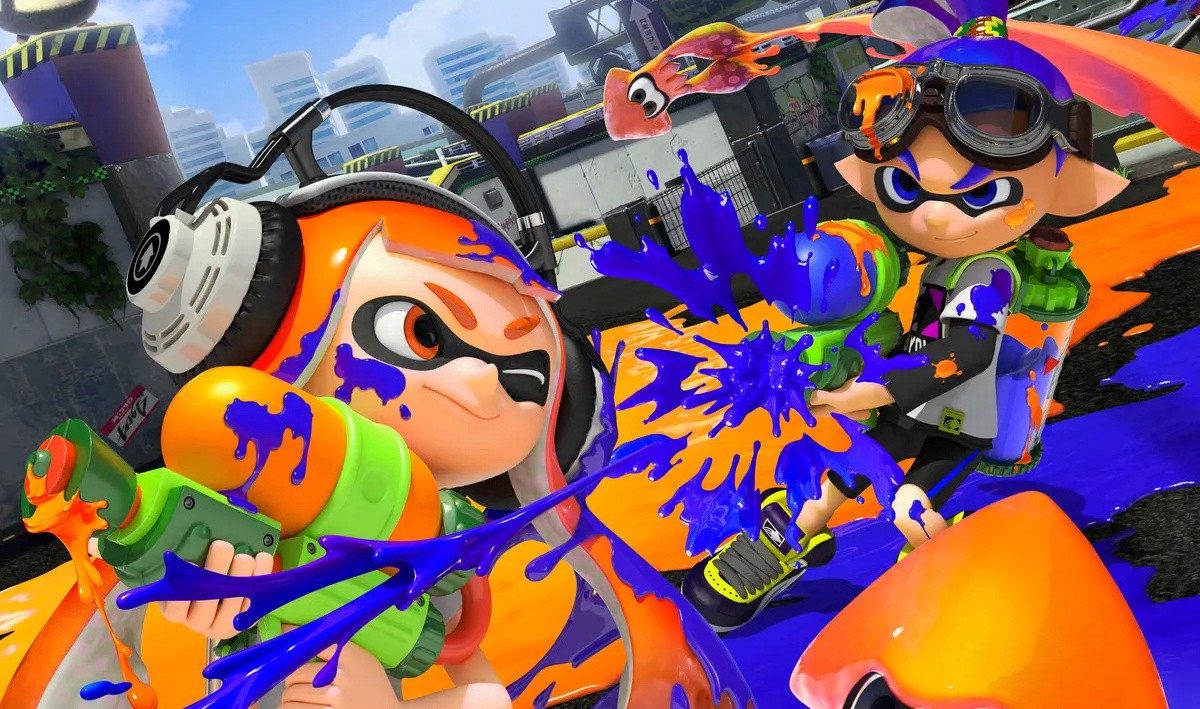
Since its original debut on the Wii U in 2015, the Splatoon series has become one of Nintendo's most beloved franchises, with countless players having fallen in love with its stylish and colourful vision of a world where evolved marine lifeforms duke it out with water pistols.
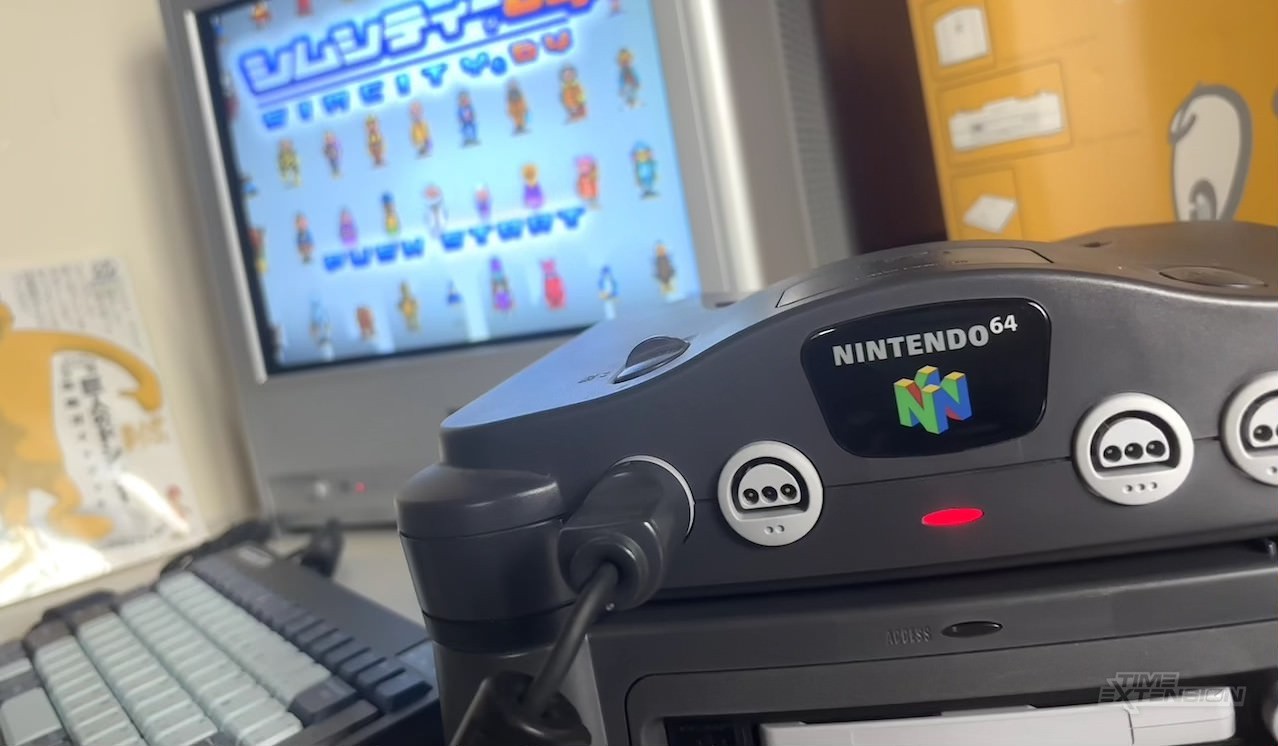
But something that you might not know is that nearly two decades before the game was originally released, Nintendo was actually working on a similar, albeit unrelated project, for its failed Nintendo 64 disk system, the 64DD, which was overseen by Hal Laboratory's Satoru Iwata and the design legend Shigeru Miyamoto.
Time Extension recently had the opportunity to sit down with the Australian programmer Richard Honeywood, who worked on this project, to chat about his career across two separate articles. In the process, he revealed a little bit more about what this unnamed project was and some of the difficulties the team encountered.
According to Honeywood, the project came about as one of many concepts pitched to Nintendo in the late '90s by a Yamanashi-based company called Digital Eden, where Honeywood was an employee. This was a company founded by members of Seibu Kaihatsu's Raiden team that had broken away from the developer, following the release of The Raiden Project, after growing dissatisfaction with their bosses, and who had landed funding with Nintendo to create a launch title for the 64DD.
He told us:
"Back then, they had this special second-party agreement that they used to fund companies, so basically, we weren't a true third party, as we weren't releasing for any other devices apart from Nintendo hardware [...] Apart from the funding, they also gave us tech assistance in the form of Iwata-san. So, Iwata-san back then was the head of HAL Laboratories. He wasn't yet the head of Nintendo.
"It was for Nintendo 64, but the "nudge, nudge, wink, wink" thing was that they were releasing this 64DD thing, and they wanted a launch title for that. Basically, Nintendo had the Famicom Disk System, so they were pitching this to us as this is the disk system for the N64.
"That was what we were told that we were aiming for, even though originally we didn't have any specs or anything for 64DD."
"We only had Silicon Graphics machines for the N64, and there was no actual hardware for it; it was all emulation on Silicon Graphics machines."
As Honeywood stated, Digital Eden was essentially treated as if we were part of Hal Laboratory, with Iwata regularly making the one-stop trip on the train from Hal's headquarters in Ryūō to the developer's offices in Kōfu, to check on their progress.
However, the developers soon found that both Iwata and Nintendo were difficult partners to please:
"The feedback we were getting for each game idea that we presented to Nintendo was just like, 'That’s no good. Start again from scratch.'
It was really blunt, which is something Japanese people usually word around. So, it was a shock. Also, this included Miyamoto-san, and he was a god to us. Sometimes they'd even say, 'we like that idea, we might use it for another title, but the rest, scrap it.' And that was our feedback every month.
No matter what we pitched to them, they were sort of pushing us to make another type of Raiden shooting game. But we were all thinking, 'The reason we went and set up our own company is to do something new that's not a shooting game.'"
This went on for a while, apparently, with the most promising game they pitched, according to Honeywood, being a water-fight themed family-friendly shooter for the add-on, which featured kids in paper hats battling each other with water balloons, pistols, and super soakers.
We'll let Honeywood describe it for you:
"The game [...] I thought had legs and was really going to go somewhere, was basically a water balloon fight. So instead of a shooting game where you had violence or whatever, because it was for Nintendo, we made everyone have water pistols, water balloons, and the kids all had newspaper pirate hats that they would wear as their armour.
Getting hit with water degraded the hat down and depleted your armour, and when the character got really wet, they reacted like little kids being sprayed with a water hose or whatever. That was basically the gameplay. You'd have these little forts, and you'd run around throwing water bombs and shooting water pistols at each other.
I remember our boss, Tetsuya Kawaguchi, fixated on the fact that he wanted the throwing animation to look amazing. So we had to stand out in the fields, throwing balloons with cameras attached to us. It was all really weird. Like, 'What the hell are we doing?'
Ultimately, Nintendo never seemed to be entirely happy with what Digital Eden had presented, and for two years, the company did their best to try to convince Nintendo to keep funding the project. Eventually, though, the team at Digital Eden got frustrated with the "degrading" situation and Nintendo's insistence that it be released for the add-on rather than the standard N64, leading many staff members to look for opportunities elsewhere. This included Honeywood, who would eventually get a job at Square, where he would help found the company's localization department in the late '90s.
You can read the first part of our interview with Honeywood here.