
 by
by 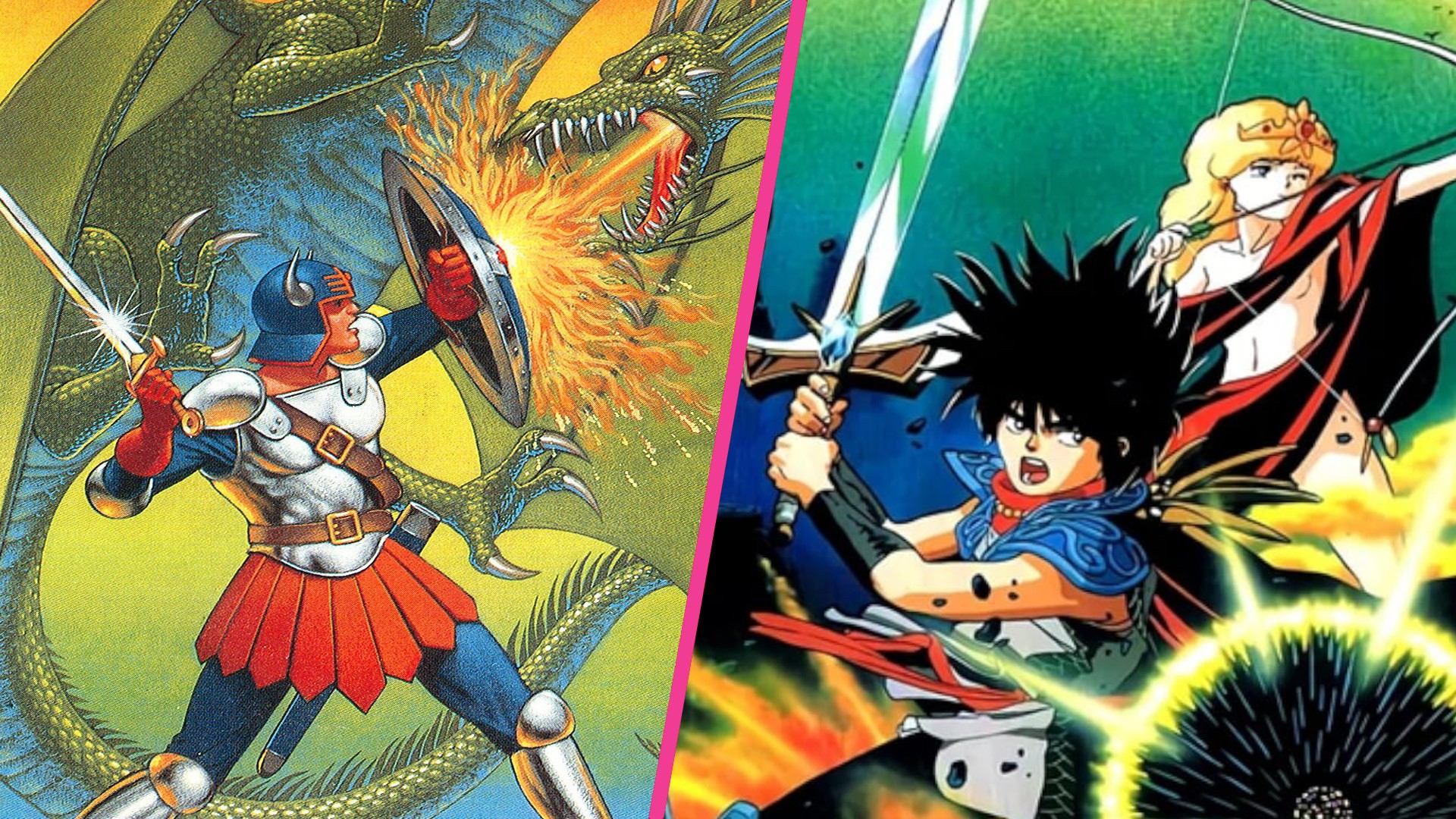
A long time ago, I was speaking with fellow site contributor and soon-to-be author Ashley Day about the challenges of interviews.
He mentioned an unnamed colleague who refuses to do interviews, saying they're unreliable because of imperfect recall, and instead relies solely on legacy materials, such as old press releases.
I was shocked at such an ideology. Legacy sources, such as release lists, charts, and press releases, are themselves prone to major mistakes - just look at the mysterious Yeah Yeah Beebiss I. Furthermore, oral histories are now more important than ever. Both Hidenori Shibao and Roy Ozaki, whom I interviewed, have passed away already. Every journalist has a duty to record developers' recollections while we still have time, the veracity of their recall be damned.
But importantly, oral histories are the best way to uncover poor work conditions or solve mysteries like why developers were never credited. Also, given the rise of AI-written opinion editorials, an interview with a living human being is now exceedingly precious.
Still, even with all that, oral histories throw up interesting challenges, and this one is a great test case to explore.
When I interviewed Tokihiro Naito, he said the following regarding his groundbreaking game Hydlide:
"By 1986 console games outsold computer games significantly. The Famicom version alone sold a million copies, whereas the combined sales for all computer platforms also reached 1 million. In Japan when a successful music artist sells a million copies, Toshiba EMI gives you a plaque to commemorate [it]. We received one for Hydlide, which may have been the only computer game to receive one."
It's one of my favourite quotes; it conveys both valuable comparative information and the then zeitgeist, and I have used it as a foundational quote for multiple articles. It's such a great quote, helping to bridge the divide between computers and consoles, and the rise of RPGs. It's also widely cited on Wikipedia and elsewhere.
But... How accurate is it, honestly?
I'm currently working on an enormous article related to Falcom. One part of the research brought up Falcom's own website, charting the history of Xanadu. And this is where things get weird.
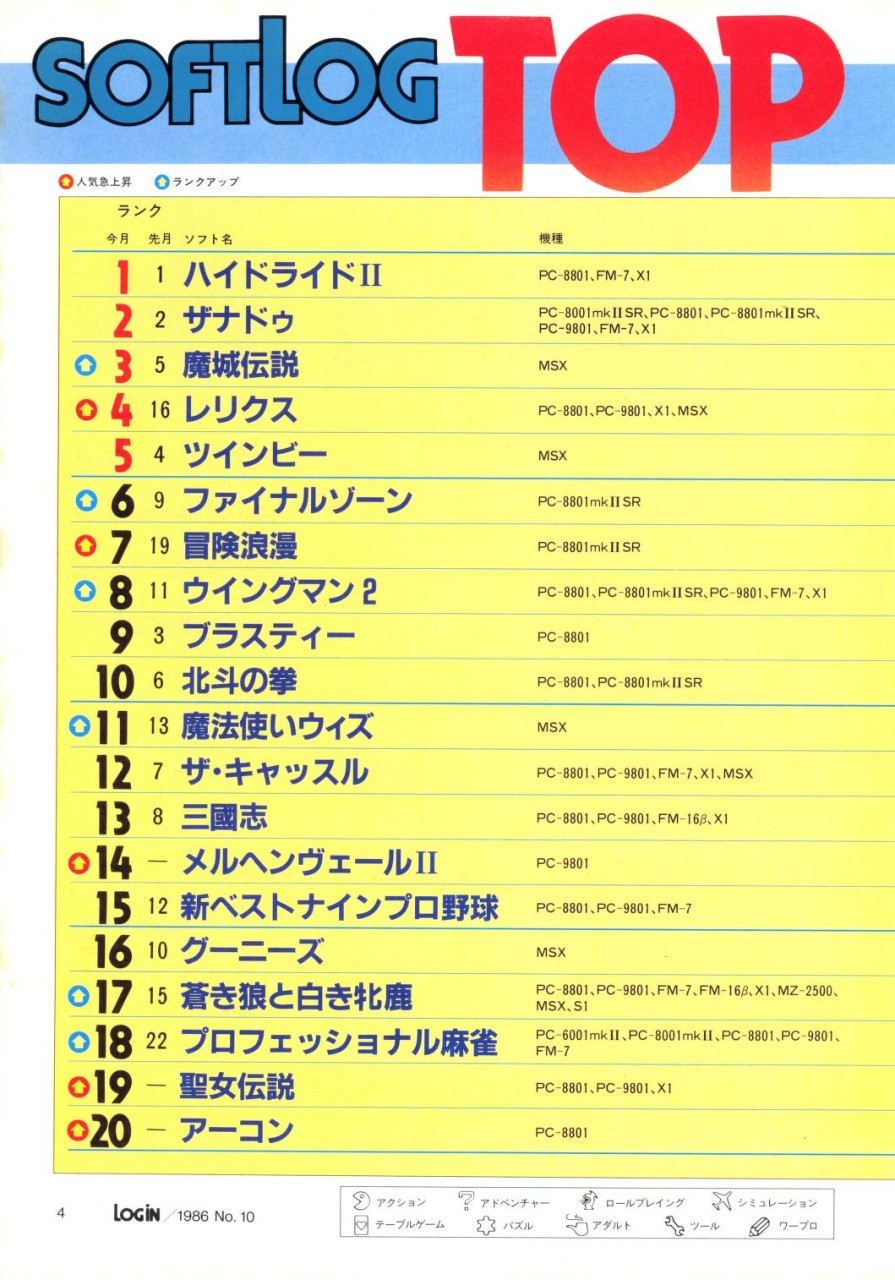
Falcom's company history page states that October 1985 was the release of Xanadu, an Action-RPG which achieved "unprecedented sales" of 400,000 units on computers; according to LOGiN magazine's chart entry, this was the PC-8001, PC-8801, PC-9801, FM-7, and X1. The website clarifies that this was the cumulative total by the end of the 1986 fiscal year.
Falcom's page on Xanadu for FM-7 says:
"Originally released in 1985 it became a massive hit, selling an astonishing 400,000 copies at the time. [...] it stood out as a blockbuster action RPG unparalleled in its era."
Falcom's dedicated Xanadu page states:
"...instantly captivated a vast number of users, achieving sales of 400,000 units - a record in computer gaming history that remains unbroken to this day. [...] Garnering support from computer users nationwide, Xanadu won numerous awards. It held the number-one spot in magazine popularity polls for a remarkable 17 months."
The wording regarding it being a "record" is important. In 1985, there weren't the independently adjudicated sales charts like we have today, but the fact that computer magazines such as LOGiN and others showcased Xanadu as being in such high regard is important.
For nearly two years it dominated the Japanese gaming psyche - at least for computer users. The October 1986 issue of LOGiN for example, an entire year after Xanadu's release, on page 4 shows it holding the number two spot, having been beaten to #1 only by Naito's sequel, Hydlide II. Keep this in mind, and also the fact that these charts in Japanese magazines are not based on sales, but rather popularity, meaning it's more of a feeling rather than a precise calculation. Amusement Center's "Falcom Museum" page mentions Hydlide, and also The Black Onyx, reiterating the 400k figure as being unprecedented.
And finally, 4Gamer in June 2005 states:
"It recorded sales of 400,000 units (across all platforms) at the time, a figure that remains the all-time record for a standard PC game in Japan."
And just so there's no confusion, the Japanese:
これが当時40万本(各プラットフォーム合計)のセールスを記録し,国内における一般的なPCゲームのセールスとしては,今もなお最高記録となっている。
The June 2005 publication date of that article is important. The belief that Xanadu was Japan's best-selling computer game for at least 20 years is reiterated across various places. So you can see the problem here, right? If Xanadu's sales figure of 400k is accurate, and it really did hold the record, representing the best-selling game on computers in Japan for over 20 years, how does that mesh with Hydlide allegedly selling 1 million copies on computers alone?
Immediate panic set in. This anomaly needed resolving.

I emailed Matt Fitsko - he was the transcriber for the first two volumes of my books, lives in Japan as a professional translator, does immense work in games preservation, and, given his vast knowledge of Japanese history, I like to consult him on various topics, such as Why Do So Many Japanese RPGs Take Place In European Fantasy Settings? (We also got drunk in Hokkaido once and, much later, he literally saved the entire book project.)
So, had we made a mistake and misquoted Naito? Had I accidentally put forth a falsehood which was now deeply embedded in gaming cultural history?
Fitsko initially suggested there might have been a translation error, and it was meant to be 100,000 copies, not 1 million. As he explained:
"Large numbers are very easy to screw up in translation because Japan still uses the Chinese 4-digit grouping system. So '1 million' in Japanese is literally '100 ten-thousands', and '100,000' is literally '10 ten-thousands'. It's tricky to convert back and forth to English."
Fitsko also seemed to recall an online source in Japanese specifically stating 100,000 as the sales figure.
Pure icy terror at this point. Had I made a catastrophic error?
As it turned out, I had not. We both checked the original audio, and Naito definitely states 1 million in Japanese and English, multiple times, so there can be absolutely no mistake. He clearly and confidently stated the figure, with no apparent confusion about the number itself. So this was not a case of the interviewee or the translator misunderstanding 100,000 as 1 million.
What about this online source Fitsko recalled, though?
As it turns out, there is one for the 100k figure on the GameWatch website. It states:
"The computer version of Hydlide, which surpassed 100,000 total units sold, was ported to numerous platforms - starting with the initial PC-8801 release and followed in subsequent years by versions for the X1, FM-7, PC-6001mkII, PC-9801, MSX, and MSX2. The PC-9801 version, which was the last to be released [...]"
It was published in 2023, but doesn't give any citations at all, making it less reliable than even Wikipedia.
Japanese Wikipedia actually states the same numbers as my own work, with a two million figure split evenly between computers and consoles. It's right there, a few paragraphs down with not one but two citations. Seeing this, I nervously wondered if they'd also used my interview as a source.
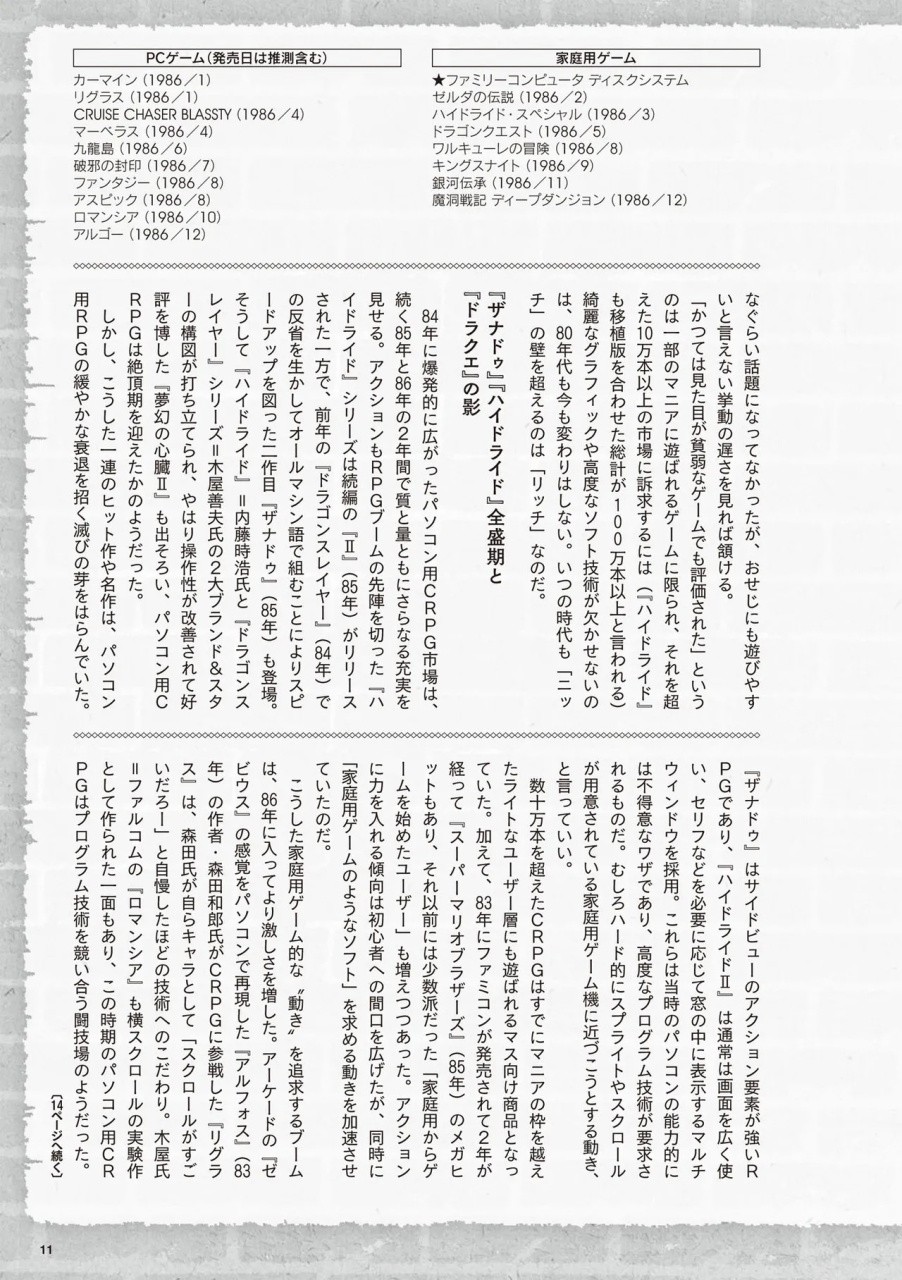
Let's quickly dismiss the second citation [5], which is the magazine Role-Playing GameSide Vol. 1, August 2014, pp. 10–14. It has an online archive page, but this is just a summary, not an actual download. The Internet Archive also doesn't seem to have it. Luckily, I found scans of it on a hardcore hentai website of all places - I'm not linking it for obvious reasons (I need everyone to know I had to wade through a frankly obscene amount of highly detailed, varied, and very carefully drawn anime pornography to bring you this research). But on page 11 there seems to be our smoking gun.
As it turns out, Fitsko owned that exact same copy, and he roughly translated the section on Hydlide:
""Graphics don't matter" only applied to certain games played by hardcore gamers, and to achieve success beyond 100,000 copies (it is said that Hydlide had combined sales of over a million including ports), you needed good graphics and sophisticated programming. That was just as true in the 80s as it is today."
Fitsko then went on to summarise other aspects of this article in GameSide, explaining:
"So it doesn't actually say how many copies Hydlide sold, but suggests that Hydlide was one of the games to break the 100,000 barrier. And the mention of a million is probably referencing that same quote from the Hydlide Museum. So the two sources on Wikipedia may actually be the same interview where Naito waffles between 1 and 2 million. Then on p.14 it mentions Hydlide as a pioneer in being one of the earliest games to be ported from computers to Famicom, and mentions how the 400,000 sales record of Xanadu still hasn't been broken, as of 2014."
So it's not conclusive. In fact, their source was most likely also the first citation on Wikipedia. Which raises the bizarre (and somewhat incestuous) possibility that Wikipedia is backing up its first primary source by quoting a second source that uses the same first source.
The first source is equally strange, though it at least predates my own interview by several years. Wikipedia cites the "Hydlide Museum", which was a series of web pages included as a bonus on the compilation disc of the first three games, released for Windows in 2001. This blog author covers the series and mentions archiving the Hydlide Museum on Hardcore Gaming 101. Unfortunately, since the site's redesign, the archive has seemingly been deleted, while the old Kontek URL is broken. Luckily, the Internet Archive has the page we need saved.
On this page, Naito states in Japanese:
内藤:結果としてこっちが200万本ですよね……200でしたっけ?ファミコンが100万、パソコンが100万で累計200万。
This is where machine translation loses some nuance, since it's not an emphatic statement. He says, loosely:
"Naito: So, the result was 2 million units for this one, right......? Or was it 200 [ten thousands]? 1 million for the Famicom, 1 million for the PC, making a total of 2 million."
He says "desu yo ne" - which colloquially works kinda like this: the desu is the sentence end, a verbal full stop; the yo is assertive, it adds emphasis (sometimes it's described as a verbal exclamation point); but the ne is the equivalent of "right" and can either mean confirmation, or it can be seeking confirmation from others. As in: "Right? Right!" And then with the figures, remembering how Japanese numbers work, he doesn't say 2 million; he refers to 200 but leaves off the "ten-thousands", but it's easily understood as 2 million.
Basically it's a relaxed conversation between two colleagues, and there's a degree of uncertainty with what he says, as he verbalises his own thought process.
When I interviewed him 12 years after the release of Hydlide Museum, he was much more emphatic and confident in his reply, and the information about the plaque from Toshiba EMI reinforced the validity of the answer. (However, there is no global consensus on the numbers a plaque refers to - a plaque from the Recording Industry Association of Japan, not EMI as Naito states, denotes 250k sales.)
I did not contact Naito again for this article. He's been through a very rough period, and it seemed deeply bad etiquette to hound him on this topic, given he's made the exact same statement years apart.
Whatever the objective truth of Hydlide's sales on both computers and Famicom, the available evidence doesn't let us establish the figure with confidence. It's also improbable that Falcom would have downplayed sales figures of Xanadu - and if that 400k figure is accurate, then surely so must the claim of it being the best-selling computer game for 20 years? Such a fact would surely have been contested by someone in that time if untrue.
Right now we have several statements which are difficult to reconcile:
- Hydlide sold 1 million across at least 8 unique computer formats
- Hydlide Special sold 1 million on Famicom
- Xanadu sold 400,000 copies across at least 5 unique computer formats
- Xanadu was still the best-selling Japanese computer game as of 2005
The validity of the Xanadu statements is important for multiple reasons: firstly, it calls into question Naito's recollections; perhaps he's an unreliable narrator or misremembered, because otherwise that "1 million" sales figure upends everything we thought we knew about Japanese computer sales.
Second, assuming the Xanadu claims are accurate and that it held the record for sales until 2005, it starkly highlights how small the Japanese computer scene was, both compared with the Famicom and with overseas computer markets.
Wizardry: Proving Grounds of the Mad Overlord (1981) sold over 500,000 over its lifetime; Ultima IV: Quest of the Avatar (1985) sold over 400,000 over its lifetime; DOOM (1993) is estimated to have sold over 2 million; while Myst (1993), which held the record for nearly a decade, sold over 6 million copies. By 2005, meanwhile, Japanese computer games still had allegedly not broken Xanadu's 400k record.
It is a surprising set of data, even when you account for different populations. Between 1985 and 2005, Japan's population rose from 121 million to 128 million, whereas America rose from 235 to 296 million. America always had the bigger numbers. But even so... Pause for a second and visualise all this: outside of Japan, Doom from 1993 would sell over 2 million copies, installed on more computers than Windows. Whereas within Japan, their alleged best-selling computer game only reached 400k, and it came out in 1985. I posed the question to Fitsko, that surely there were better selling computer games by the 1990s?
"Nope!" he replied emphatically. "Japanese computer gaming became extremely niche in the 1990s, especially after the release of the PlayStation. Most SFW games permanently left for console-land in the early-to-mid 90s, leaving mostly the NSFW stuff, which was a low-budget, low-sales, high-turnover market. A few developers stuck around. Falcom kept releasing (and re-re-re-releasing) their stuff on PC, but they made most of their money on the licensed console ports. I still remember when I saw Sora no Kiseki on store shelves, because it was one of the only non-eroge PC games available at the time (early 2000s). It was wedged in between greeting card and tax prep software. Capcom also ported Ace Attorney to PC around the same time. Trust me when I say that computer gaming in Japan was very niche for a long time."
None of this resolves the problem of conflicting figures, though; Fitsko and I spent a long time emailing back and forth over the data and suggesting possible explanations or workarounds.
To summarise much of what he said:
"That 400,000 figure for Xanadu is well-corroborated and I have no reason to doubt it. Xanadu was #1 in the sales charts for months. If we can dig up any old issues of LOGiN magazine, we could compare the rankings for Xanadu and Hydlide. Regardless, if Hydlide had somehow managed over double that of Xanadu, there would be plenty of evidence - 1 million simply cannot be right. Likewise, I really don't see how Hydlide Special could have sold 1 million copies on the Famicom. That would put it in really elite territory. Only a small selection of Famicom games (out of around 1200) sold over a million copies. And the reception for Hydlide Special was not especially enthusiastic. According to Wikipedia again, although Hydlide was popular on computers, the Famicom port was perceived as unfriendly to younger players and lacked explanations on how to proceed. It was criticized as being too difficult. Maybe Naito misremembered, and the 1 million figure is the combined computer & console sales, rather than 1 million each? But even that seems like a stretch."
As you can see, readers, dissecting the minutiae of old games through the lens of oral histories presents many challenges. This isn't like Meccha Chameleon, a Japanese indie game on Steam which is now verifiably documented as selling over 20 million copies. Well done to them - that will also probably hold some records for a few years.
In the end, I don't have a definitive conclusion to the Hydlide / Xanadu problem. Both Tokihiro Naito and Yoshio Kiya were rivals during the height of their careers, poking fun at each other's games within their own titles, wrestling for the number one spot in the charts, and now, over 40 years later, their legacies continue to contest each other, despite both men having moved on, almost like ancient ghostly colossi locked in an eternal struggle.
I am at least satisfied that the anomaly was not caused by a failure on my part or my transcriber Matt Fitsko's, since Naito stated the same things years earlier. I also feel confident that Hydlide's computer and console sales were at least similar, because many other Japanese developers have reiterated that games on this single console matched or outsold all the computer versions combined. But ascertaining a precise figure for Hydlide (or Xanadu) isn't easy, nor is reconciling the contradictions.
I ask that anyone quoting my work, or indeed the much earlier Hydlide Museum quotes, frames the two million sales figure with caution.
I'd also like to leave you with the words of Yusaku Yamamoto, from his foreword in my first volume. He was also Editor-in-Chief of GameSide magazine, cited earlier.
"A game has as many truths as there are people who took a hand in its creation. Each person experiences their own dramas, and provides their own artistic ideas. If you interview several people who worked together, they might contradict each other. Sometimes those contradictions are because one person is wrong. But sometimes, everyone is correct. That is why a writer delivering a creator's own words to game fans must also tell them that those words are just one perspective out of many."
And his original Japanese:
ゲームに関わったメンバーの数だけ、ゲームの真実がある。
人それぞれのドラマがあり、芸術的な発想がある。
取材をしてみると、メンバー同士の証言が、食い違うこともある。
その食い違いが、どちらかが間違っていることもあれば、
どちらも正しい場合もある。
だから、クリエイターの証言を記事にしてゲームファンに届けるときは、
その証言が、大勢の視点の中の一つであることを、伝えなければならない。