
 by
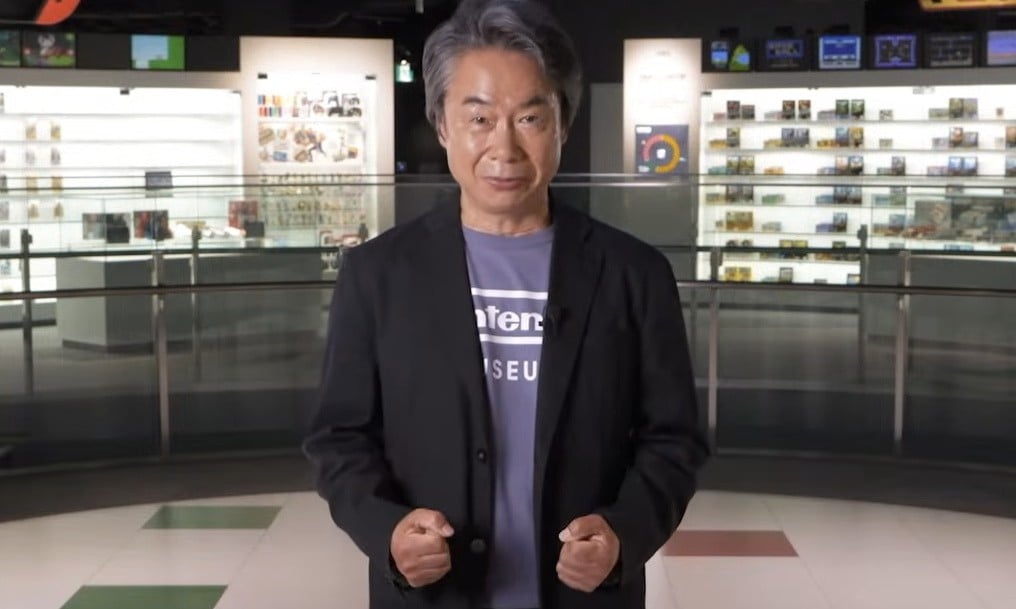
The legendary Shigeru Miyamoto has just received Japan’s Order of Culture award, and after accepting it, the creator of Mario and Zelda had something to say about the rise of GenAI in video game development.
Generative AI has become a hot topic in recent years, and with good reason; GenAI models are trained on copyrighted data, and several of the companies pushing the tech are currently involved in legal action. GenAI also carries an environmental burden, and many view it as a lazy replacement for human creatives.
Nintendo has largely resisted the allure of GenAI, so Miyamoto's lengthy comment on the matter, translated by VGC, makes for interesting reading.
"Our generation lived through a period of rapid computer development—a time when tools were constantly evolving, moving from typewriters to word processors," he begins.
"In the past, for instance, designers were taught in school how to create beautiful lettering for posters; possessing that skill alone was enough to be called a ‘designer.’ Alternatively, one could simply take a design that was trending abroad, give it a ‘Japanese-style’ twist, and be labelled a designer. However, as computers and technology advanced, a designer’s true individual capabilities, such as their innate sense of layout, finally came to the fore. I believe generative AI represents a similar shift."
He then discusses the difference between 'creation' and 'labour':
"When you set out to create, you first establish a broad structure, then begin the hands-on work: the tasks that follow, such as filling in gaps or refining the details. The tricky part is that this labour can actually be quite enjoyable. While the act of creation is inherently satisfying, there’s a danger: one might find satisfaction in the labour itself and mistakenly believe that a high-quality piece of work has been created. In that sense, the more AI replaces these tasks, the more it provides an opportunity to reflect on what’s really important, which I think is a positive thing."
Indeed, Miyamoto feels that lazy copy-pasting, something GenAI has certainly been accused of amplifying, fails to articulate the designer's intention, so humans will always be needed in the creative process, no matter how advanced GenAI becomes.
"Looking back at past designs, there are some that were created merely by copying and pasting," he says. "Yet, such work rarely stands the test of time; it lacks the individual’s particular design intention. Because the process relies on an individual’s intent, with the computer serving as an assistant for the labour, I believe that even as technology continues to evolve, and even if AI were to eventually handle everything, there will always be a role left for us to play.”