
 by
by 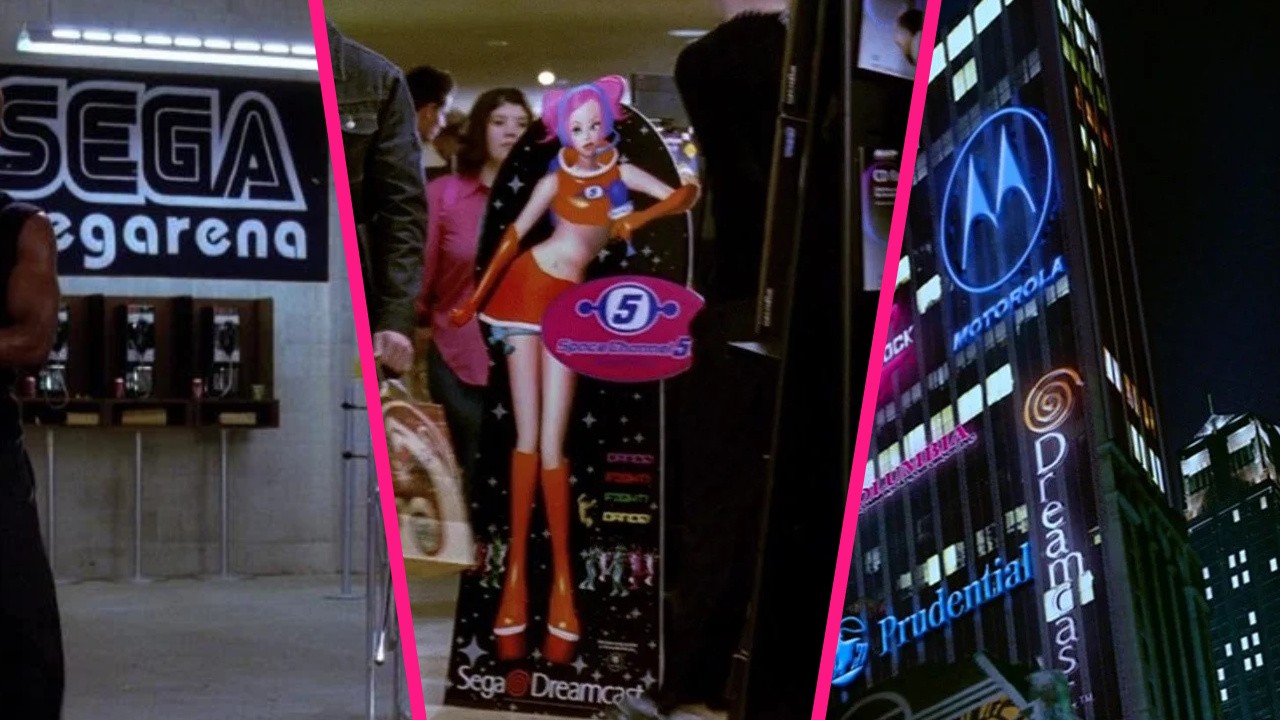
A version of this article was first published on Friday, March 31st, 2023, but since Josie & the Pussycats turned 25 earlier this year, I've decided to re-edit this piece and update it for some of our newer readers who may have missed it the first time around.
If you happen to follow any Sega-related fan accounts on social media, there's a possibility that at one point or another over the last two decades, you may have seen these types of posts online talking about the 2001 musical comedy Josie and the Pussycats (based on the Archie Comics series of the same name).
The movie — about a struggling rock band that's suddenly thrust into the spotlight and used in a nefarious scheme to brainwash teenagers into buying more products — famously featured product placement from a ton of real-world brands, all in the pursuit of poking fun at the music industry and early-2000s consumer culture.
Yet, among all the brands that appear, it's Sega and the Dreamcast that arguably have the greatest presence throughout the entire film, something that inevitably hasn't been lost on fans of the Japanese video game developer. The movie's final concert, for instance, takes place in the fictional "Sega Megarena"; you can constantly see advertisements for the Dreamcast and Sega hidden in the background of several shots, and there are even Dreamcast kiosks featuring Space Channel 5 and Crazy Taxi displayed inside a music store.
What makes this all the more odd is that the film was actually released in April 2001 in the US, one month after Sega discontinued the console in order to become a third-party developer; something the filmmakers obviously couldn't have known at the time of filming, but which gives the movie a strange elegiac quality in retrospect, acting as a last hurrah to an era of the company's history that was soon about to vanish into the past.
Having seen several of these posts across Twitter/X, Facebook, and now BlueSky, I wanted to find out more about how this product placement came to be, and if Sega was ultimately happy with the way the film presented them. So, I tracked down Sega's then-consumer promotions manager, Heather Kashner; the then-vice president of branded integration at Norm Marshall & Associates, Caressa Douglas (who handled Sega's product placement at the time); and the film's co-director/co-writer, Harry Elfont.
Heather Kashner joined Sega in 1999 ahead of the September launch of the Sega Dreamcast in North America. As she told me, she had worked with future Sega senior vice president of marketing (and future Sega of America president) Peter Moore while at Reebok and was brought on board to try to make Sega more appealing to a teenage demographic after the commercial disappointment of the Sega Saturn in the States.
A big part of this, she says, was seeking opportunities to put the Dreamcast in front of this audience through attention-grabbing promotions and, of course, product placement.
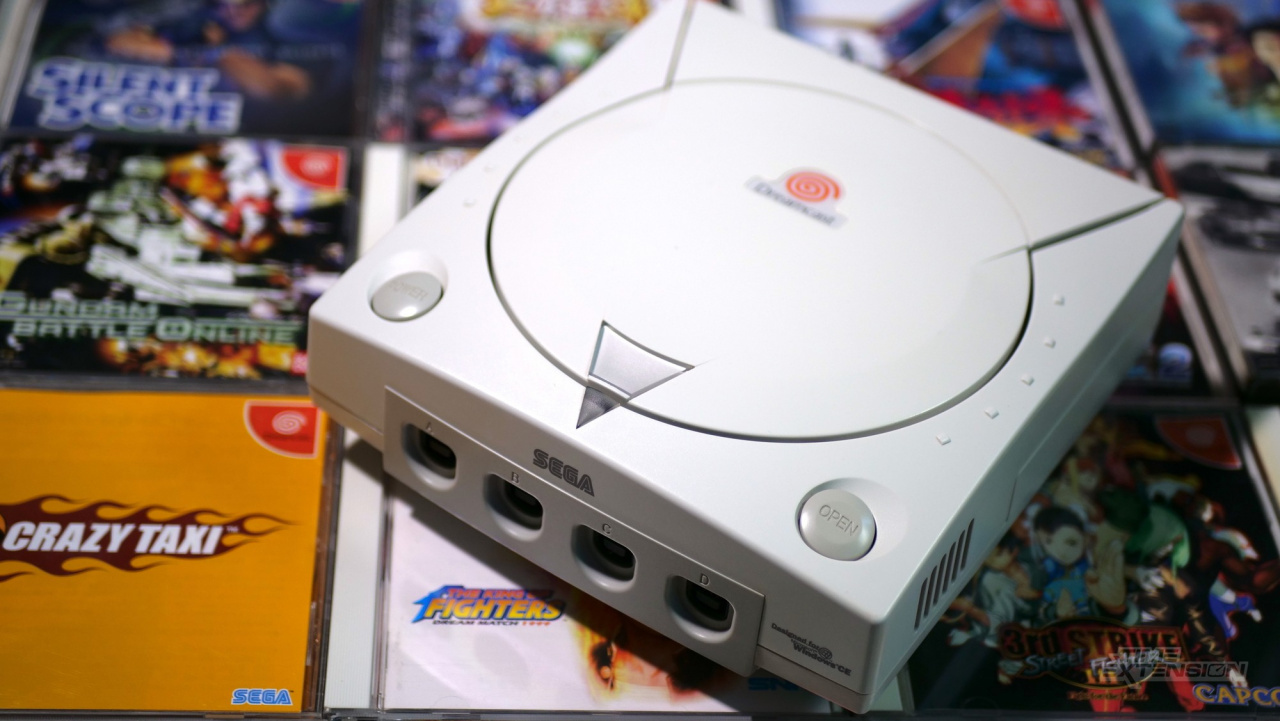
Kashner tells me, "I had a fairly big budget, and what we decided to do as a team was really focus on being culturally relevant with boys 12-17. And that meant not only focusing on trials, but also getting them to try Dreamcast, which we did through a huge grassroots mobile tour where I think we were in over 120 markets throughout the US, and product placement. It was all about, 'How do we become more visible and culturally relevant based on either TV shows that they are watching or movies that they are watching?'
"For product placement, we worked with an agency out of Los Angeles called Norm Marshall & Associates, and I worked specifically with a woman named Caressa Douglas, who is still in the product placement industry today. We basically leaned on them because they obviously get scripts in advance and know what’s coming down the pipeline, so we not only leaned on them for movies but also to build relationships with prop masters and the people responsible for building the sets. I can’t remember all the TV shows we were in, but they did an amazing job of getting us placed in a lot of TV shows as well. So, it was really just a full-on assault of trying to get out and become culturally relevant in a very short amount of time through TV, film, consumer promotions, and events."
It was really just a full-on assault of trying to get out and become culturally relevant in a very short amount of time through TV, film, consumer promotions, and events.
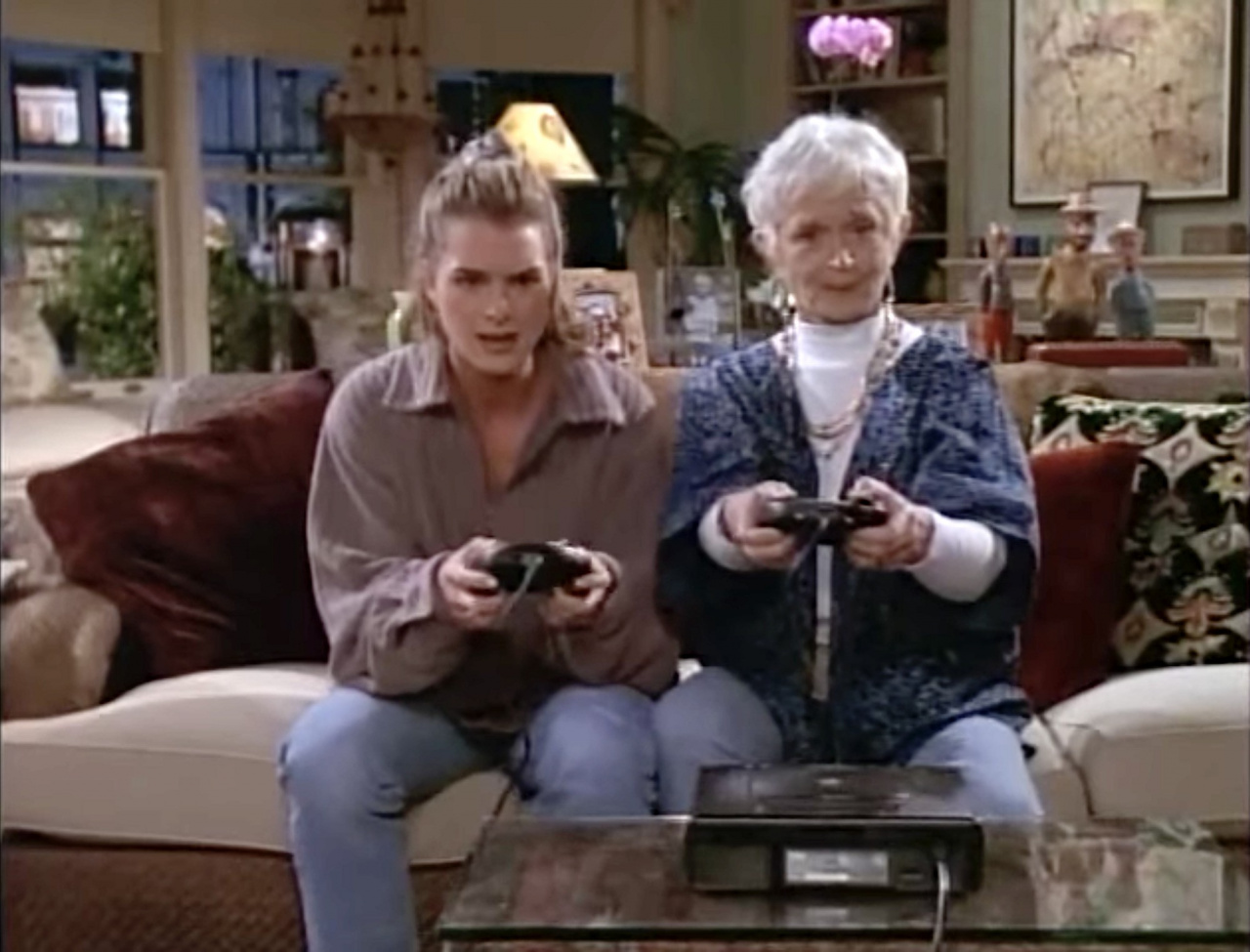
By 1999, Douglas had already been working with Sega for three years, she tells me. Having struck up a professional relationship with the company in 1996, one of the first placements she secured was for a Brooke Shields TV show called Suddenly Susan. A prop master on the show needed a gaming console for a scene and asked Douglas if they knew any gaming companies. Nintendo and Sony already had representation from other agencies, so Douglas contacted Sega, and they were able to send over a Sega Saturn overnight for Brooke Shields and Barbara Barrie to play on screen. From there, she placed Sega in a number of other TV shows and was also present at the Dreamcast launch, where she helped get the console on screen to coincide with its September 9th, 1999 launch in the States.
"Because the Dreamcast launch was so specific, we needed to have placements on screen the same window as the launch for everybody else," says Douglas. "That was the first time we got empty boxes for a console. So, we had consoles that looked like consoles, but they didn’t work. We figured out how to get them made. We had those, and then we’d have someone play pre-recorded gameplay on the screen; it was definitely movie magic to make it all happen."
Going into researching this article, I thought of product placement as brands paying productions to feature their products on screen, which is, I'm guessing, how most people view it, but according to Douglas, that isn't always the case, with some writers and directors also seeing products to establish a character beat or provoke laughters from the audience (think of the Eggos in Stranger Things Season 1 or the Cornetto references in the Three Flavours Trilogy).
As Douglas tells me, "Brands are really important to storytelling, so it doesn't always come from an agent or a brand side; it can also be beneficial for a production or a writer.
"In one frame, a director can tell a story about a character through a brand. So, if a character drives up in an SUV versus a Lamborghini, we know [details about the character] in that one frame. It’s a great shorthand. Imagine a world in entertainment devoid of brands, or where they’re all fake brands, I think it would take you out of the experience."
It's this comment that brings us back to the topic at hand: Josie and the Pussycats. With a working script in hand, the filmmakers knew they wanted to make a satire of consumerism, with audience members bombarded by marketing and brands in almost every shot. But they didn't just want to settle for creating their own; instead, they felt that bringing in real-world companies would enhance the production and make it resonate all the more with those who watched the movie, tying the film to their day-to-day lives.
"Since the movie was a satire of consumerism and popular trends, we wanted to create a world that was filled with branding and advertising," Harry Elfont, the co-director of the movie, explained to me over email, "So, we needed as many brands as possible to make that work. We could have used fake products (like The Simpsons did with Duff Beer and Laramie Cigarettes), but we made the choice to try to get real brands because we thought it gave the satire a bit more teeth and just felt funnier."
What's interesting is, according to his co-director/co-writer on the movie, Deborah Kaplan, on the film's behind-the-scenes commentary (available on the 20th Anniversary Edition Blu-Ray), none of the companies that appeared in the film actually paid Universal for their screentime, with the film's product placement person Kim Barker contacting as many companies and their agents as possible and offering them a role for free.
"It was very hard to get corporate sponsors to sign onto a movie using their logos where we’re actually making fun of the fact that they use them so much," Kaplan said. "So no cash exchanged hands."
From what we were able to find out, among all the companies asked to participate, Sega was one of the more relaxed about how it would be presented, which likely explains why it is featured much more than the other brands. According to Douglas, this comes down to the company being extraordinarily willing to take risks, whereas others in the industry would likely have turned down the offer because they wanted more control over the final product.
"When I think of Nintendo, I think of like mums buying for their kids," says Douglas. "And PlayStation was very corporate. But when we started working with Sega, it was the first time I had ever seen in a marketing meeting, a dude comes in with full sleeves of tattoos [...] They were all about taking risks. They wanted to be disruptive. They wanted to shake things up. And that’s the way they saw themselves, and that’s why they made such a big splash because they were willing to just go all out."
"What we’re talking about here is a really terrific example of that," she continues. "As well as the longevity of what we do. Because Josie and the Pussycats was filmed in 2000, before their release, and here we are talking about it today, right? The brand might not exist, but it’s that long tail where we’re still talking about Sega Dreamcast. And there are different generations, especially with streaming now, that may be discovering something new through streaming, so it's a whole new set of eyeballs on it."
If you happen to find yourself particularly nostalgic for the days when Sega was still in the hardware race, it might be worth giving the film a try. It's cheesy, over-the-top, and has aged a bit poorly in places, but it's still an interesting time capsule from the early 2000s, and one that will likely remind Sega fans of better times.