
 by
by 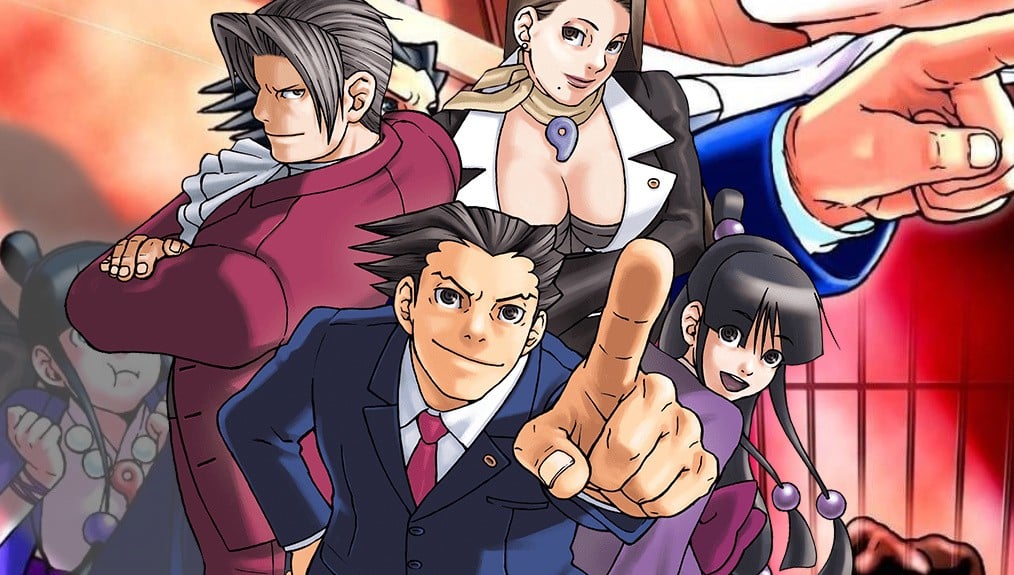
If you were to ask me to put together a list of my favourite video game soundtracks, Phoenix Wright: Ace Attorney's music would undoubtedly rank toward the very top.
Originally written by the Capcom composer Masakazu Sugimori for the game’s Japanese-exclusive Game Boy Advance release, the synth-heavy soundtrack was the perfect accompaniment to the title’s unique blend of courtroom drama and crime scene investigating, combining catchy pop melodies, a mix of exciting tempos, and some expertly-timed drum breaks to create a palpable sense of tension, anticipation, and relief.
Like many Western fans of the series, I didn't initially discover the game through the original GBA release, but thanks to its enhanced port for the Nintendo DS from 2005, where the Mega Man X5 series composer Naoto Tanaka rearranged and expanded the game’s music for Nintendo's dual-screen handheld. Nevertheless, I've always had a huge respect for what the original team, especially Sugimori, was able to pull off, and have often credited them for establishing much of what I later came to love about the popular ADV series.
As a result, today I wanted to take a step back and look at the creation of Sugimori’s original score, to pay tribute to the legendary composer for laying the foundation for the series’s musical identity, and uncover more about how he squeezed the most out of the GBA hardware. So, in order to do this, I reached out to Sugimori directly via email to ask him some questions with the help of the Japanese-to-English translator, Liz Bushouse.
During this exchange, Sugimori generously offered to run me through his approach to the soundtrack, the types of music he was listening to during its creation, and explained how the game's punishing work schedule almost killed him. He also gave us some additional insight into what led him to join Capcom in the first place and how he originally came to be part of the small development team tasked with working on Gyakuten Saiban (the Japanese name for the series that would eventually be localized overseas as Phoenix Wright: Ace Attorney, which we'll be using throughout this article).
When Sugimori first got the job at Capcom, he admits that becoming a video game composer/sound designer wasn’t necessarily his goal in life.
Instead, he had always envisioned himself as having a future as a pop composer or songwriter, having begun writing his own music at age 16. However, while attending music school following graduation from high school, he received a wake-up call from one of his teachers one year after Summer Break, who encouraged him to think more practically about his future and look for work elsewhere.
“My teacher suddenly asked me, ‘What are you going to do about finding a job?’" he recalled. "I hadn't been thinking about that at all and wasn't looking around or applying to anything, so I was like "What?! You think I should get a job?!" When I look back on it now, I'm really not sure what I was thinking.
"Regardless, at that point, the only companies that I could find that were still accepting applications were Atlus and Capcom. Atlus rejected my application. But for some reason, things proceeded pretty smoothly with Capcom, and I passed.”
“Incidentally, part of me thought, ‘If I'm gonna get a job, it would be nice to work at Square (now Square Enix)’, so I convinced myself to call them up. They told me that they weren't taking new graduates and that I should train at another company first and then switch to Square later. So they didn't accept me. I never actually set out to become a sound creator in the video game industry. I just went down that path because Capcom happened to hire me.”
Starting at Capcom in 1999, Sugimori’s first roles at the company were doing audio testing for games, with his earliest credit on Mobygames being for Breath of Fire IV. Eventually, though, in his second year, his bosses would approach him for a slightly more exciting proposition — and one that actually put his compositional skills to the test — the opportunity to create music for a new game from the writer/director Shu Takumi.
At the time of Gyakuten Saiban's development, Takumi had just gotten off directing Dino Crisis 2, as revealed previously in an interview between Takumi and Official Nintendo Magazine story (published online in 2013), and had been permitted by the leader of Capcom Production Studio 4, Shinji Mikami, to come up with a brand new game idea. Initially envisioning “a fairly typical adventure with a detective as the main character”, over time, Takumi came up with a slightly more novel take on the genre, featuring an attorney as the protagonist.
Putting the finishing touches to the pitch, Takumi presented the idea to Mikami, who at first attempted to warn the developer off the idea but eventually gave the project the green light. Takumi was then allowed to put together a small team to try and build the game, with the young composer Sugimori being the person selected to handle the game's music — his first-ever video game soundtrack.

For the composer, it was an amazing stroke of luck and the chance to finally make a name for himself within the company. But things initially didn't get off to the greatest of starts.
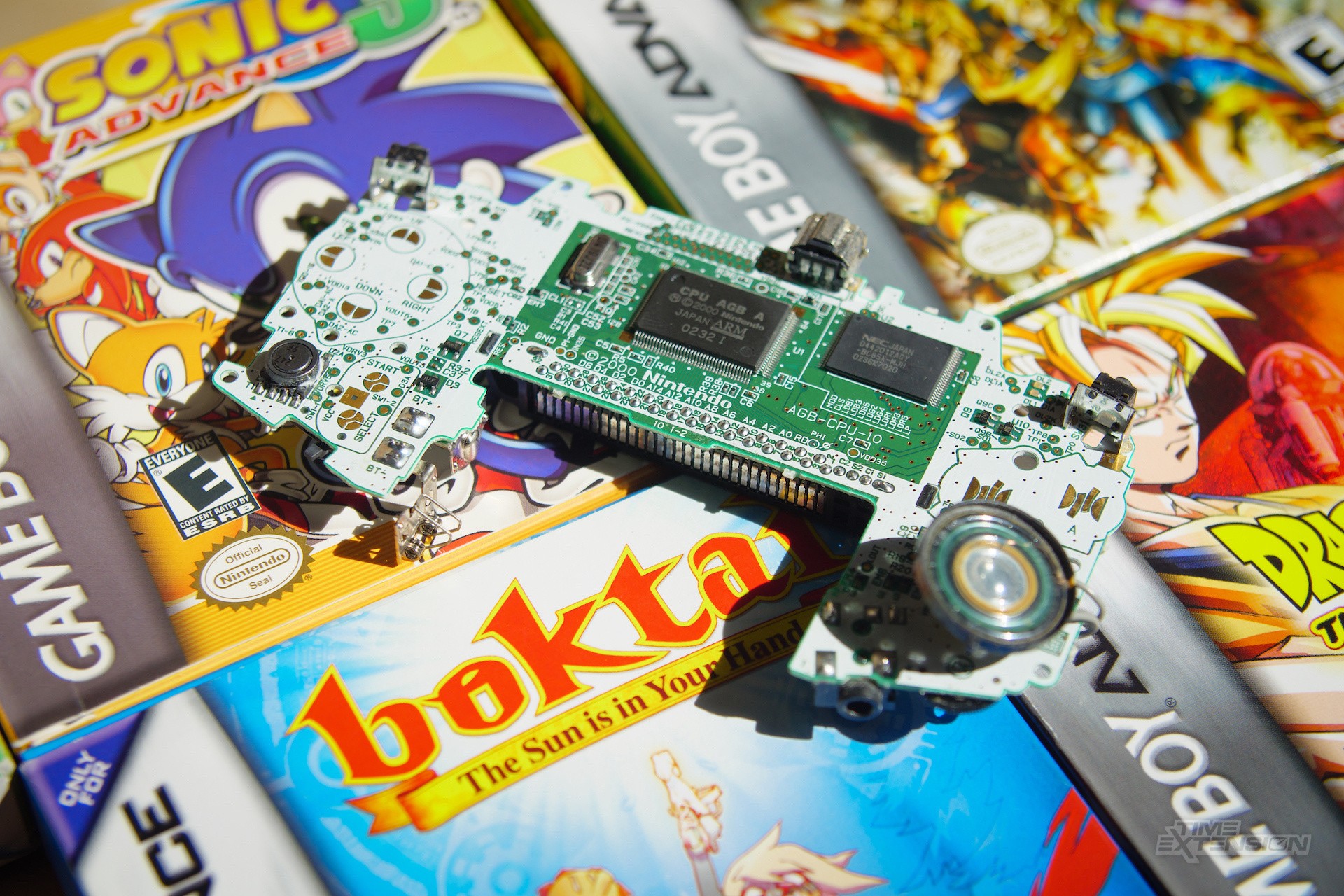
Not only did he not have the proper GBA hardware to work with, leading to volume issues and complaints from his other colleagues on the team, but he was also limited by instructions to use the Game Boy Advance's PSG (programmable sound generator) channels almost exclusively for the music. If you're familiar with GBA audio at all, you'll probably already know that the handheld has 6 audio channels in total: 4 programmable sound generation channels (PSG) and 2 PCM (Pulse-Code Modulation) channels (capable of raw sample playback).
The PSG channels were essentially modified versions of the Game Boy Color’s 4 audio channels, while the PCM channels were totally new to the device and let composers process and mix multiple samples together using the CPU (including instruments and voices). Wanting the sound to be the best it could be, Sugimori wanted to use the PCM channels, as it was what he was already comfortable with, and he personally believed he wouldn't be able to make music as good as his colleagues on the handheld Mega Man games.
So he went to talk to Atsushi Mori, the sound designer on the game, who was a more senior employee, to ask for his advice.
"At the time, Mori-san was also working on Resident Evil's GameCube remake," Sugimori said, "As well as Resident Evil 4. It was probably an unimaginable amount of work to deal with, and yet I remember being surprised at how fast he did things. We did in fact work in the same building, on the same floor. Floor 14 of the Capcom development building in Osaka was the sound floor. But there were transparent walls that stretched from floor to ceiling separating composition, arcade sound effects, and consumer sound effects, so we didn't have many chances to talk, other than having a discussion about PCM."
According to Sugimori, Mori encouraged him to compose what he liked and use PCM if he liked, which the musician has since described as having been akin to being given water in a desert.
Once I did that, everything changed. The sound, the capacity, the processing load, and the number of times the programmer got mad at me for overloading it! But if I hadn't pushed through with it, then Gyakuten Saiban would sound totally different, and the game may not have been as popular
"Once I did that, everything changed," Sugimori told me. "The sound, the capacity, the processing load, and the number of times the programmer got mad at me for overloading it! But if I hadn't pushed through with it, then Gyakuten Saiban would sound totally different, and the game may not have been as popular."
Joey Lopes, the writer, director, and composer of Detective Instinct, an Ace Attorney-inspired game, said, "I for sure can’t imagine Ace Attorney’s OST without the percussion/drum samples [created through the PCM channels]. Some of the coolest and most intricate parts in the score are the extremely funky drum parts, and while you could have approximated the sound of the snare/hi-hat/kick using the PSG noise channel (and I actually think he does use it sometimes for a closed hi-hat sound), I think it’s the combination of chiptune synths playing the melody/harmony and pseudo-realistic drum samples driving the rhythm that gives the Ace Attorney score a large part of its character."
The music analyst and Ace Attorney fan, 8-Bit Music Theory (8-Bit for short), meanwhile, commented, "The use of samples allowed for certain synth tones and pads that could bring an atmospheric approach to the music that wouldn't have been possible the same way with just the PSG channels. The trial music in particular uses thick chords that wouldn't have been possible without the PCM channels."
Interestingly, when it came to the musical direction of the soundtrack, Takumi and Sugimori did hold some initial discussions to talk about what the composer's approach to music might be, but, according to Sugimori, “Takumi-san didn't request anything in particular”.
As a result, Sugimori simply opted to pull from the music he was listening to at the time, including everything from jazz fusion groups like T-Square to classical musicians (Dvořák, Bach), J-pop acts (Tetsuya Komuro, Daisuke Asakura, B’z), Western artists (Phil Collins, Peter Cetera, Chicago, Starship, Heart), and a ton of other ‘80s pop and rock bands. The aim wasn’t to create music that could be easily categorised into a single genre or sound, but to instead infuse the soundtrack with a bunch of different styles that would help convey the necessary emotions of each individual scene. This is an approach he has continued throughout his career.
“I find anything that can be categorised into a specific genre quickly becomes dated,” said Sugimori. “So I’ve always strived to create music that cannot be fully contained within any one particular genre.”
One notable example of how Sugimori matches the emotion of a scene can be heard within the track that is commonly referred to as 'Phoenix Wright - Objection 2001', which Sugimori considers the main theme of the entire game. This plays immediately after the player catches a witness in a lie, and features a stabbing synth melody that continuously builds in intensity, signalling that Phoenix has shed his nervous demeanour and has managed to push the courtroom battle in his favour.
"I wanted to make it so that when that song came on, it would leave the strongest, 'Aren't I the coolest?' impression, so even though it's short, I tried to make it impactful. Incidentally, Phoenix's theme has a second half. Originally, the Pursuit theme was going to break in during the second half. But at the time, I wasn't able to put that together, and abandoned the idea because of the restrictions in capacity and number of sounds. That's why the track is so short."
“I also intentionally wove in some periods of silence so that it would have more of an impact when the music in the game started playing. Gyakuten Saiban had a script where you could embed control codes between single characters [in a line of text], and the music was also similarly controlled, so I tested out having the sound stop or start as soon as a particular character was displayed. It was maddening work and took quite a lot of effort at the time."
For Lopes, Sugimori's decision to incorporate these different musical styles into the soundtrack makes a lot of sense when he considers "that nothing about the tone or setting of Ace Attorney suggests it should sound any particular way".
As he put it, "If you’re making a hard-boiled, noir-styled detective mystery game, people might expect to hear a dark, jazzy score; if you’re making a fantasy epic, they might expect to hear an orchestra. What do you expect to hear from a somewhat comedic, sort-of contemporaneously set mystery adventure game starring lawyers that is sometimes extremely silly, and sometimes deadly serious?"
He praised Sugimori's decision to have the music be just as eclectic as the game itself, and argued "the sum total of all of those styles together filtered through the GBA synths" results in something that feels totally unique to the Ace Attorney series, and also helps to compensate for the game's broad emotional range.
8-Bit offered a similar perspective: “I think freely switching genres allows the music to use whatever fits the intended mood best. The EDM dance music approach to the rhythm in 'Pursuit - Cornered' theme, for example, is great at generating the energy that the scenes that use that music call for, where Phoenix has a witness on the ropes and is gunning to tear their story apart.
"This is a pretty far cry from the writing of something like the detention centre theme, which is written more like something in between a jazz ballad and a Bach chorale. But the sound of the GBA colours all of the music and gives it a coherent sonic identity, and Sugimori's compositional voice shines through on every track.
He added, “It’s a tall order to provide the experience of a courtroom drama within the confines of a Game Boy Advance game, with only pixel art stills of the characters and text dialogue available to convey the story. Sugimori’s music expertly follows the emotional arc of these courtroom stories. With the soundtrack, all of the twists, the drama, the desperation of being backed into a corner and the rush of victory when a case is turned around are all able to come out of the 3” screen and grab the player.“
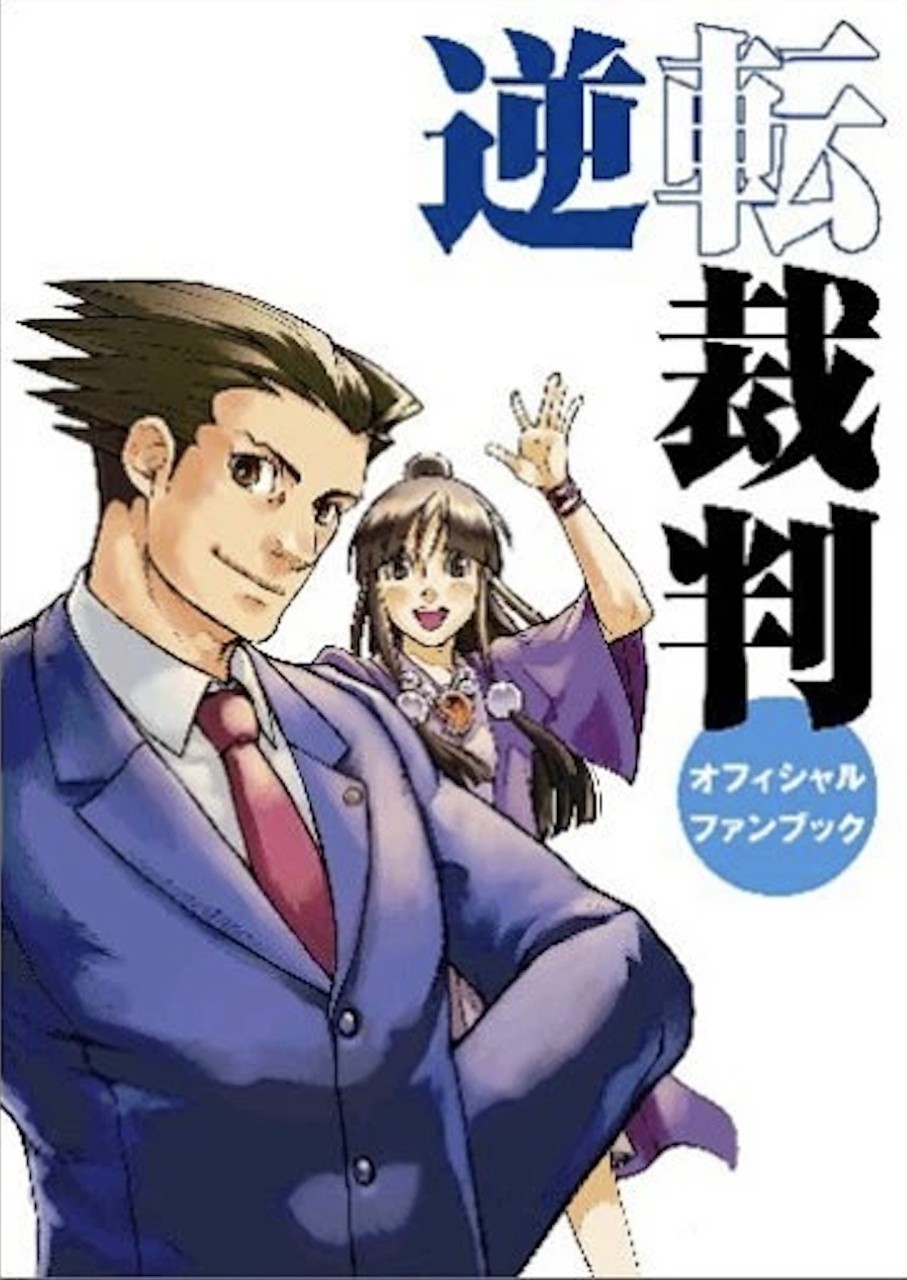
While Sugimori's soundtrack has since gone on to be universally praised by critics, it should be noted that the composer's contributions weren't made without some personal sacrifice. Given the sheer amount of work that needed to be completed and the composer's level of commitment to the project, the game's development proved to be much more challenging than Sugimori initially anticipated, with the musician's health eventually declining during the project due to overwork. This all came to a head in the last few weeks of the project, with Sugimori temporarily having to take a step back from the project for his health — an event that Shu Takumi later recounted in an interview for the official Gyakuten Saiban Official Fanbook.
In this interview, Takumi stated that the composer had to take a "long leave" while "the team was still busy with the actual development of the game" and that he had left them with tracks he had "written in a flurry". Because of this, the team were reportedly left to implement much of the music themselves, eventually running out of available tracks and resorting to using an unfinished piece over the end credits. It wasn't until the game was finished that Sugimori finally reappeared, having a tear-filled reunion with Takumi. This is a story that now appears on the game's Wikipedia page, but doesn't necessarily match the events as Sugimori described them to us, with the composer instead insisting to us that the only work left to do when he took his leave was debugging the finished game.
"Development had been completed," Sugimori recalled. "But I was told by my doctor to stay home and rest, so I couldn't go to work. I was unexpectedly really close to dying."
According to Sugimori, his poor health was simply a case of pushing his body too hard, and his body then started to push back. So, he had no choice but to uncharacteristically take some time off to recover, to avoid potentially endangering himself even further. Reflecting on this decision today, Sugimori states it was the "obvious" thing to do, and recommended others do the same if their health should also end up in a similar place, but also, perhaps controversially, suggested that artists should be ready to push themselves in other ways to see their limits.
"There is a trend in Japan of trying to focus on 'work-life balance', but for me, 'Work is Life and Life is Work'. We are creators, after all."
Following the release of Gyakuten Saiban on the Game Boy Advance, the game ended up generating a small cult following — enough to warrant an enhanced port for the Nintendo DS. Sugimori, however, would not be involved with this new version of the game, having already left the company by the time the DS was released, following his work on action sidescroller Viewtiful Joe.
To fill the void, Capcom approached Naoto Tanaka (Mega Man X5, Mega Man X6, Mega Man X7, and Mega Man X8) to arrange Sugimori's existing music for the new version of the game and to also compose some additional tracks to accompany a bonus chapter that was set to be included in the new release. This version of the game was released on the Nintendo DS in Japan in September 2005, and would eventually also be published in North America and Europe, marking the first time the series had been given a proper English localization. The sales expectations within Capcom US were initially set fairly low for this release, but eventually it went on to be a surprise success for the publisher, far exceeding expectations and selling out of its third print run in a single week.
Most of the reviews were extraordinarily positive, with our sister site Nintendo Life describing the DS title as a "masterpiece" and "a game of wit and humour that appreciates the player’s intelligence and greatly rewards their accomplishments." Out of curiosity, we asked Sugimori for his thoughts on the DS version of the game and its rearranged soundtrack, but he was reluctant to pass any comment, likely out of respect for Tanaka. Instead, he simply told us that he had listened to the new versions of the tracks "quite a while" after the DS games' release, and that he sensed a "different approach" in his arrangements.
Curiously, in the years following Sugimori's departure from Capcom, no one really knew what had happened to the composer, with some believing Sugimori had left the industry for good. But, in actuality, he had instead decided to go freelance, starting the sound agency Designwave in 2007 with his former Capcom colleague, Atsushi Mori, and contributing to some brand new projects behind the scenes.
In 2010, he then eventually re-emerged, with Shu Takumi announcing on May 12th, 2010, that Sugimori would be reteaming with him for his latest game, Ghost Trick. Given his disappearance, the reaction to this new online was a mix of shock and excitement among Phoenix Wright fans — something which took the former Capcom musician by surprise. He hadn't realized just how big the series had become in his absence, nor had he any idea of just how popular his music had become.
"Just as Ghost Trick was in development, Takumi-san mentioned at an event that I was the composer," said Sugimori. "And everyone on the internet was like, 'Sugimori is back!' That's when I learned that Gyakuten Saiban 1 had become popular. I say this all the time, but Gyakuten Saiban's success came from Takumi-san's persistence and the effort that Capcom put into growing the IP. I just happened to be able to ride on the coattails of that, and I couldn't be more grateful."
Today, Sugimori runs his own company, MUSE SOUND, which he founded in 2016, where he offers his services to various game companies as a composer, sound designer, and producer, and has contributed music and audio to several games, including Murder by Numbers and Capcom's 2023 remaster of Ghost Trick: Phantom Detective. His music continues to be hugely inspirational to this day, especially to those who happen to work within the adventure genre.
We asked Sugimori if he had any final message for people who love his music overseas, and he responded to us with the following words of appreciation: "I hope you all continue to cheer on the Ace Attorney series, Capcom, myself, and my company. Everyone's encouragement has really kept me going through the years. All I can say to that is thank you."