
 by
by 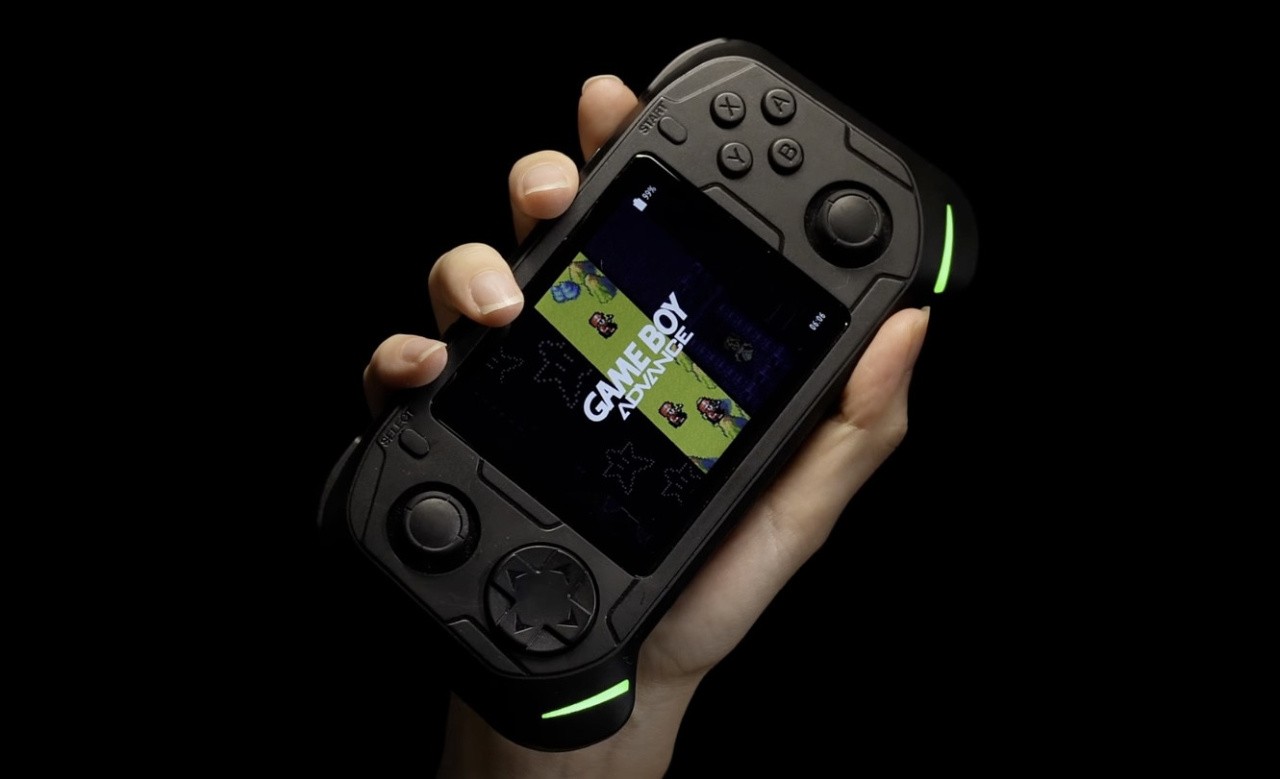
First impressions of the Abxylute E1 ($70 / £52) aren't brilliant, it has to be said. The black plastic casing looks and feels a bit cheap, and while the green LED lighting is eye-catching, it's something I quickly found myself turning off.
However, I've come to learn that, in the emulation handheld space, looks aren't always everything, and the Abxylute E1 is blessed with a comfortable design, decent D-pad and a surprising amount of processing grunt for a device in this price bracket.
The handheld is powered by a Rockchip RK3266 running at 1.8 GHz, which is nothing to write home about. There's a 3.5-inch IPS display with a resolution of 640x480 pixels – again, nothing groundbreaking here (in fact, the display is quite disappointing in terms of brightness, contrast and colour depth).
Twin this with rather wimpy speakers, and the package begins to look even less appealing. It's only saved by the fact that the Abxylute E1 is capable of emulating PS1, N64 and Dreamcast games, with some PSP titles thrown in for good measure. I wouldn't say it handles all of these formats with ease (some of the more demanding 3D titles struggle a little), but it's certainly powerful enough to ensure that games are at least playable.
Also, I really like the D-pad. Sure, it's not really in the optimum position – it's a little too low down, which can result in thumb cramp over prolonged periods – but the 'rolling' design (inspired by Sega's controllers, I'd wager) is fantastic; it's easy to hit diagonals, and fighting games are a joy to play; special moves are easy to pull off. It might be a little too 'mushy' for some people, but I came away pleasantly surprised.
The dual analogue sticks are Switch-style ones, and apparently not Hall Effect sticks – which means they could potentially suffer from drift as time goes on.
Another thing that's unique about the Abxylute E1 is that it offers a dual-boot system – by default, it runs a Linux OS with Emulation Station on top, but you can switch to Android 11 via a special menu.
This might sound like a plus point, but it's important to note that the Abxylute E1 lacks a touchscreen, so actually doing anything in Android is difficult – maddeningly so, in fact, as the entire OS is built around touch. Even something as simple as making your way around a webpage is an exercise in intense frustration.
I also noticed that, when running emulators in Android, performance takes an almighty hit – making me question why it was ever included at all. I suspect it's to streamline the process of actually getting ROMs (which you will have sourced from your own collection, needless to say) onto the device, which, in its default state, is like pulling teeth.
Abxylute offers a 'ClickMe' app that lets you install games on the device from your smartphone, but it's far more complicated than it needs to be – adding more friction to a device that, thanks to the aforementioned lack of touchscreen support, is already a pain to navigate.
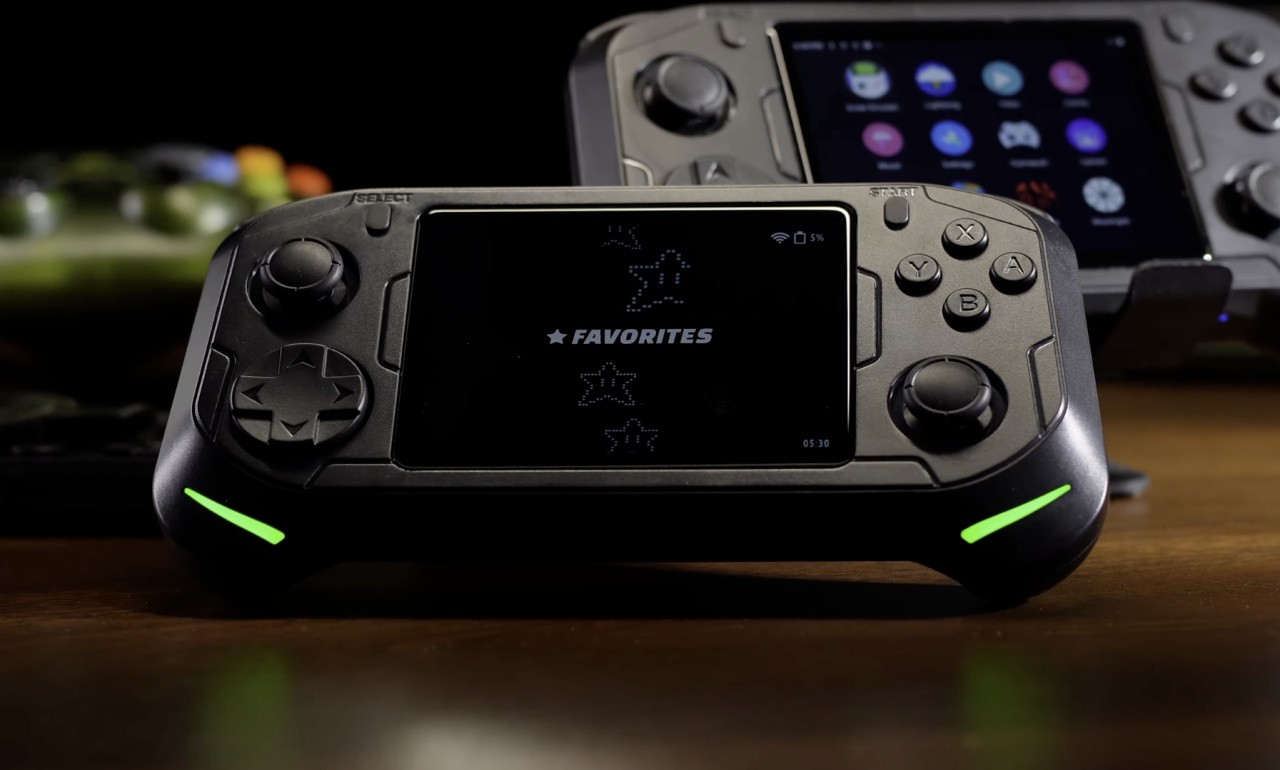
Elsewhere, the Abxylute E1 has two USB-C ports, HDMI-out (a nice touch in a device this cheap, I must say), a 3.5mm headphone socket and a 3500 mAh battery, which delivers around four to five hours of play, depending on what kind of emulation you're getting up to.
Ultimately, the Abxylute E1 feels like a slight disappointment, even at its relatively low price point. Sure, the D-pad is good and performance is better than you might expect, but the decision to include Android is a mistake, and there are other aspects (cheap casing, poor screen, weak sound, awkwardness of installing games) that count against it.
Given that there are better alternatives, even in this price range, the Abxylute E1 is perhaps best left on the shelf – unless LED lighting and a Sega-style D-pad are of the utmost importance to you.
Thanks to Abxylute for supplying the Abxylute E1 used in this review.