
 by
by 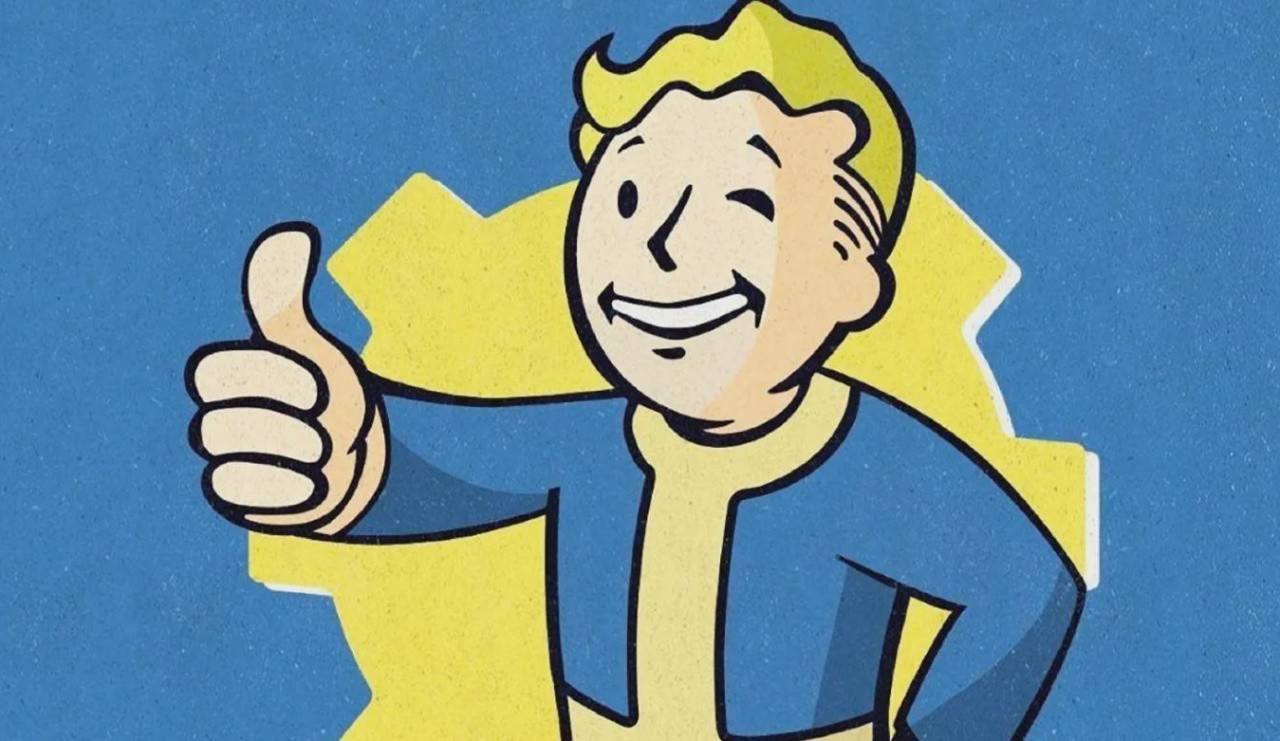
The post-apocalyptic RPG Fallout has a lot of famous iconography, but I'd argue none more so than Vault Boy.
Debuting in the original Fallout in 1997, the blonde-haired, jumpsuit-wearing character has become the series's de facto mascot as it has grown to include sequels, spin-offs, and TV shows, and has also inevitably appeared across mountains of merchandise: from bobbleheads to lunchboxes, board games, and pretty much anything else Bethesda has released since it acquired the franchise almost 20 years ago. It's possible, though, that despite all that, you may still be unclear exactly how the character came to be in the first place, but luckily for you, Fallout creator Tim Cain has a new YouTube video that delves into exactly that.
In the video, entitled The History Of Vault Boy, Cain reminds players that, much like many other features in Fallout, the creation of Vault Boy was a collaborative effort, representing the work of a chain of people, from the person who originally had the idea, to the person who refined the idea into something workable, to the person who implemented the idea, and so on. As a result, he doesn't credit the character's creation to a single individual, but instead goes through the process of how the character was created step-by-step, starting with why it needed to be made in the first place:
"Fallout started as GURPs, the generic universal roleplaying system from Steve Jackson Games. That tabletop role-playing game, and therefore Fallout at the time, had way more skills than it has now, and in addition to skills, there were things called advantages and disadvantages, and quirks.
"For every single one of those characteristics, we had to make an icon […] A 2D artist named Arlene Somers made icons for many of these. I think she made over a hundred […] of these, and it was getting more complex as we discovered things we needed to add […] This was a lot of work, and as we started putting them in, people pointed out that it was hard to keep a 1-on-1. When you saw the icon, it didn’t pop into your head, ‘Oh, that’s stealth. Oh, that’s the anosmia disadvantage."
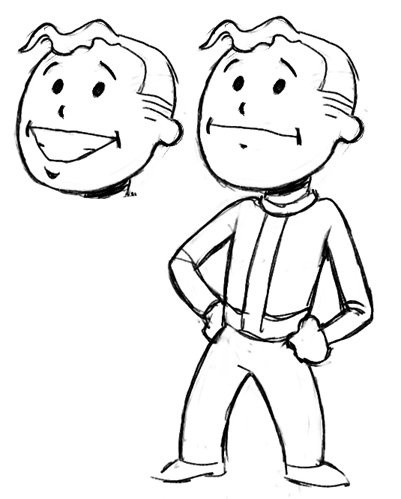
As Cain explains, because these icons weren't clear enough (a side effect of the artist not being able to distinguish them by colour), Leonard Boyarsky, Fallout's art director, suggested it might be helpful to have a cartoon character instead. So, that way, the character could perform the action or the attribute it was meant to represent.
He even referenced the Monopoly mascot "Rich Uncle" Pennybags, and sketched a drawing of what the character could look like:
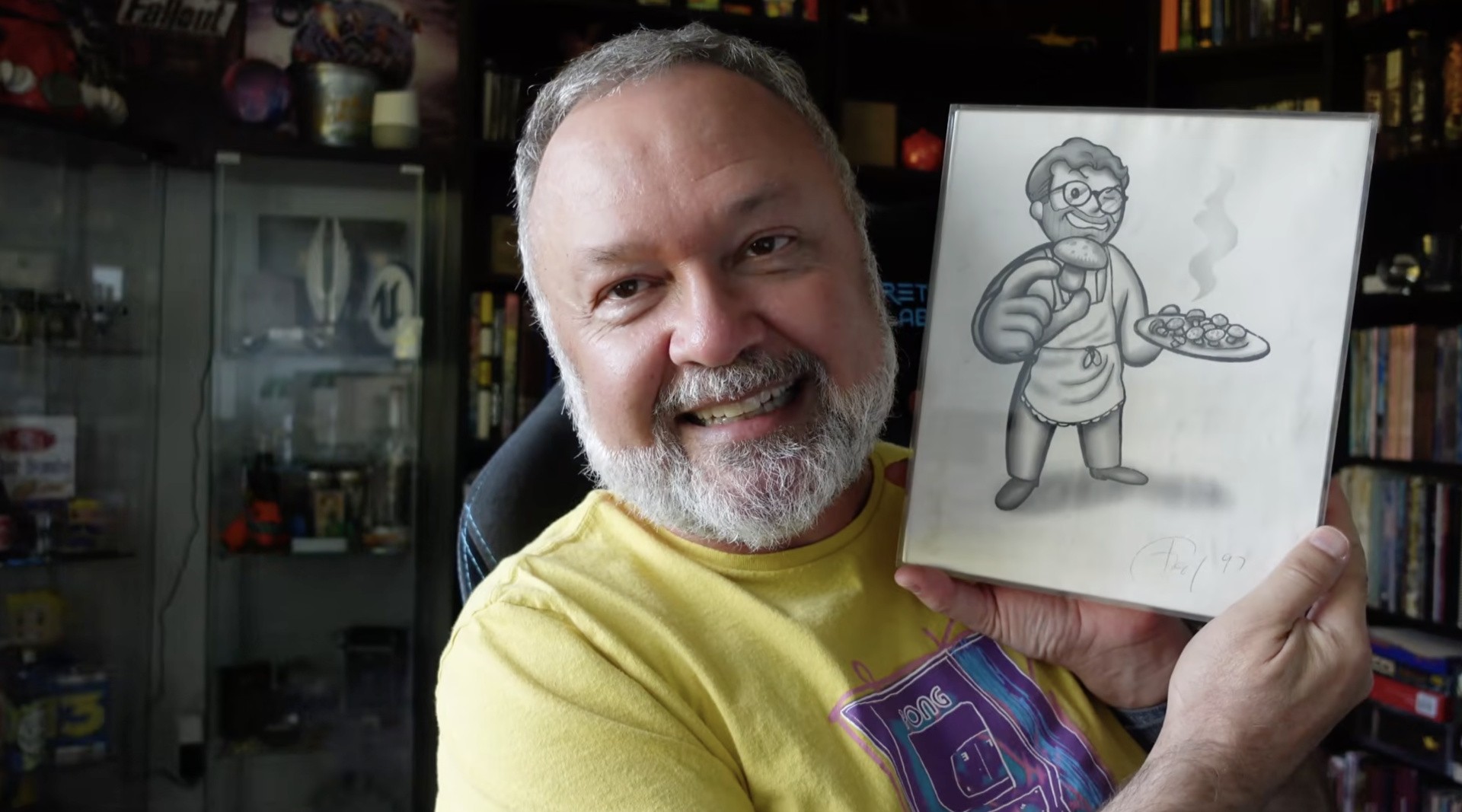
"We all thought that was really cool. We were like, 'That would work,' and from my point of view, who was doing the UI, there was no difference between pulling in an icon and pulling in a cartoon. It was just referencing a different art ID. So, another 3D artist, George Almond, did some iterations on the Vault Boy that Leonard created [...] and then T. Ray Isaac took over, and he started drawing them. And he had drawn a lot of them for all the different attributes and skills and disadvantages and advantages and quirks. And this is when we have to talk about switching to S.P.E.C.I.A.L. Because, among other things Steve Jackson did not like about Fallout was Vault Boy."
If you've played the original Fallout, you'll already know that the game didn't ship with GURPS, but a newly developed system called S.P.E.C.I.A.L., which became a fixture of the series (more on its creation here). According to Cain, this all happened because of disagreements between Interplay, Fallout's original developer, and Steve Jackson Games, who objected to the game's content, not least Vault Boy, who they argued "tonally didn't fit."
Obviously, with the power of hindsight, this is pretty hard to understand. After all, I'd argue there's no better distillation of the series's mix of bleak post-apocalyptic themes and satirical humour than the cheerful mascot juxtaposed against the horrors of the nuclear wasteland, but perhaps other factors were at play. Regardless, the end result is the same: Fallout ditched GURPS, and Vault Boy remained:
"We connected as many of the existing cartoons that T. Ray had drawn to the new stuff we had. So, if there was a stealth in GURPS and we had sneak, we did that. Some of them didn’t match, and T. Ray had a new list of things to draw, and he did. He drew hundreds of these things. […] So that was how Vault Boy was created to solve a problem: icons weren’t linking in people’s heads, got iterated a few times, and then created in literally a batch of a hundred by another artist. Then, for Fallout 2, a new artist took over, Brian Menze, and he drew all the ones you see in Fallout 2 and I think he did Fallout: New Vegas too.
"Which means that, depending on when you got into Fallout, you may be looking at Brian Menze's Vault Boy, or you may be looking at T. Ray Isaac’s Vault Boys. But don’t forget George Almond and Leonard Boyarsky created the whole Vault Boy concept. "
If you're interested, you can watch the full video above. We also recommend checking out Tim Cain's playlist of other Fallout videos for more info on the history of the influential cRPG.