
 by
by 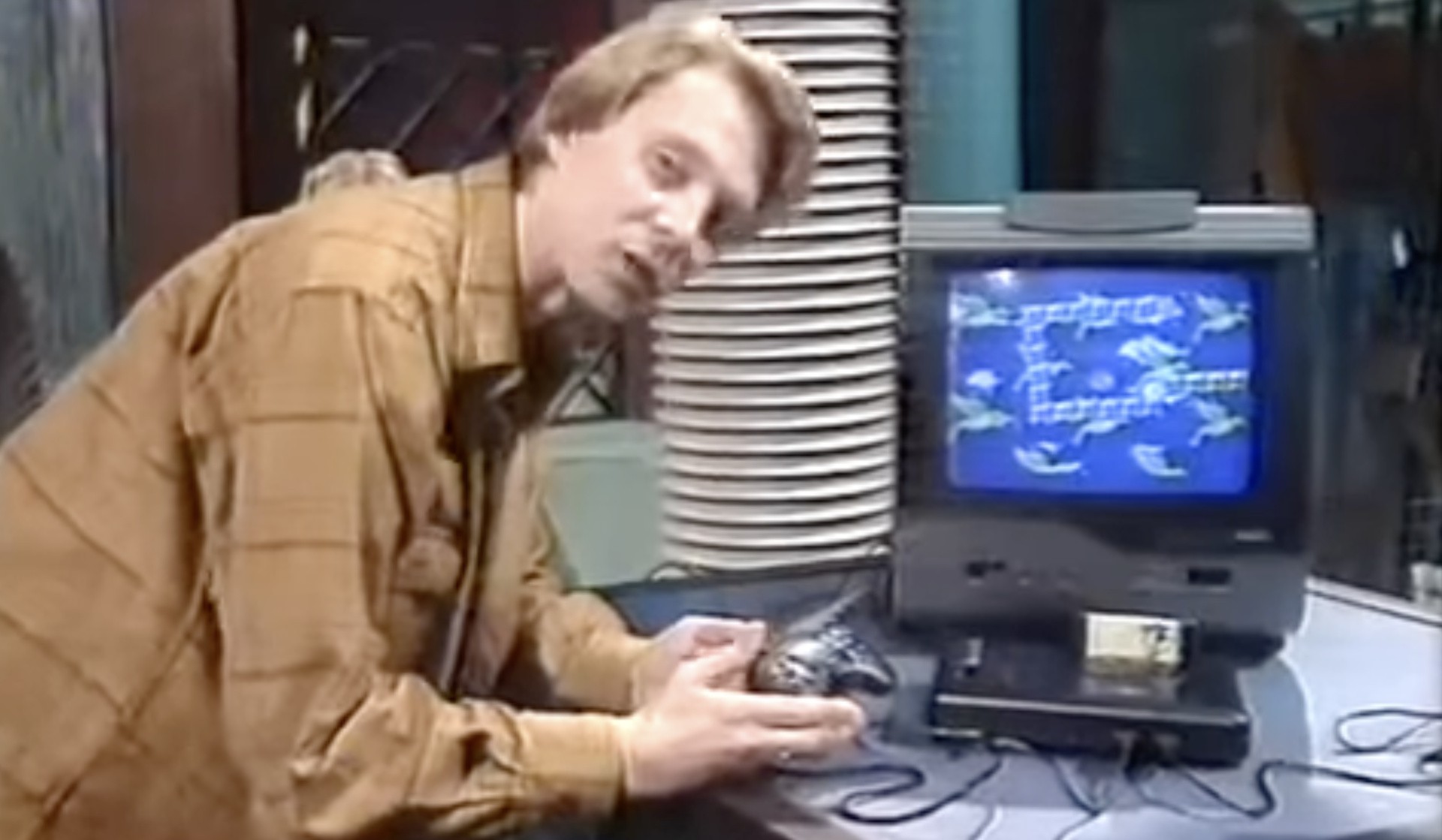
If you were an avid fan of the UK video game show Bad Influence! in the early '90s, it's possible you may have memories of seeing a bizarre Sega Mega Drive clone that was featured on the programme, called the Scorpion XVI.
Released at some point in 1994, the console was famously or infamously (depending on your point of view) featured on Series 3, episode 13 of the CITV programme, which originally aired in December of the same year, with the show's host Andy Crane demonstrating the unofficial hardware to camera as part of its own special segment.
During this preview, Crane described it as being "made by a British company," and highlighted some of its main features.
This included, among other things, the existence of several switches on the side that could be configured differently to let players experience games from anywhere in the world, regardless of region. What was interesting about the Scorpion, though, wasn't just its region-free abilities, but that it also managed to penetrate a large number of legitimate retailers in the UK, cheekily taking a bite out of Sega's business.
Over the past three decades, there have been a few different online discussions and videos about the Scorpion XVI, including a 2021 video from the Nostalgia Nerd. In this video, he covered the history of the device, revealing it to be a rebadged version of the Taiwanese Mega Drive clone, the KW501, and spoke to Bad Influence!'s Violet Berlin and Steve Keen to look into how it ended up on the show. What he couldn't find out, though, was the identity of those behind the British company responsible for distributing the machine, with a name on the instructions included with the console (Gary Smoke) being the only significant lead.
Because of this, there was still a significant part of the Scorpion XVI story that was left untold, with some even speculating in response (completely without merit, we should note) that this could all be part of a money laundering scheme run by UK drug traffickers.
While looking through newspaper archives recently, though, Time Extension was able to find more information on Interactive Enterprises, in the form of an article published on March 13th, 1995 in the Nottingham Evening Post. This revealed that the founders of the company weren't drug traffickers at all, but a husband and wife team named Stephen and Sue Churchill who had moved to the UK from South Africa.
According to the news story, written by the Evening Post's business reporter Richard Tressider, the Churchills had operated a video games and consoles business in South Africa, but decided to quit the country after Stephen was reportedly held up at gunpoint by "a gang of thugs" in Johannesburg.
So, in response, the pair moved to Cotgrave, a Nottinghamshire mining village in the UK, where they quickly set up a new business, assembling, packing, and distributing computer game hardware (the company also seems to have released a cheesy-looking Famiclone called the Scorpion 8, and also teased Game Boy and SNES clones) to its "450 retail customers."
"We are aiming to give the independent retailers back an edge against the major chains," Sue told the Evening Post's reporter, but Sega ultimately didn't see it that way. As stated in the article, Sega reported the company to the Trading Standards Authority, believing it was selling counterfeit goods, which led to a raid on the 2000 sq ft warehouse in Cotgrave where they operated from. Their entire stock was taken, but then quickly returned after the Trading Standards Officers decided the products were not counterfeit, but simply "compatible" with Sega and Nintendo products.
“We are proving that compatibility is an acceptable form of trading,” Stephen told the Evening Post back in 1995 in response to this raid, before teasing a move into “new areas like arcade consoles.”
Following that, however, the trail goes cold, with our own search pulling very little info that says what exactly happened to the company.