
 by
by 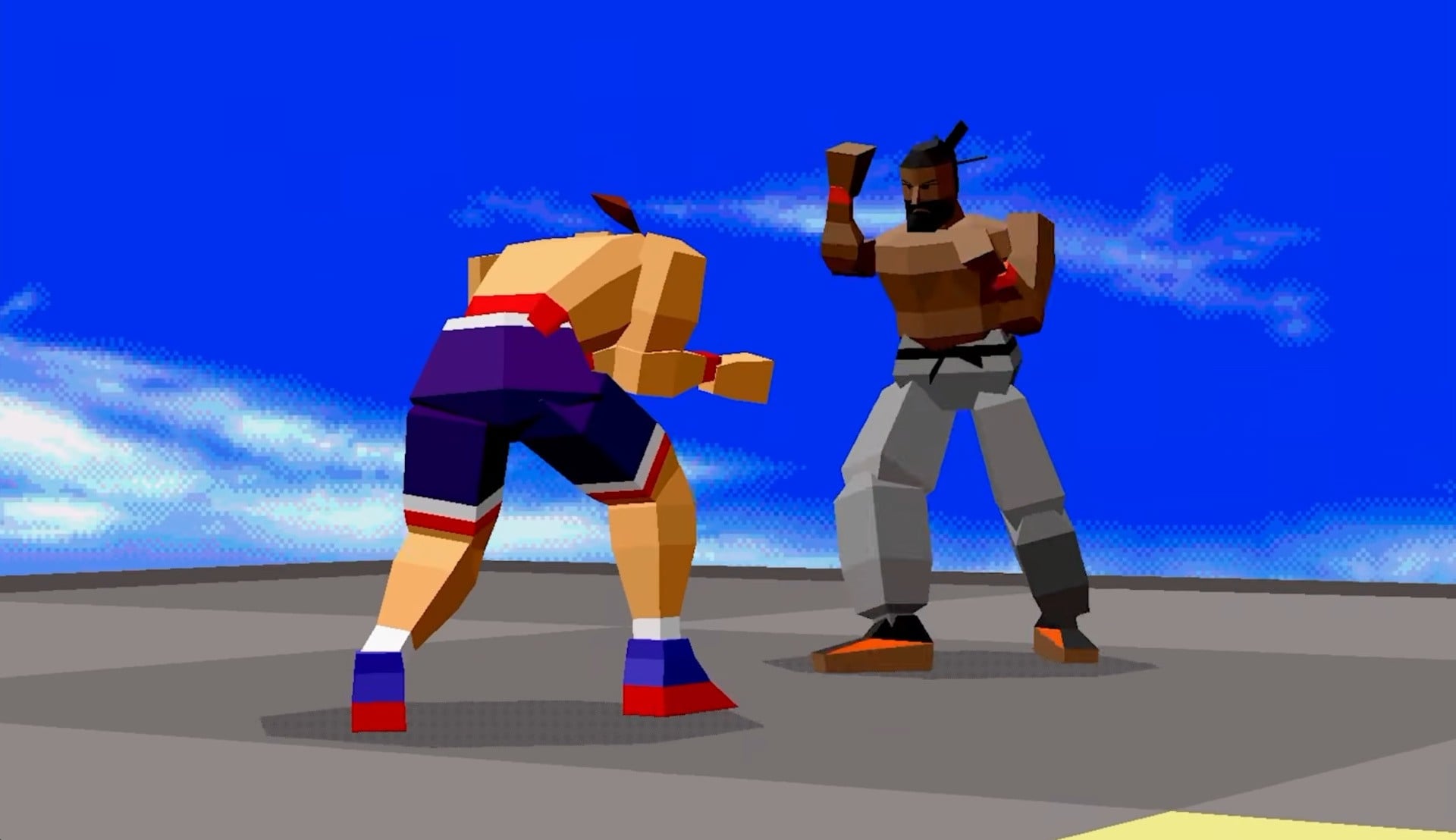
When Virtua Fighter smashed its way onto the arcade scene in 1993, it caused a helluva ruckus. Sega's one-on-one fighter launched slap-bang in the middle of the fighting game explosion, with titles such as Street Fighter, Mortal Kombat, and Fatal Fury already gobbling up the quarters in arcade centres while riding high on the home release charts. It was an unenviable market to enter, especially when playing catch-up.
Of course, Virtua Fighter had an ace up its sleeve, courtesy of Sega's groundbreaking Model 1 technology, which allowed for the high-speed rendering of huge 3D polygonal models. This gave Virtua Fighter a striking aesthetic edge over its competition, and while Yu Suzuki's highly polished scrapper didn't exactly wipe the floor with its arcade competitors, it certainly cemented itself as an exciting alternative to its 2D brethren. Today, Virtua Fighter is widely recognised as the first 3D fighter, a groundbreaking release that would pave the way for franchises such as Tekken, Soulcalibur, and... umm... Ballz 3D.
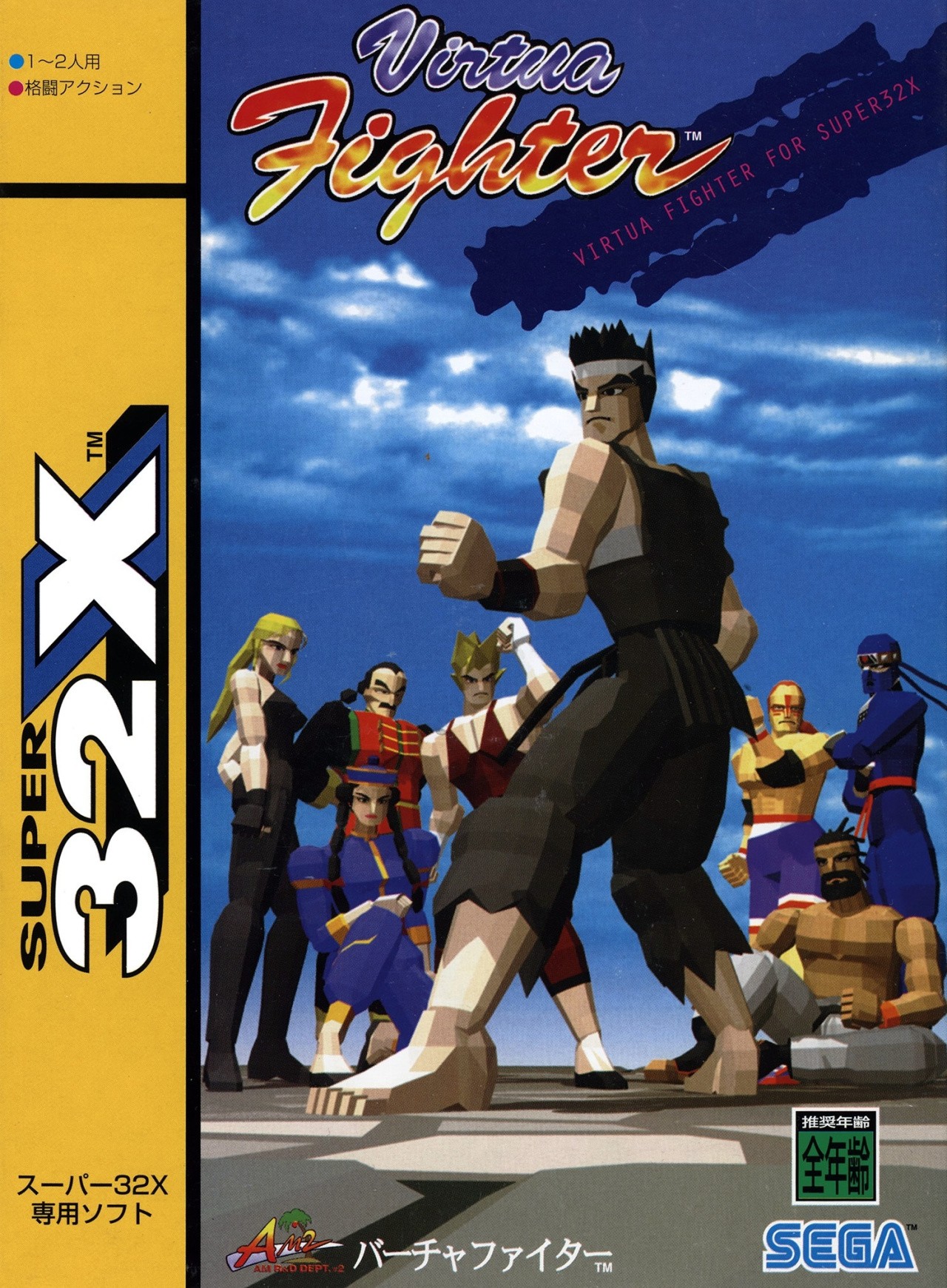
When it came to home ports, however, Virtua Fighter was at a distinct disadvantage to its contemporaries. While 16-bit platforms could authentically replicate offerings such as Street Fighter II with ease, Virtua Fighter was a specialised release, requiring powerful, expensive technology beyond the reach of the Mega Drive.
In late 1994, with the release of the 32-bit Sega Saturn and the 32X Mega Drive expansion, Virtua Fighter would finally make its way into the home market - albeit in downgraded form. The Saturn hardware allowed for a comparable, not quite arcade-perfect replication of the original, delivering a solid port that (due to the lengthy localisation of the Saturn itself) was looking dated in the wake of PlayStation's Battle Arena Toshinden, which had released in the U.S. in early 1995.
But while the Sega Saturn port was an impressive feat, the 32X release was nothing short of a miracle. Sporting fast-paced gameplay, smooth animation, cartridge-speed load times, and ambitious efforts in replicating the CD-quality sound and music of its Saturn compatriot, the 32X port of Virtua Fighter showcases the much-maligned hardware's true potential when handled by developers who understood its notoriously impregnable coding structure.
Which brings us to 2026 and fan modder SEGA MODEL KING (aka "WangDrum"). Having already produced a faithful emulation of Virtua Fighter's original Model 1 release, WangDrum has turned their attention to the 32X edition - looking to remaster the Tower of Power's finest fighter in a new PC port featuring a crisp HD aesthetic.
The first goal was upscaling the original 320x224 resolution, which in itself was a fairly momentous undertaking.
"The 32X VF codebase itself locks vertex positions to a 320x224 pixel grid during final rendering... Simply upscaling the display output meant the vertices remained trapped within that 320x224 grid, restricting their minimum movements.
To bypass this, I intercepted the camera-space floating-point vertices, matrices, bones, and camera data during the SH-2 interpreter's vertex/part transformation phase. I then reconstructed the coordinate space and re-rendered the 3D geometry extracted from the ROM using a custom-built renderer operating in pure floating-point space, free from the pixel grid.
The video you're looking at was rendered using this engine - the Mega Drive handles the 2D elements, while the custom renderer handles the 3D."
In addition, WangDrum wrote new interpolation code, allowing the frames to render at 60FPS, rather than the original Virtua Fighter's 30. While this latter tweak definitely feels a little uncanny to Virtua Fighter purists, the crisp new resolution really brings out the impressive model work performed by the 32X team back in the '90s.
The upscale also reveals a fascinating shortcut, wherein the character models were rendered with basic, simplified faces for gameplay, but had their features fully restored for the win poses, where the 32X hardware could focus its rendering power entirely on a single character. Remarkable work.
WangDrum is already receiving praise online for their hard work, with many fans prodding and poking as to whether they'd consider remaster projects on other 32X releases, such as Star Wars Arcade and Virtua Racing Deluxe. For now, however, WangDrum is clearly focused on the world of Virtua Fighter, shining the spotlight on one of the groundbreaking series' most obscure ports, but also one of its most remarkable.