
 by
by 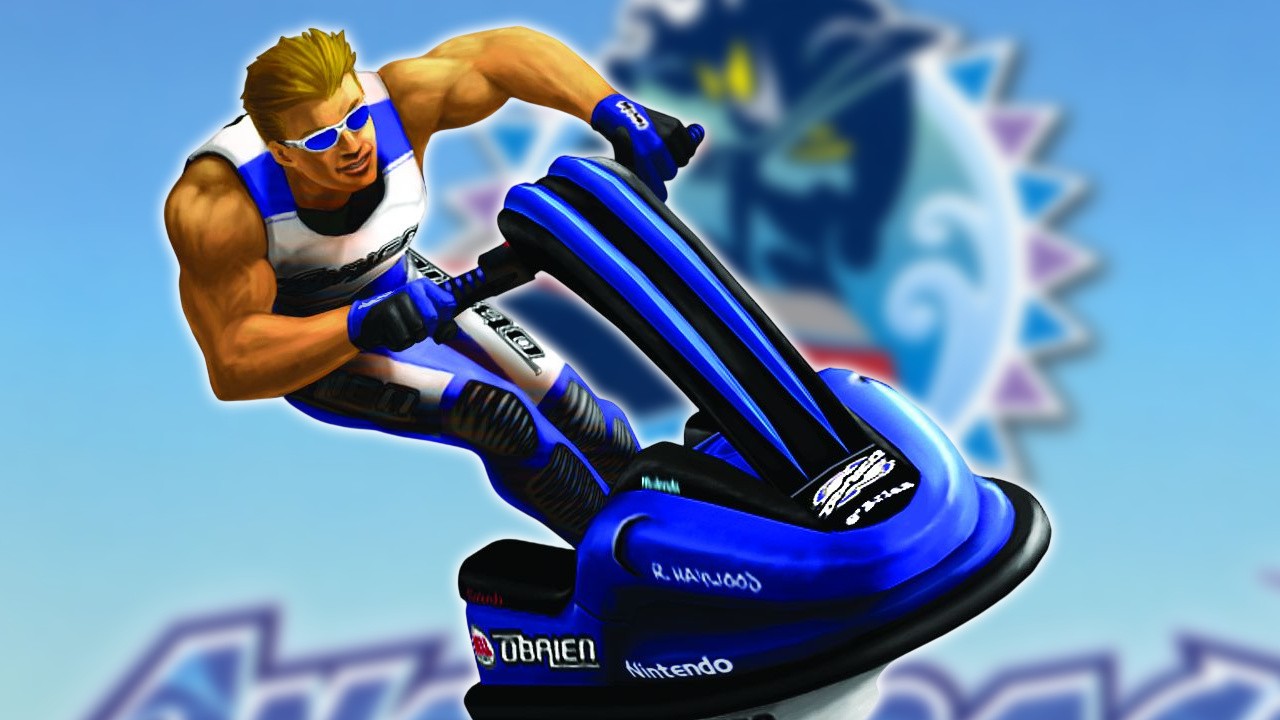
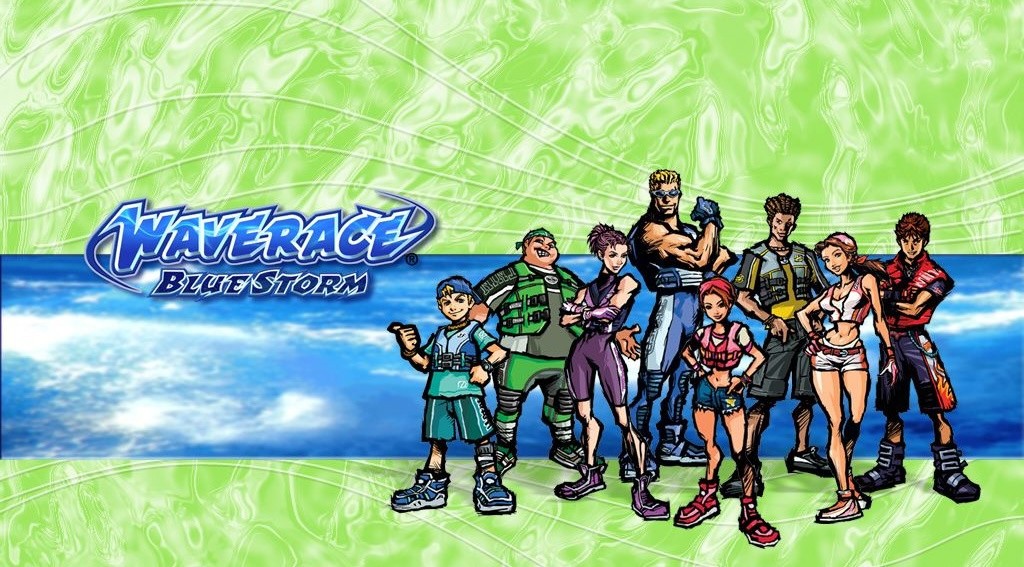
This week marks the 25th anniversary of the Nintendo GameCube's original release in Japan, which also means Wave Race: Blue Storm is turning 25.
The third in Nintendo's series of jet-ski racing games (which originated all the way back in 1992 with Nintendo EAD and Pax Softnica's Wave Race for the Nintendo Game Boy), Wave Race: Blue Storm may garner something of a mixed reception online today, but received mostly positive reviews upon its launch in the early 2000s.
Serving as an early demonstration of what the GameCube was capable of, the majority of critics praised the Nintendo Software Technology-developed title for its tight controls and impressive weather effects, with some, like GameSpot, dubbing it "the most accurate video game representation of water-based racing ever to be released."
Recently, as you may have seen, I spoke with Ken Christiansen, a former Nintendo Software Technology and Disney Interactive artist, about a broad range of subjects; this included his work on Wave Race: Blue Storm. Christiansen is credited on Wave Race: Blue Storm under the fairly ambiguous section labelled "Additional Work," but as his online portfolio reveals, he was actually one of the original artists responsible for designing the characters, but left in the year 2000 to pursue a career at Disney Interactive instead.
According to him, it was one of the most difficult projects he worked on at Nintendo, with there being a clear divide between what the character designs he and his fellow concept artist Adi Granov (who was later responsible for designing the Iron Man suit for the Marvel films) were submitting, and what NCL (Nintendo Co. Ltd.) in Japan were after.
"When designing something, you want to find a point of reference," said Christiansen. "And this game was a two-parter, right? It's a character and their jet ski. But we needed to define one or the other, and we could only do so much with the jet ski. So, the personality and flair of the character had to come from the avatar, and so that's what we were focused on. We thought, once we were able to nail that, then we could extrapolate the whole style of the game, but we couldn't even get that far on it."
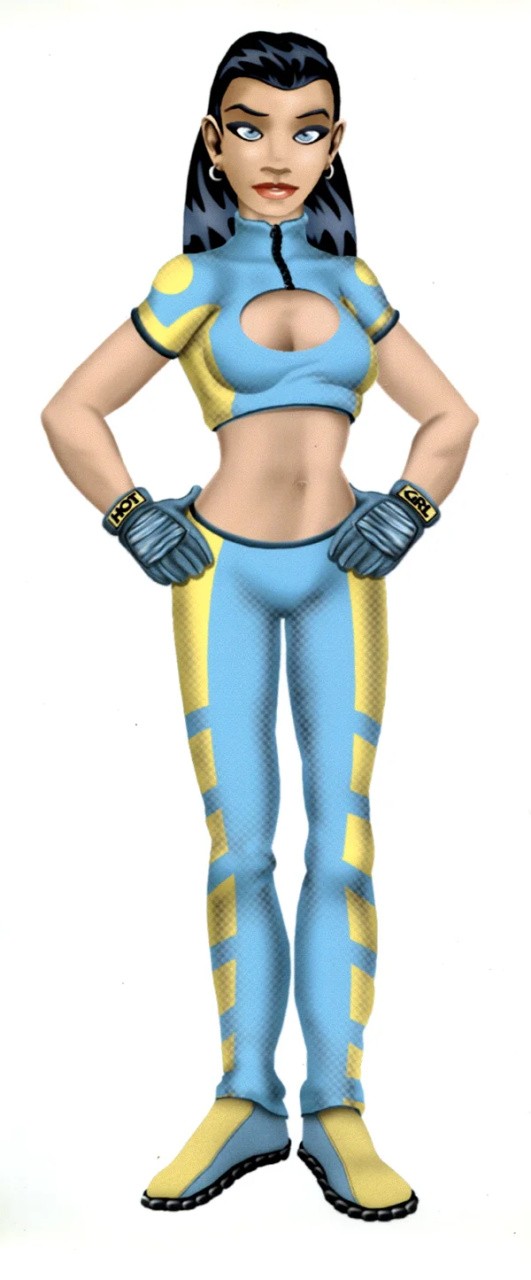
"[The problem was] we had to go through an approval process with Japan," Christiansen told me. "And they denied everything. Every style we did, every final art, whether it was a painted character or a sketch. Finally, I go to Adi, 'Hey, let's just go down to Chinatown, get some manga books, and let's just trace artwork out of there, put them in wetsuits, and see if we can do anything with that. We sent those in, and they're like, 'Oh, that's like 10 years too old.' And we were just like, 'I don't know what to do anymore.' They weren't giving us what they wanted, because it didn't seem like they really wanted us to do anything at all. And I got so frustrated with the whole thing, I started looking for other work."
Inevitably, I was curious if Christiansen recognised anything he designed in the finished game, to which he said, "I did a lot of work on it, but I don't think anything that I contributed to Wave Race actually made it into the game."
He even expressed shock that he had a credit on the game, stating that this was down to the support of one of his former colleagues: "My art director made sure that I got credit on it, though, which was a shock to me because usually if you leave a company before the game ships, you're dead; they don't care, you're out."
I asked around to see if I could find out who did create the final designs for the characters, and was told by an anonymous source that it was a collaborative process, which Christiansen and Granov were involved in, alongside other concept artists. As I was told, Yusuke Nakano then took the production art, including the models, and created polished 2D images to be used for the game, hence his credit for "Character Illustration".
Unfortunately, Christiansen's portfolio only includes one image to represent all the work he ended up putting into the project, with the artist stating that because of Nintendo's strict security measures at the time, he was only allowed to use a 1MB floppy disk to transfer data, as opposed to installing a Zip Drive or a Jaz Drive: "Everything else I did [for Wave Race] stayed at Nintendo. I couldn't get much out of there." He does, however, have some materials from Ridge Racer 64 (another game Nintendo Software Technology worked on), on his site, alongside the work he did on Lode Runner 3D, Crystalis, and Bionic Commando: Elite Forces.
Reflecting on Wave Race today, he does note the experience wasn't an entirely negative one, with the artist having some fond memories of watching the developers prototype the levels with LEGO early on.
"We had a big room for the concept art room," said Christiansen. "And it was just two of us — me and Adi. We were in opposite corners, and we had this big table in the middle of the room with a bunch of LEGO and ground sheets, so you could build stuff.
"There was one designer I remember, and he would be designing the courses with LEGO and then kind of like dropping down and seeing eye level and seeing what you see at this angle. For Ridge Racer 64, Nintendo Software Technology built a track generator so you could push and pull corners and curves, then test and fix things. But they hadn't done that for Wave Race yet, so he didn't want to wait to do that because he was a really hands-on kind of guy. He didn't really come from computer design and stuff.
"He was just building a little miniature kind of thing and just plugging in LEGO and then making them all kind of work out. So that was kind of cool."