
 by
by 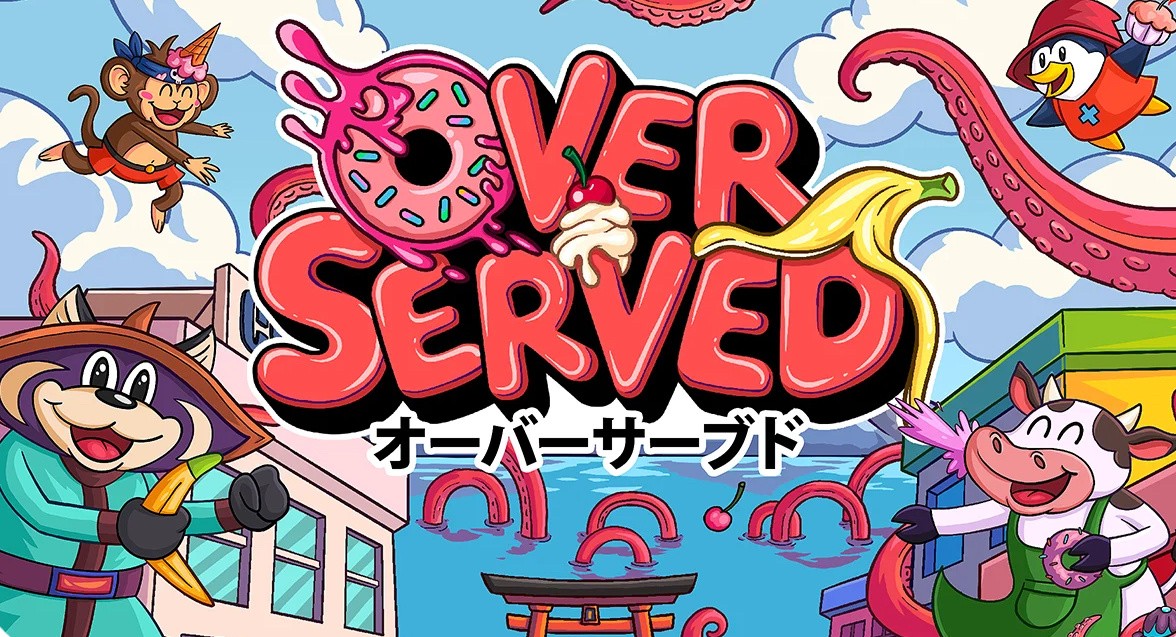
Overserved: Food Fighters is undoubtedly one of the more curious Neo Geo titles in recent memory.
Though on the surface it may look like a fairly straightforward party game inspired by titles like Saturn Bomberman, behind the scenes, it is shaping up to be one of the more ambitious homebrews we've seen, promising online/offline 8-person multiplayer, and crossplay with a long list of modern and retro platforms (including the Sega Saturn, Sega Dreamcast, Nintendo Switch, PlayStation, Xbox, PC, Mac, Linux, iOS, tvOS, and Android).
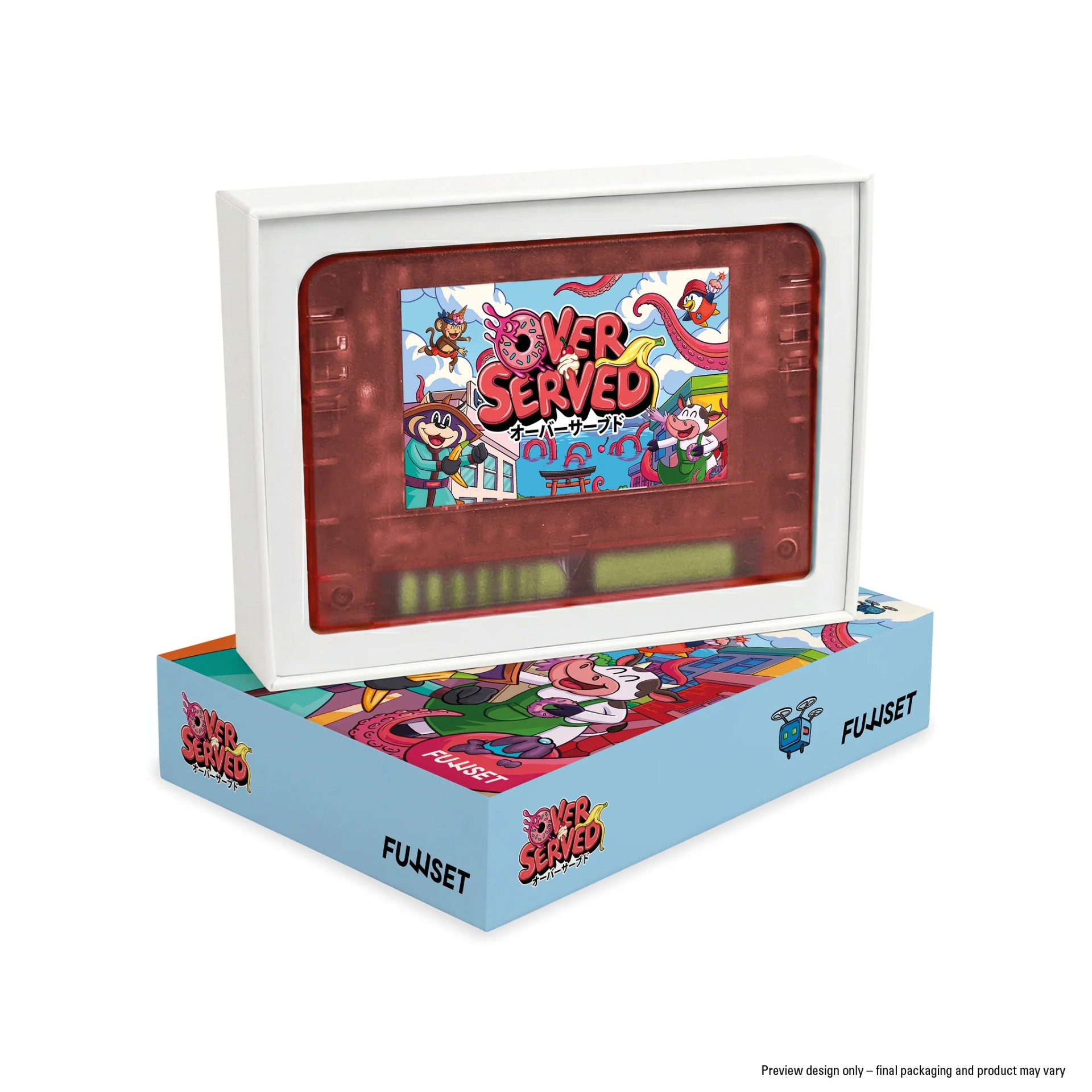
This is something its developer, FULLSET, reasons will be achieved via a set of custom Wi-Fi-equipped cartridges for Neo Geo and Sega Saturn called the FSNG-1 and FSST-1, as well as a new Neo Geo multitap, which will allow people to connect 8 controllers to both the Neo Geo AES and MVS.
Initially teased back in February of 2025, Overserved was officially made available for pre-order earlier this month across a range of platforms, alongside Sega Dreamcast and Sega Saturn versions of its developer FULLSET's previous game, the shoot 'em up Project Neon.
As a result, we decided to sit down with the project lead, Sascha Reuter, to talk about his journey to making Neo Geo games, the exciting tech powering this latest project, and some of the ideas the team is currently investigating for the future. To find out about all this, and more, you can read our recent conversation with Reuter below, edited for clarity and length:
Time Extension: How does your history with Neo Geo start?
Reuter: I came to the Neo Geo later than most. I'm an '80s kid. So I was born during the right time, but where I was living in Germany, we didn't really have arcades.
The first arcade machine I ever saw was a Wonder Boy machine at the public swimming pool, which I was obviously super fascinated by. Then there were just the really big ones that popped up now and then, like Sega Rally at the gas station. So there were not a lot of arcades around, at least none that I really had access to. I had a Sega Mega Drive and a Super Nintendo, but the Neo Geo AES was just something a friend of a friend of a friend had. Or this one guy's uncle who was living on a US military base in Germany somewhere, right? I saw some coverage of it, but I didn't really have access to it. So, it was only when I started getting back into gaming as an adult that things started to change.
Time Extension: Your first Neo Geo game was Project Neon? Could you talk us through how that started? Is it true that it started on Pico-8?
Reuter: Yeah, so I was doing startups for quite a while, and then I think in 2016-17, I took a little bit more time to go back to my hobbies, and like gaming was a big one.
Before that, I had previously tinkered around, trying to build games on the Amiga 500. But it wasn't until 2019 that I really began work on what would become my first project: a version of Project Neon for the Pico-8.
Basically, I just wanted to get started right, and Pico-8 is pretty amazing for that, because it has a lot of constraints. It gives you all the tools and lets you focus on finishing the game instead of picking up Unity or Unreal, where you will just become overwhelmed by all the things that you can do, right? Or you will spend the next five years just tuning your shaders, right? So, I did that, and from there, I was like, 'Cool, how do I get that on my Game Boy?' And, obviously, you can't just take that and run it on a Game Boy. So I decided to learn more about programming in C.
I picked up GBDK and then basically ported the game I had on Pico-8 to the Game Boy. I then took that to a local demo scene event, joined the competition there, and it went quite well. So I had started to understand how it all worked, I had some background knowledge, and basically I was like, 'Okay, how do I get this now onto like one of my favorite systems? Or ideally like an arcade system?'
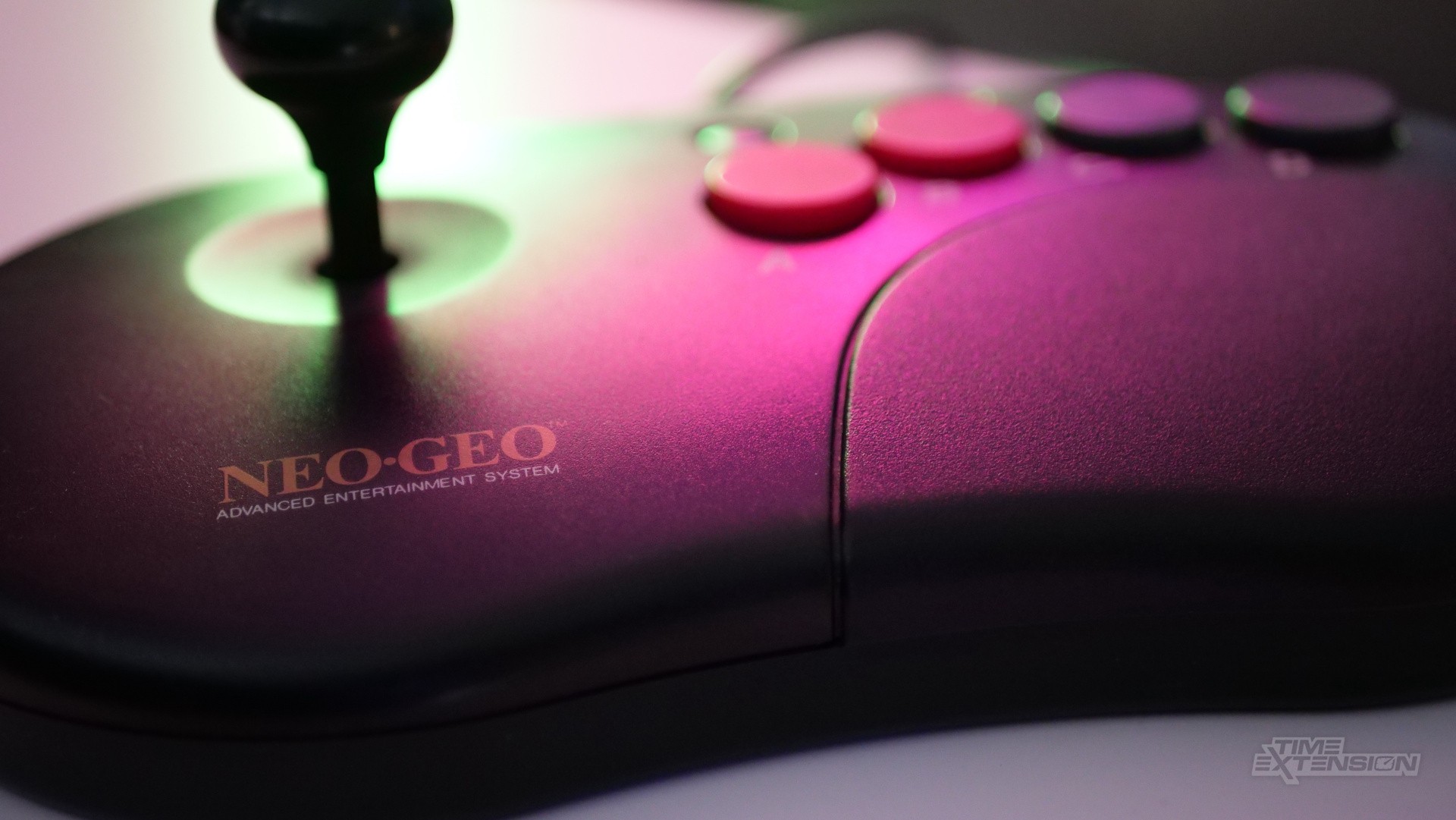
I have a lot of arcade systems, but I was like, 'Okay, what's my favorite one?' and 'Which seems to be the one that is most feasible?' I could potentially do a game for the CPS-2, but it's not as well-documented, and building these big CPS-2 B boards would be a little bit much. So that naturally led me to the Neo Geo.
There are actually some old videos I had on YouTube, or still have, where you can see me just tinkering with what looks like a Game Boy Color game on a Neo Geo. And yeah, that's when I was like, 'Okay, let's see how that all works,' and figuring out, 'How do I find somebody that I can collaborate with on the soundtrack?' Eventually, I found Freezedream, who also worked on Tanglewood before that, and he's local; he's also in Australia. And then I found my first and second pixel artists, who helped me with the project's artwork.
So, I started Project Neon all the way back in 2019, and eventually, we shipped the game on Neo Geo in 2024. The reason it took so long was that I was quite time-constrained due to work. But now, in 2026, I've stopped everything, because I'm like, 'No, I don't want to do that stuff anymore. At least not right now. It's too stressful, and it's not like really where my heart is." So, I'm now all in on making games.
Time Extension: That brings us nicely to Overserved - Food Fighters, your latest game. What was the inspiration for picking Overserved as your next Neo Geo project?
Reuter: I think the main reason why we wanted to do Overserved was my desire to have like a new version or a successor to Saturn Bomberman. So the general idea behind it is that it's a food fight. So I wanted to make something not just accessible in that it runs on as many platforms as possible, but also in that it would be something that a family might want to play. Because it has cute characters and nobody is being hurt, right? So that's how the general concept came around.
For instance, in the game, we don't call the items that you pick up and throw "weapons"; we call them "treats". And how we come up with ideas for those is: I usually just do the first 8-10 ideas myself and put them out there, and then some of our team members, like our pixel artist Sonreir or one of our designers, Impbox, come and look at them and offer their own suggestions.
Time Extension: From what you've told us, Overserved will use a custom cartridge for the Neo Geo called the FSNG-1. How did that initially come about? Did that originate from your previous game, Project Neon?
Reuter: So basically, when I did Project Neon, I had to decide on how to do the manufacturing, and nothing was really feeling right to me. So I was like, it seems we need to build this ourselves, which then opened up a bunch of cool possibilities. So, maybe we can add an MCU [Microcontroller Unit] and make them upgradable. That then spiralled into, 'Well, if we have an ESP32, then we can do like Wi-Fi updates, and we can do online high scores, which we don't have yet in Project Neon, but totally could.
Anyway, while I was thinking about all of this, the programmer Furrtek reached out, or I reached out to him, and he was like, 'Hey, what are you doing for your cartridges?' And, long story short, I ended up working with Furrtek to design our cartridge, and we kept pushing things further and further. So, now the cartridges have Wi-Fi support for updates, online play, high scores, and local saving of your settings. It even has Bluetooth. We haven't enabled that yet, but in theory, you can pair extra controllers via Bluetooth as well, which is especially useful for Overserved when you want to play with eight players on your Neo Geo. Obviously, though, if you don't want to use Bluetooth, we also have this Neo Geo multi-tap we collaborated on.
Time Extension: I was going to ask you about the multitap. Was that something that you were hoping to do from the beginning? Or something you realised you wanted later on?
Reuter: The idea kind of just felt natural, because we were inspired by Saturn Bomberman. All the Bomberman versions, even back on the Super Nintendo, used the multitap to have more players. Again, how that happened is I think Furrtek pinged me, or I pinged him, and he said, 'I know how to do that. Why don't we want to do it?' He had wanted to do this multitap before, I believe. But there was always a very limited market for it in the past because there was only really one Neo Geo game, Kizuna Encounter, that could actually support it, or homebrews like Neotris, which already used their own custom two-cable multitap for four players. With our multitap, though, it's basically just one cable.
So, in the case of our game, it can detect, 'Okay, do I need to run the two cable way? Or do I run in the mode that we use?' That's where it just needs the first cable plugged in, so you can plug in another one and have eight players.
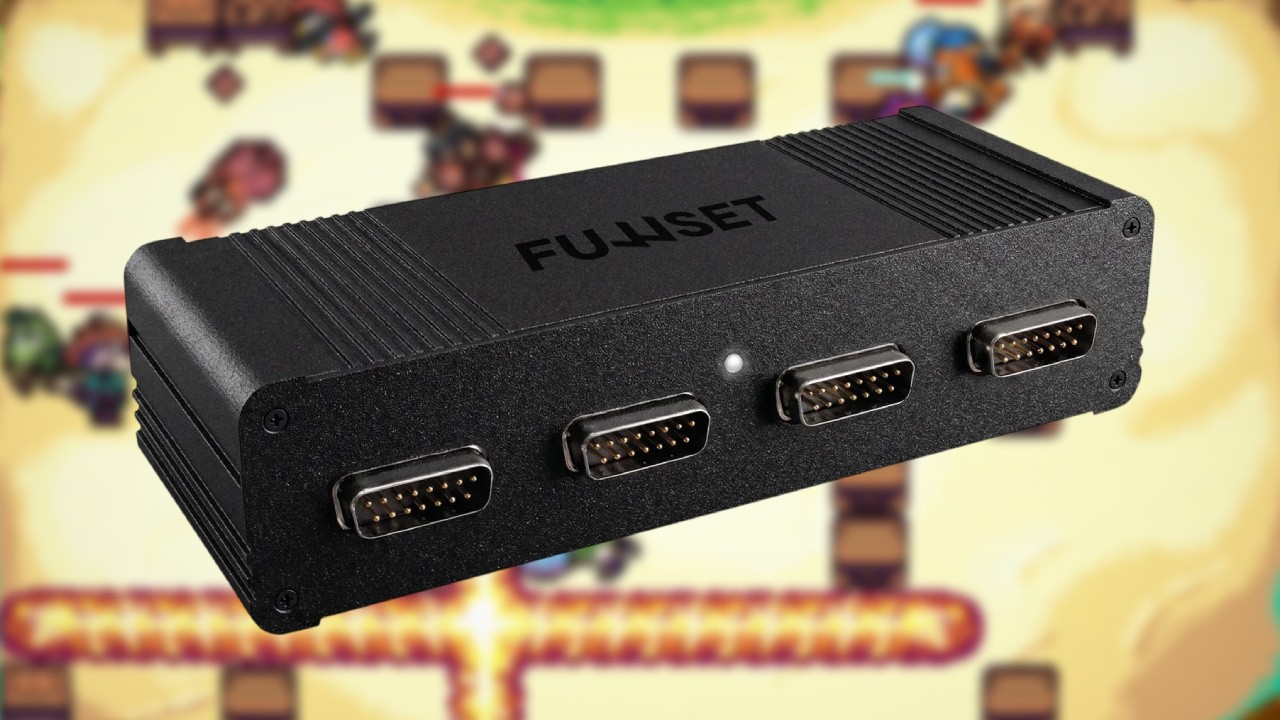
You can also theoretically mix and match, too, right? So, you can have just one multi-tap and have some people join in via Bluetooth, which again, is totally possible, but that is one of the few things that I can't say is actually done and tested yet, even though all the bits for it are technically in place. Or you can have people join from the internet, or even their own local server.
Also, one other thing that I should probably mention before I forget it, which makes the multitap even more interesting, is that you will be able to connect it via USB-C to your PC, and you can actually use it as a Neo Geo to USB adapter, basically, with four ports. That's not implemented right now, but Furrtek is working on it and is already 100% sure it's possible.
Time Extension: In addition to the Neo Geo version, Overserved is also coming to the Sega Saturn, as is Project Neon. You've mentioned before that the Saturn versions of these games will use their own special cartridge, which is being built in collaboration with another programmer, Professor Abrasive. Could you give us some details about that?
Reuter: Yeah, so Professor Abrasive is the guy who cracked the copy protection of the Sega Saturn. He's the guy who did the Satiator, which goes into the back of the Sega Saturn, and was technically the first ODE.
When I saw that back then, I jumped on his Patreon and wrote, 'Take all the funding you need, this is amazing.' And that's how we basically connected. And it's funny, through contacting him, I also found out he's Australian, too. So, right now, he's working on the Saturn cartridge, which we are calling the FSST-1, and it basically piggybacks on the FSNG-1. So it's sharing a lot of the same platform features, I would say: from over-the-air updates to Bluetooth controllers and the Wi-Fi stuff. The only thing that's different is the system specifics. So, the edge connector and whatever else we need to do there, and we can also add some additional twists.
I think I hinted at this a bit in one of the emails I sent you when I mentioned interrupts, but people seem to have already figured it out. They already asked, 'If they can do that, can we also have this?' So basically, the idea is that you can play the games — Overserved or Project Neon's Sega Saturn version — but what if you could just press a button on your gamepad while you turn on your Sega Saturn, and your cartridge will become an extension cartridge instead, like a Netlink, so you can use it to play the Sega Saturn online.
Right now, you can take the Saturn online with a Netlink cartridge, the DreamPi, a lot of cables, and a USB modem. So what we're looking into is — so you again get more bang for your buck — is using those cartridges as a wireless netlink device. That's not confirmed, but it's theoretically possible. We've designed the cartridge or the PCB, but we just haven't gotten around to implementing it yet.
Time Extension: For Overserved specifically, I think one of the things that has shocked people most is not only are you planning to bring the game to Neo Geo and the Sega Saturn via cartridge, but you are also planning to release it on a bunch of other platforms (Sega Dreamcast, Nintendo Switch, PlayStation, Xbox, Windows, Mac, Linux, iOS, tvOS, Android), with crossplay. How easy has it been to ensure the experience is consistent across all these versions?
Reuter: So, all the platforms we mentioned, we already have the games running, including the networking stuff between them. So all the risky stuff basically is ticked. I can pick up my Steam Deck, or I can pick up a controller for one of the current consoles and make it work so I can play. The Sega Saturn and the Sega Dreamcast versions are both working, too. But obviously, there is a long list of smaller things we still need to fix around system-specific issues.
The reason we've been able to be so quick is that, for everything, so like the networking, storage, save states, trophies, we basically just have a general abstraction layer, and then we just need to see, 'Okay, what's the platform-specific work that we need to do there?" So, basically, we have this SDK for Neo Geo from Neobitz, and datlib from HPman on top of that, and we thought, 'What if we don't change any of our game code and just like do like a shim layer and basically build an adapter that takes all the calls that we do, and does all the system-specific stuff for whatever platform we're targeting in the background?'
So we basically build our engine so that you define how or what is being drawn or played, and we can just plug that in with a system-specific implementation. SDL is the big catch-all we use for modern consoles and Windows, Linux, macOS, and mobile versions. But we have this abstraction that's not one-to-one tied to SDL. So instead, we can say for the Dreamcast, 'Let's just wire it up to something else, like the KallistiOS or PowerVR APIs.' So I actually started with SDL on Dreamcast, and it was way too slow. Then I did it directly with the raw PowerVR APIs, and after a few hours, I was already at a stable 60 FPS. Doing things this way gives us a lot of flexibility in how we build our engine.
Time Extension: One concern we've seen is crossplay and whether certain platform holders will allow you to proceed with your plans. Do you foresee any problems with modern platform holders like PlayStation, Nintendo, or Xbox?
Reuter: We don't anticipate problems from any of the platforms. Our starting point is not to allow any user-generated content and to use the platform-required/provided means to sanitize usernames across platforms. But if the community has any concerns, we'd love to hear them and address them head-on. As an example, the Saturn community was a bit nervous about our use of JoEngine for the Saturn version (as it uses a Sega-proprietary graphics library), so I "simply" used the weekend to switch to a fully open-source alternative (libyaul).
Time Extension: Just a final question, you've said that it's going to be tested at some upcoming events. I'm wondering, have you done any testing with it before then? Or is this the first time that it's going to be shown off?
Reuter: Oh yeah, if you look at our X feed, you can see we were at a local event called Beer and Pixels, in Sydney. We brought it there and played it on the Neo Geo, but then decided to switch to Project Neon because we had the CRT, and I wanted to turn it on its side to show off the Tate mode. So, Overserved, we actually then just ran off the laptop, and the feedback was great.
People seemed to really enjoy it, so we didn't have any trouble attracting players, especially Bomberman fans. We even had a lot of people stick around for dozens of games at a time, so that was really great to see. I would say that was more of an ad hoc, spontaneous meeting we participated in, though. The three big tests are still coming up.
We will be at Too Many Games in June, where we'll have an arcade. We're going to have a CRT and a big TV there, and just to demonstrate online play a little bit more. Then, in August, we'll be at Gamescom in the Indie Arena, running a few tournaments. At Gamescom, we will likely just plug in a Steam Deck or whatever it is in the background and have people piggyback on the network nature. But for the Too Many Games event, we plan to really show off the cross-play between the systems, except for the current-gen stuff, for obvious reasons.
Then, finally, there's going to be like an event at 1UP in September/October, which is the biggest arcade here in Australia, in Brisbane, which will be more like a release party, ahead of the actual launch. So we have a lot of great stuff planned.