
 by
by 
Before the internet became widespread, if you were stuck on a video game and needed help, you had a few different options available to you. But arguably, one of the quickest was to call up a video game hotline.
As you may already be aware, throughout the '80s and '90s, various companies operated dedicated hotlines to help players through their games, with the Nintendo Power Line being one of the most famous.
Introduced in 1987, this was a special number that players could call for tips and tricks on all the latest Nintendo games, and proved to be a huge success for the company; eventually growing into a large network of 270 counsellors by 1995 (per a syndicated article from the Tacoma News Tribune).
What you might not know, though, is that it wasn't actually the only Nintendo hotline available, with different regions having their own unique takes on the service — that includes a more modestly staffed UK alternative, which went live in January 1991.
A few years ago, Keith Pullin, one of the original Nintendo UK hotliners, wrote a great article for our sister site, Nintendo Life, that gave a brief overview of their experiences manning the phone lines from 1991 to 1993, but as far as we're aware, there haven't been any other in-depth attempts to document the history of the hotline, other than that.
I decided to contact Pullin and two of his former colleagues, Mike Barnes and Darrell Jones, to try to paint a more complete picture of the hotline's history (1991-2000), the incredible opportunities they experienced as a result of the job, and its eventual closure — a journey that ended up taking me all the way back to the 1980s. [Note: these interviews were conducted separately, but have been edited together and abbreviated for length, clarity, and structure.]
"Attention Video Game Enthusiasts"
When people reflect on the launch of the Nintendo Entertainment System, they usually describe it as an unmitigated success, based on the company's strong record in both the US and Japan. In the UK, however, things were a bit different.
Rather than handle distribution directly, Nintendo partnered with the toy company Mattel in 1987 to introduce the console to the region, but the latter failed to make inroads into a market already dominated by microcomputers, being accused of treating the product as an "afterthought." As a result, Nintendo cut ties with Mattel the following year, partnering first with the Ipswich-based board game company Serif Cowells in 1988, responsible for launching Trivial Pursuit in the UK. This relationship fared slightly better than Nintendo's prior arrangement with Mattel, but was rather short-lived.
That's because, only one year later, Serif Cowells and Nintendo agreed to terminate the arrangement, with Serif Cowell's John Pryke stating that "the capital required to maintain the momentum of the [NES's] success would have far exceeded [Serif Cowell]'s resources" (The Daily Telegraph, Thursday, September 27th, 1990). Nintendo was once again left scrambling for a partner, turning to the UK arm of Bandai, a Japanese company that was best known at the time for producing the ridiculously popular Teenage Mutant Ninja Turtles toys.
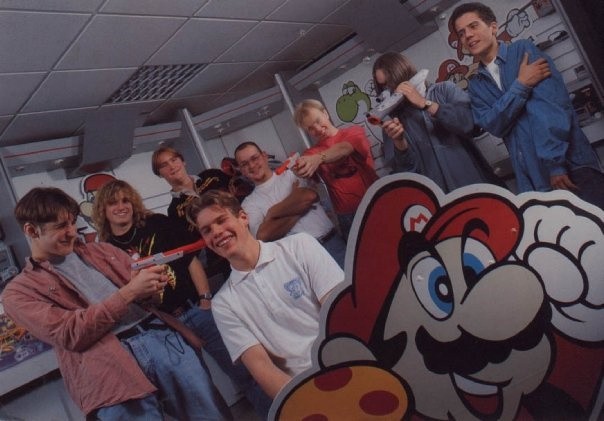
An agreement was quickly struck, with Nintendo instructing Bandai to set up a new hotline based on its American counterpart. Bandai placed ads in both the Southern Daily Echo and the Portsmouth Evening News (the papers covering Fareham, where Bandai was based), seeking "video game enthusiasts" to man the phone lines. This is where our hotliners come into the story:
Time Extension: How did you originally get the job working on the Nintendo Hotline?
Pullin: I had just finished a BTEC in computer studies at Fareham College, and I already had a job washing up in a Harvester restaurant. Like my peers, I was on the verge of going to university, but I was enjoying the feeling of having a bit of money for the first time in my life (50 quid a week or something like that), so I thought, 'Oh, maybe, instead of going to uni, I can get another job.' So I looked at the Portsmouth Evening News a few times to see what was going on, and then one day I saw this advert; it just said, 'Video game enthusiast wanted.'
I'd moved up from a ZX Spectrum to an Amiga, so Nintendo was a complete mystery to me. A few years prior, I had a friend who had R.O.B and Duck Hunt, and I had a go at them, but I remember thinking, 'There's not much in this for me. I'll stick with my Spectrum.' So I was pretty much going in blind. The next thing I knew, I was at the interview, and I got the job.
Jones: I've always been a computer gamer. I remember having a ZX Spectrum in my school years, and I also had the Sega Master System. But I knew about Nintendo because I worked in a shop called Dixons, if you remember them.
Dixons was one of Nintendo's first big accounts, and we had the NES console set up where people could go in and pick one of six different games to playtest before they bought it. So I remember playing that a lot when the shop wasn't open. Obviously there were things like Super Mario and Duck Hunt, but it was also around the time the Game Boy was being launched, probably about September or October 1990. Anyway, I applied for the job at the hotline after seeing it in the paper, not thinking much of it, and went for an interview. That's when I ended up getting it.
Barnes: I think I still have the original newspaper clipping from when I applied. My mother, or someone, saw it in the newspaper and went, 'Oh, you like video games?' and chucked it at me. So I think the whole point was that Bandai were going to push it and try to get them a foothold in the UK. I really didn't know what I was walking into. I don't think many of us did. All I remember was that there was a lady called Jayne Shipperley, who was the hotline manager initially. She was in charge of us, but I use that term loosely. And there was also Mike Hayes, the original marketing director for Bandai. He was lovely; really chill.
Time Extension: What do you remember about the offices in Fareham where the Nintendo hotline was originally based?
Barnes: It was an industrial estate in Fareham, which is between Portsmouth and Southampton, where Bandai worked. At the time, they had bought up most of the estate. Our offices were right down on the bottom floor, but others were scattered across the area, including an in-store thing with a bunch of Teenage Mutant Ninja Turtles toys and all sorts of crazy stuff.
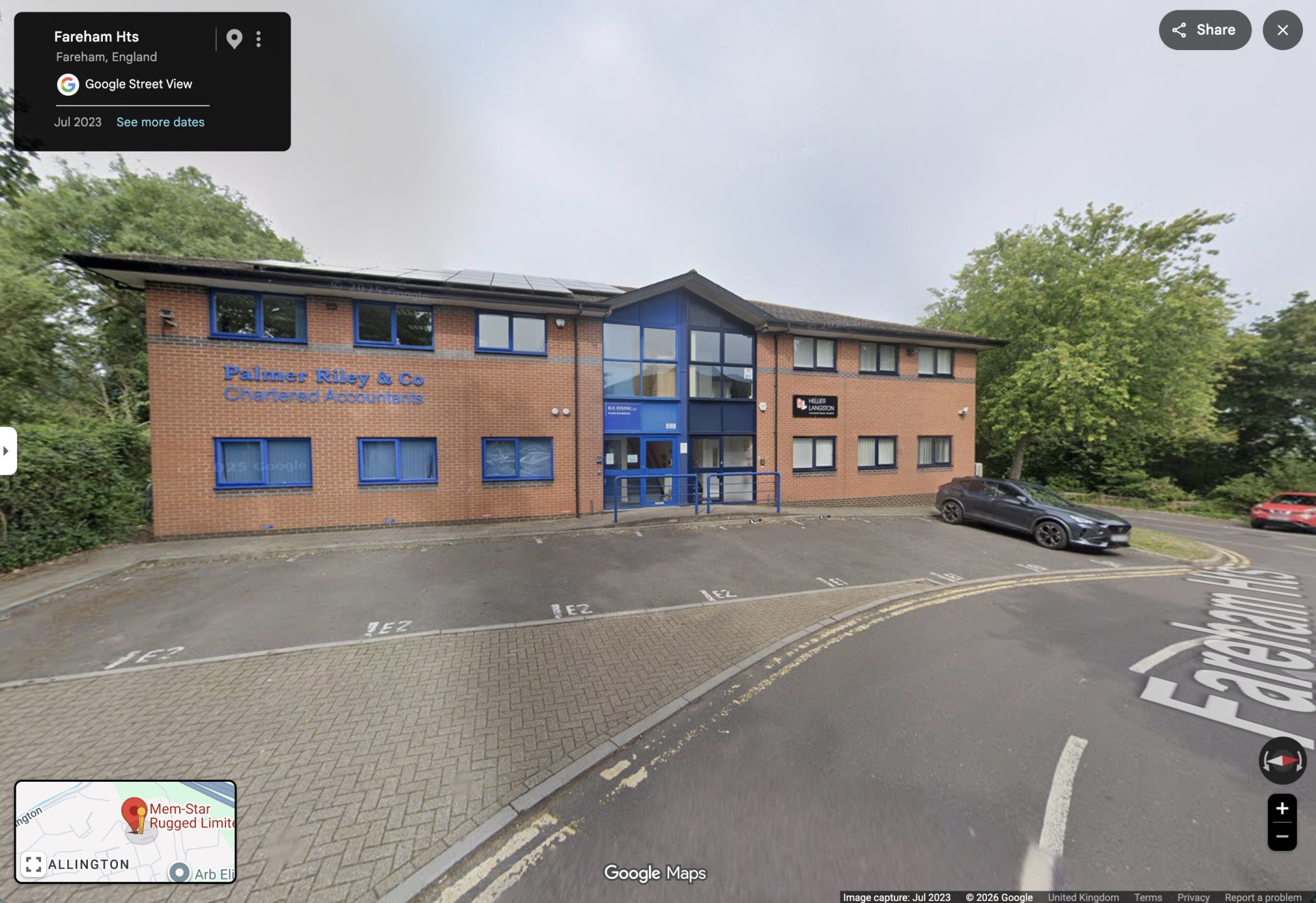
Jones: It was like an out-of-town office unit, and there was nothing else around it. Bandai were having massive success with Teenage Mutant Ninja Turtles, and there were all of these new offices that had just been built.
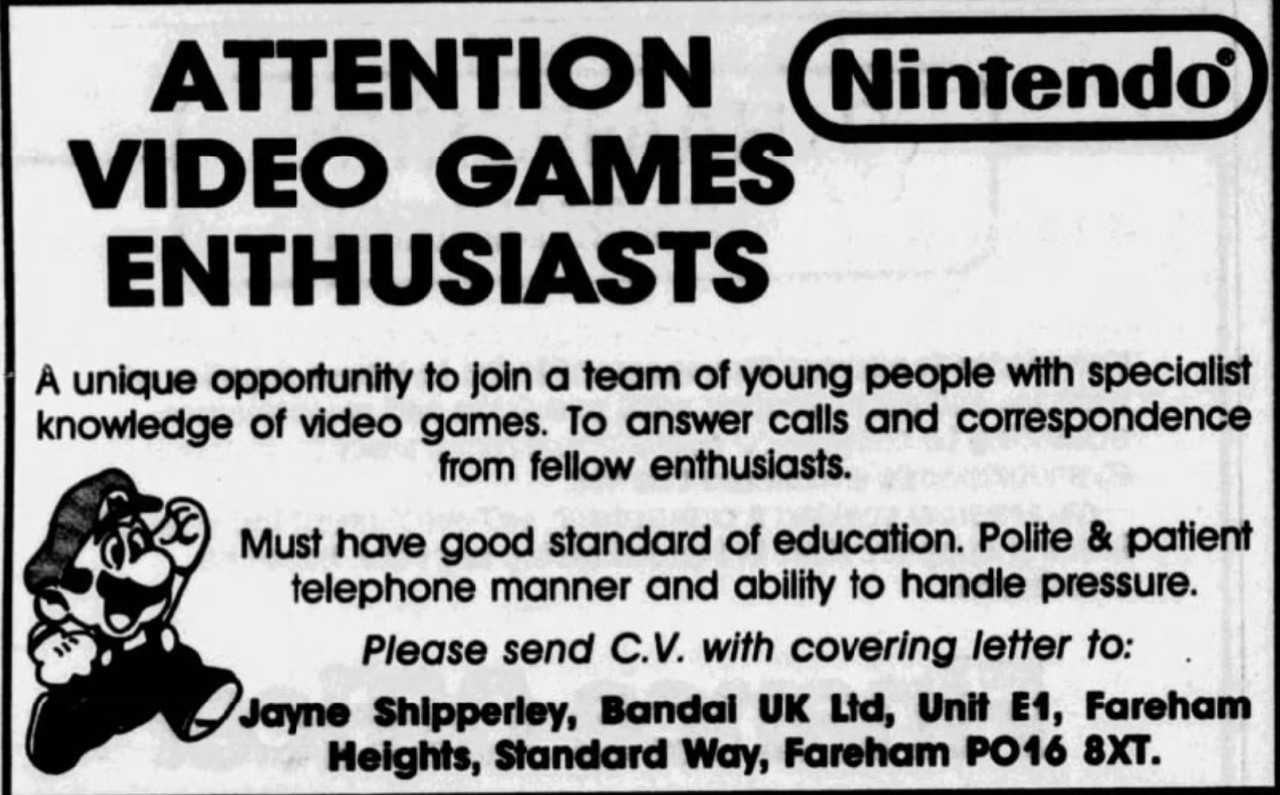
Initially, they had two units, but very soon, they expanded to six, and by the time we left, they'd knocked them all through to make one big office space. There was also a toy showroom and a video game showroom on site, too. In the video game showroom, they just had a console set up for people to play, but for the toy showroom, they made it look like a shop. So it had the metal display units you'd see in a Tesco, and the toys were pegged on them to represent what it would look like in a physical shop.
As for the hotliners: we had a unit downstairs, and there were six of us. So it was myself, Mike, Keith, Graham Archer, Mark Todd, and another guy called Gideon. I can't remember Gideon's surname, but I know he didn't stay long.
"Rygar...Even I Hadn't Managed To Get Through The Sodding Thing"
The group of hotliners began work in November of 1990, but the hotline wasn't set to open until the following year, in January. So, in the meantime, they set about familiarising themselves with Nintendo's back catalogue, being given literal "bin bags" of NES and Game Boy games, and being tasked with producing manuals containing maps, frequently asked questions, and other useful bits of information to serve as an important reference when the phone lines finally opened.
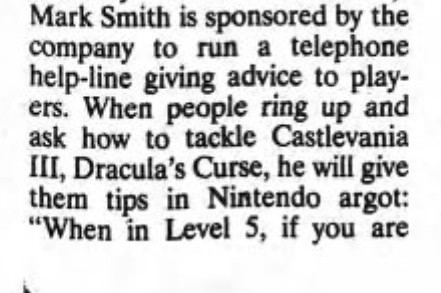
In addition to this, they also made a 150-mile trip to an existing "Nintendo-sponsored" hotline in Newton Abbot, operated by a teenager named Mark Smith (the editor of the UK version of the Club Nintendo newsletter) for some on-site training.
The aim of all this was to get them ready for the avalanche of calls that they expected would take place when the service opened:
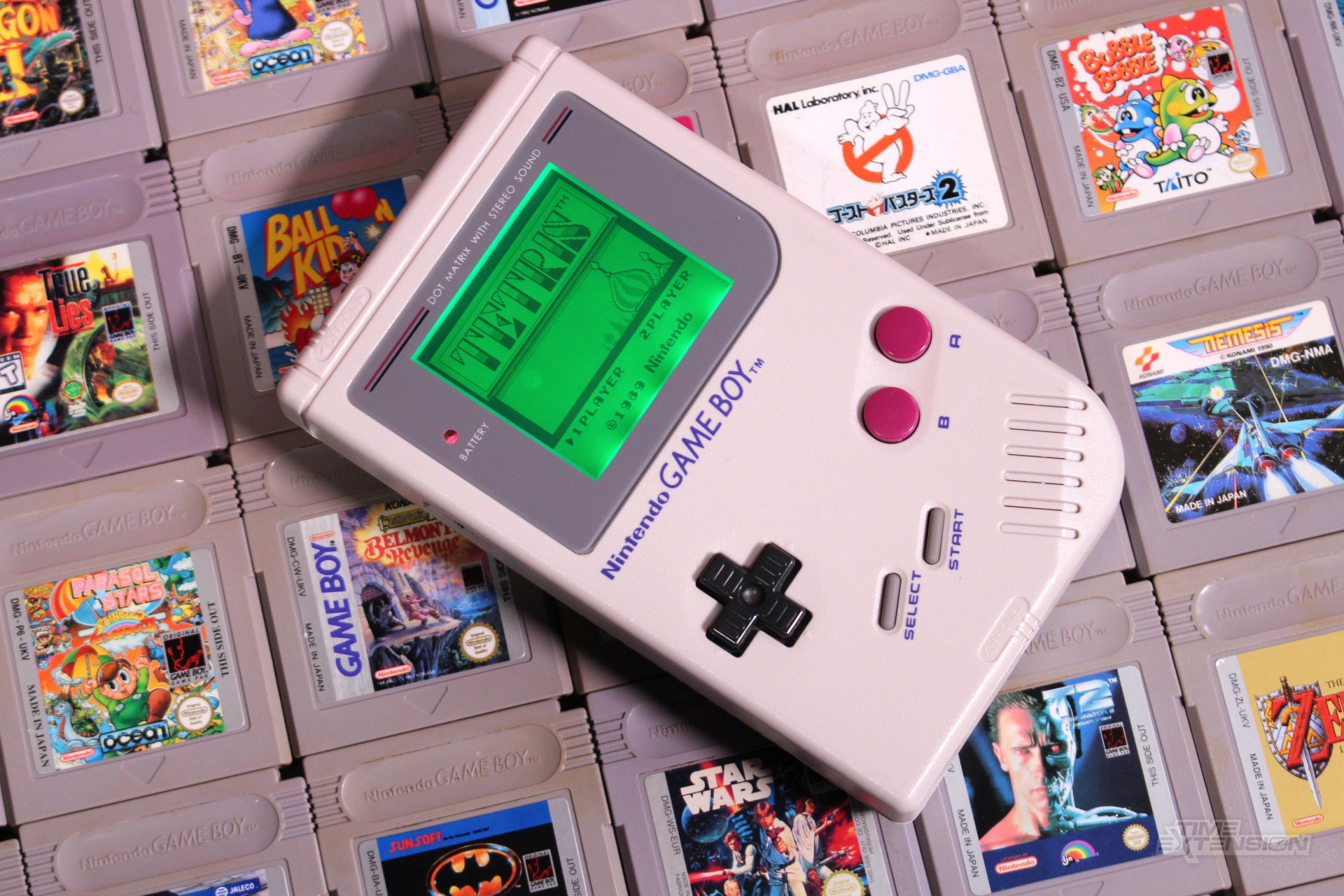
Barnes: By the end of the first day, they gave us an NES, and pretty much all of the games that were out at that point in time; I think there may even have been the original Game Boy because it was launching around the same time.
Jones: We all got given a Game Boy each. So we had that, and we each had a dedicated desk space, where we had a PAL NES and an NTSC one, so we could play games from the US and Japan whenever we wanted.
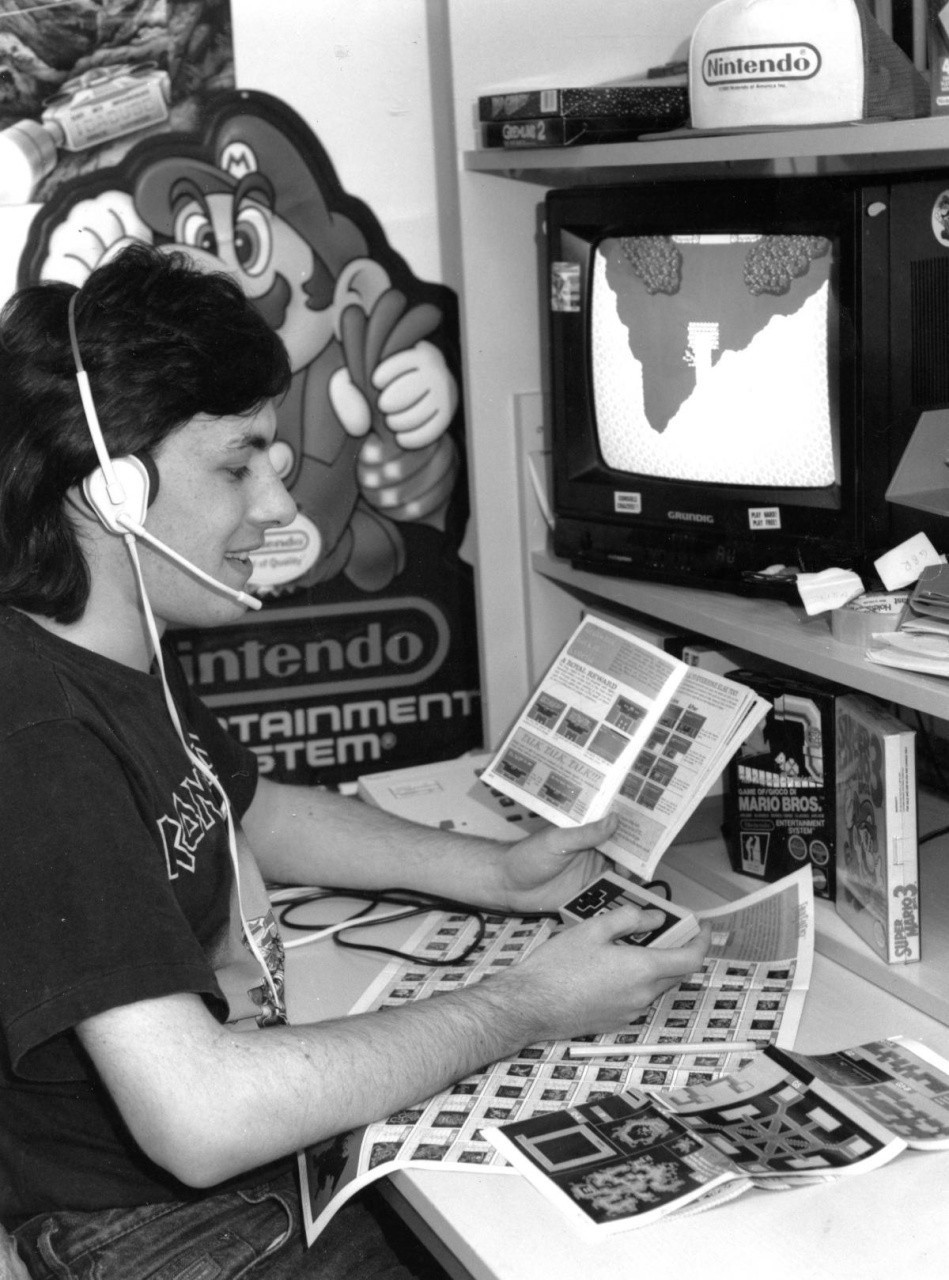
Barnes: I remember being given Mario, Metal Gear, Mega Man, and Zelda, and one of our first homework assignments was to learn specific games and be the content specialist for those titles. So, two of us would work together to write each manual, and everyone had these lever-arch ring binders on their desks with plastic holders; inside were all the various game guides we'd written together, which we tweaked and refined as we went along.
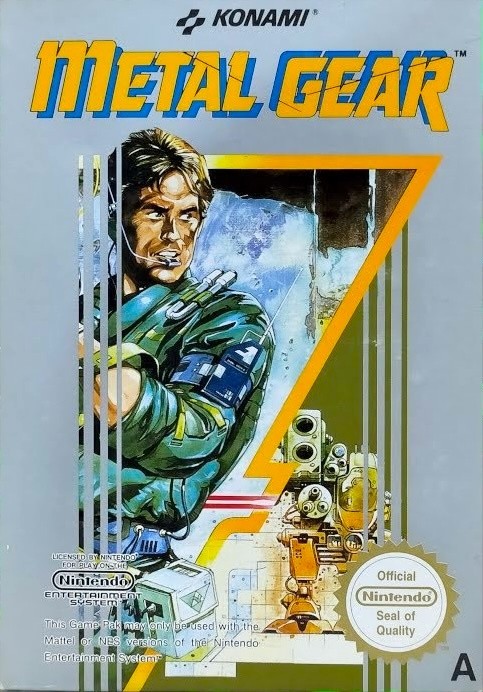
I did Zelda, and I remember doing the very first NES Metal Gear, which I really enjoyed. Later on, whenever someone got a call about that, they would just transfer it to me. But I also remember there were other games no one would volunteer for. I remember Tecmo's Rygar was one of them; that was bull hard. I'd done the guide for about two-thirds of it because even I hadn't managed to get through the sodding thing. I remember one day some kid ringing up, and they got past where I got up to, and we were just bullshitting our way out of it (laughs)
Pullin: I haven't thought about Rygar in years. That's just given me a cold shiver.
It's true, though. Everybody had their strong games; everybody had their weak games, but you would always try to answer the call as best as you could. Fortunately, we were armed with a whole row of hint manuals and things above our workstations that you could pluck off the shelf and look at if you were unsure, then relay it over the phone.
Barnes: Those manuals were usually a mix of bits and pieces we had written or drawn, because you couldn't screengrab anything easily back then, but over time we also started ripping out maps, cheat pages, and anything else we could add to the binder from some of the magazines of the time. I wish I still had one now.
Time Extension: I've heard that you did some on-site training at another Nintendo hotline in Newton Abbot. Do you remember anything about this experience or what this hotline was?
Jones: So, from what I understand, before Bandai took over Nintendo's distribution, there was a guy based down in Newton Abbot called Mark Smith, and he was running his own hotline. I don't know if it was authorised or not. So one of the things we did was go down to Newton Abbot to work on that hotline for experience, answering calls.
Pullin: We went down, and there were probably only about two or three guys in this little room, and my understanding is that they were operating as a Nintendo hotline, but they were kind of unofficial. Mark Smith set this up; Nintendo took note and liked the idea.
Barnes: Mark was older than us; he probably wasn't that much older, but god, he loved himself. We were basically sent down to go in with his team to get a vibe of it. I remember it being in some pokey little office above a curry house. It really was the worst, but afterwards, I remember thinking we're probably taking all these guys' jobs, aren't we? That's probably why they weren't the most inviting.
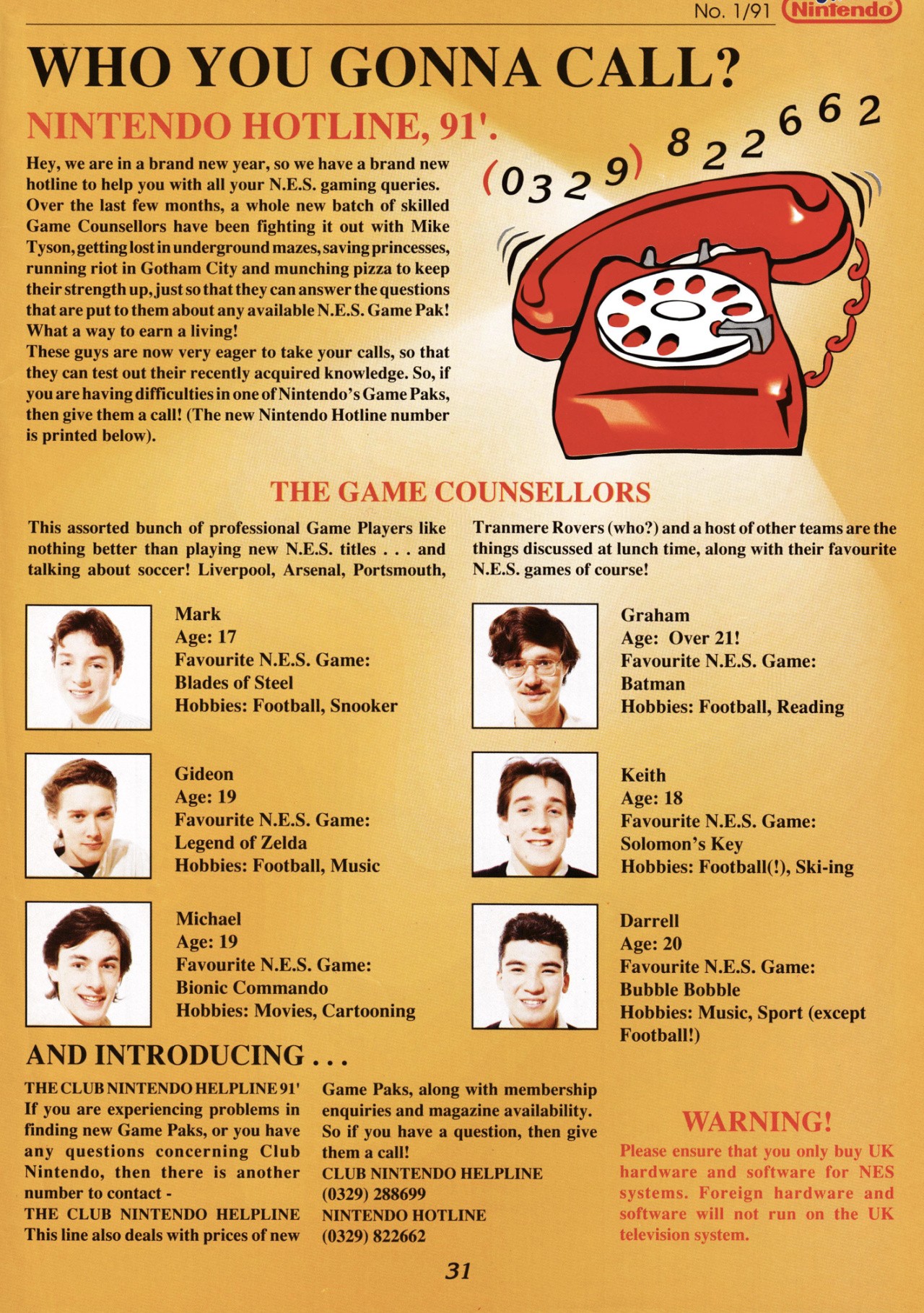
Time Extension: The phone lines went live in January 1991. How long did it take for the calls to start coming in? Was it immediate?
Pullin: It may have taken something like five or ten minutes for the first call to come in, because I think the number had changed from that embryonic hotline I mentioned. I remember there being a little concerned that people wouldn't know the new number, or understand why it had changed. So Jayne and some of the guys higher up were definitely concerned that people wouldn't call.
Barnes: I still have memories of us all sitting in the room waiting for one of the phones to ring. I can't remember who took the first call. I'm sure it was Darrell, but for a moment we were all thinking, 'Is anything going to happen?' But it did.
Then, as the weeks went on, it just grew. It must have been kids in schoolyards going, 'Hey, I rang this number, and this happened.' That sort of thing. They were also putting it in the back of all the guides. So every instruction guide, at the very back, there was a little page that had our number in there saying, 'Stuck on a game? You need to ring the Nintendo hotline.' So that was definitely driving some of it.
"A Southampton Industrial Estate Is Far Worse Than A Portsmouth Industrial Estate."
Following the deal between Bandai and Nintendo, Nintendo's popularity in the UK grew fairly rapidly throughout 1991 and the beginning of 1992, and this inevitably increased calls. By March 1992, the number of calls had reportedly grown from an average of 150 a day to almost 2000 (per the Southern Daily Echo), with Bandai bringing on more staff to deal with the rising call volume.
On account of Nintendo's growth in the region, the decision was made to move the hotline from the Fareham location to a much larger industrial estate in Eastleigh, near Southampton — a choice that understandably proved controversial for the Portsmouth locals on staff — with the team preparing for the launch of the Super Nintendo, which would take place in the UK in April 1992. As you might have guessed, this would eventually bring a whole new wave of attention to the growing hotline, as people once again dialled in for tips on the latest games (in this case, titles like Super Mario World, F-Zero, Super R-Type, SimCity, and Super Castlevania IV).
At the same time, the hotliners found themselves doing much more than just answering phones, being roped into acting as official ambassadors for the Nintendo brand in the UK, helping out at trade shows and behind the scenes on popular television shows of the time, including Gamesmaster:
Time Extension: In 1992, Nintendo Hotline moved from Fareham to another location. What do you remember about this move?
Jones: After about a year, they ran out of space, so we moved to Eastleigh, which is over towards Southampton. That was a proper industrial estate. They had this big warehouse, and the Nintendo hotline was inside, along with another showroom, and that's also where they were shipping products from.
Nobody had any idea it was there, because there were millions of pounds worth of goods inside it, so Nintendo didn't advertise it much. It also had some workshops in there, too, so if you sent them something, that's where they would repair things.
Pullin: We stayed in the original building for about another six months to a year, but because of Nintendo's growth at the time, we had to move. The Eastleigh location was another industrial estate, and again, it was very unglamorous — not the kind of place you'd expect them to be. A Southampton industrial estate is far worse than a Portsmouth industrial estate.
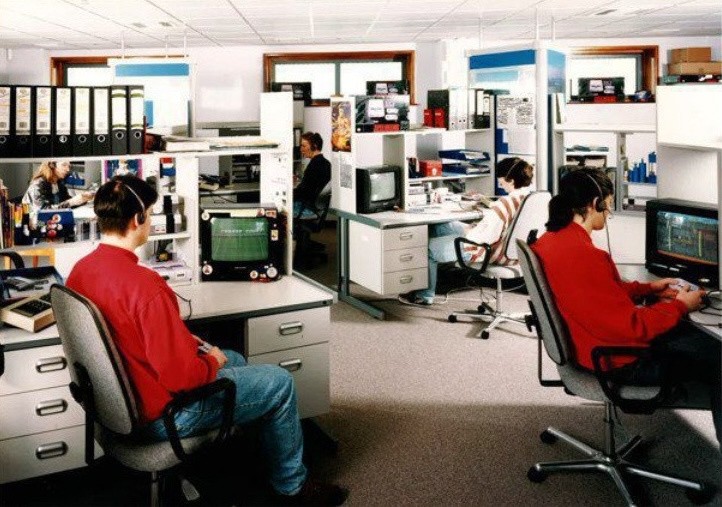
Time Extension: Obviously, around this time, the call volume increased significantly. Do you remember any notable callers?
Barnes: There were definitely regular callers. I remember there was a lad called Jonathan who used to ring up almost on a daily basis, and he couldn't have been very old; he was bloody useless at whatever he was doing, and he didn't listen either. Now I've had kids I understand why. If he called, you just knew he would be on that line for a while, and eventually you'd have to be like, 'I need to go.'
The best one was I took a call from the comedian Bob Monkhouse. That was the mad one. He was a big Nintendo player. He used to take it on tour.
Jones: The one I remember most was I used to help out this elderly lady on Super Mario World; she had arthritis. I basically took her through the whole game. She'd call up maybe once or twice a day for weeks and weeks, which I always found heartwarming.
Time Extension: As the hotline grew, the hotliners eventually got other opportunities beyond answering phones, such as appearing on GamesMaster. Do you have any memories of how that all came about?
Jones: So, before that, there was actually another show that came out in '91 that Keith [Pullin] and I worked on, which was called The Super Mario Challenge. It was on a children's channel called TCC, The Children's Channel, and it was an officially licensed program.
If you search YouTube, you'll probably find some of the episodes. I think there were only 8 to 12 episodes in total, and each episode was roughly 10 minutes long. The main guy was a US comedian called John Lenahan, and they made him dress up as Mario. I remember they did a celebrity edition, and it had the ventriloquist Keith Harris, with Orville and Cuddles the Monkey.
Keith Harris is obviously a ventriloquist, and he couldn't actually play. So Keith and I actually had to play on their behalf behind the scenes. That show literally lasted one season, and then it disappeared. It was filmed in a studio in St. John's Wood, of all places. So that came first, but then some of us were later involved with GamesMaster.
Barnes: We were the naughty children in the games business, because the rest of it was all suits and ties, so we became involved in all of the crazy stuff that was just happening at the time. We were just coming out of the 80s, and Nintendo was obviously Japanese, so they had a very corporate structure. Eventually, we started turning into like rock stars, because nobody understood us at all. We were just this group of nerdy lunatics.
Pullin: There were a few weird sort of groupies. I remember there was one particular caller; she phoned up all the time. We used to go to game shows, and at one in Birmingham, she turned up asking for me. It was really stalkery, and I remember moving away from the stand to hide somewhere, asking people to not let on where it was. It was bizarre and distracting. But at the time, Nintendo's scope and marketing focus started to broaden, and it felt like we were everywhere. The official magazine Nintendo Magazine System had just come out, and I was keen to get involved with as many things as I could. Eventually, because I was getting involved in all these things, my title changed from Hotliner to media liaison. Today, that would probably be public relations, or PR.
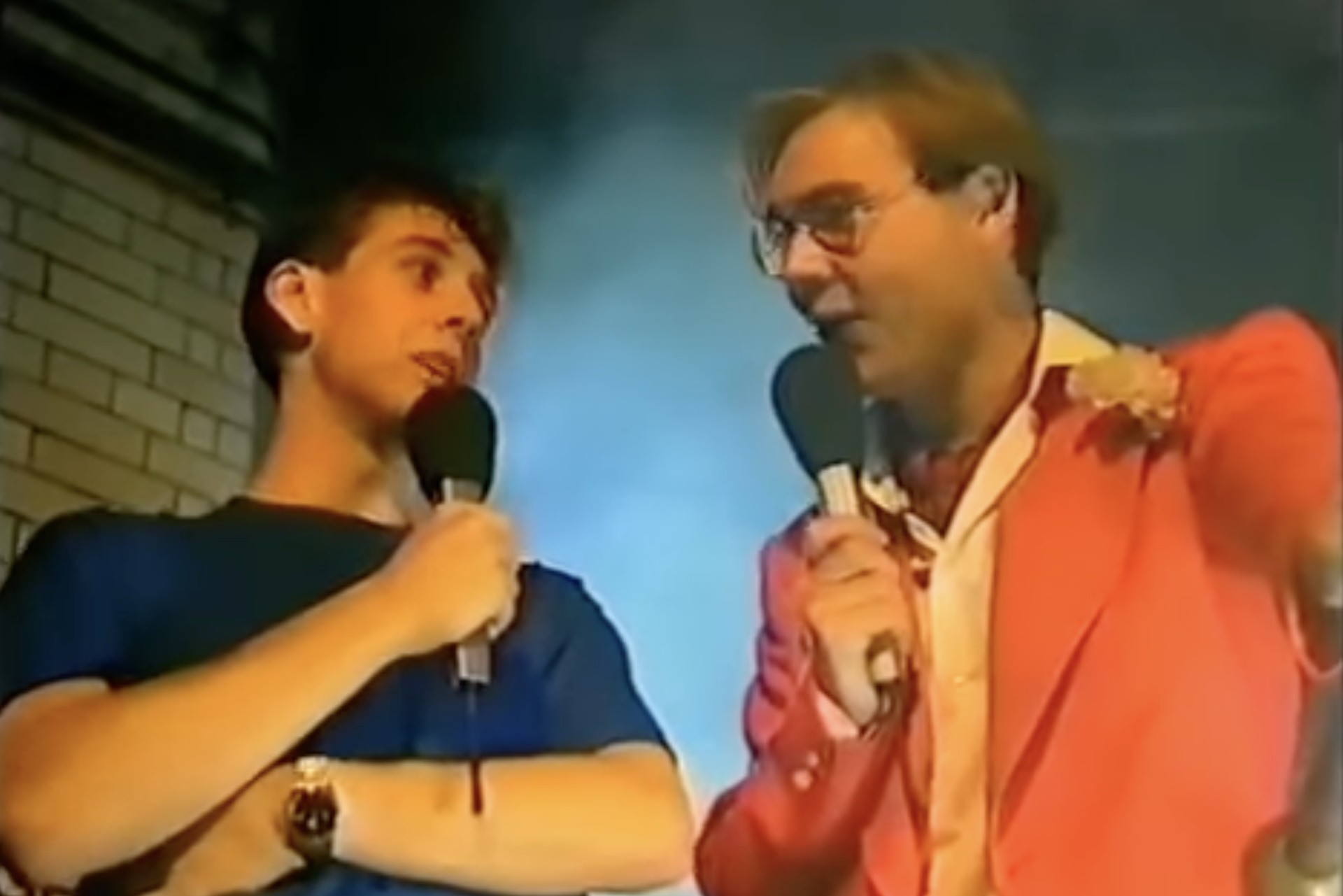
GamesMaster was such a massive cult hit at the time that it couldn't be ignored, and I think Nintendo were very aware that Sega weren't doing anything to make the most of GamesMaster, and the hotline was just this goldmine of information. So we were brought in to write some scripts for the tips section of the show. It was just a very basic script: 'Hi, GamesMaster, I'm stuck on Zelda. I can't find the hookshot. What do I do?' So, what we did was we just took the most popular calls and then turned those into scripts for Patrick, and some of us even appeared on the show itself.
Sometimes that meant taking people off the Hotline to travel down to the studio, which a lot of the hotliners weren't happy about, because that meant they would have to deal with more calls themselves while people were away, but the people above us loved it.
"Rik Mayall Told You To Piss Off? That's Fantastic."
By 1993, Nintendo had managed to position itself as The Beatles to Sega's Rolling Stones, but in the words of Bandai's marketing manager Mike Hayes, the market share remained stubborn: "always two-thirds Sega, one-third Nintendo." That was despite Bandai running a cutting-edge advertising campaign for the Super Nintendo, featuring the same morphing tech used in the music video for Michael Jackson's 1991 single, "Black or White," to combat Sega's own marketing blitz.
As a result, on Wednesday, March 3rd, 1993 (per the Southern Evening Echo), Nintendo revealed it was taking over distribution from Bandai to take closer control of its business and have more say in its marketing. Nintendo acquired both the Fareham and Eastleigh operations from Bandai, with Hayes becoming Nintendo UK's head of marketing in the process. This would kickstart another ambitious marketing push to further build the brand and bring the fight to Sega.
In the aftermath, Nintendo not only teamed up with Rik Mayall for a series of ads promoting its products, but also released a promotional VHS featuring Red Dwarf's Craig Charles, and announced the Challenger, a custom Nintendo-branded truck, weighing approximately 21 tons that would tour the country with a library of games. Once again, the Nintendo hotliners would be pulled in to help with all of this, but not all of them, as some of the original hotliners, including Darrell Jones, decided to call time on their Nintendo career and search for jobs elsewhere in the industry:
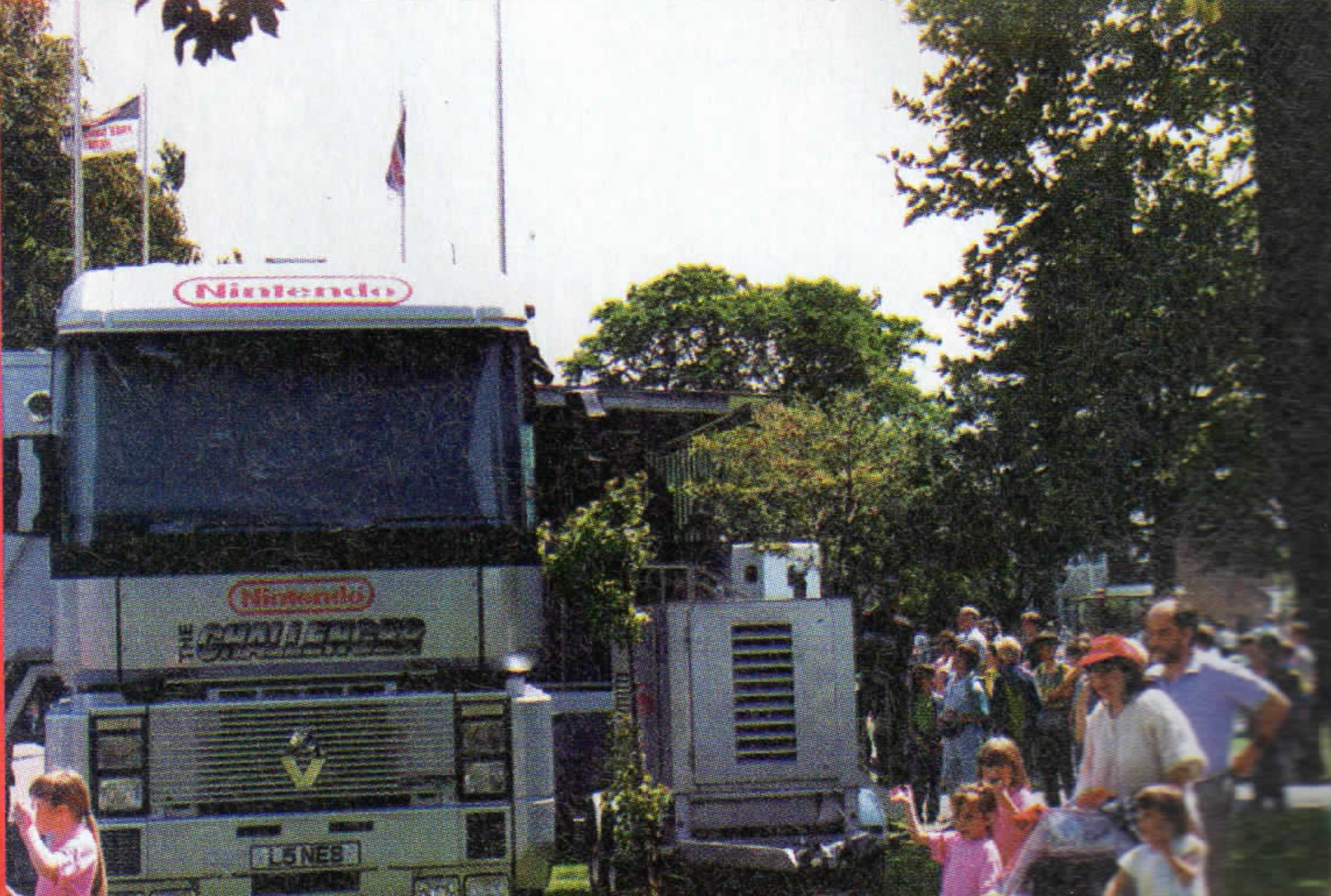
Jones: I left in March of '93, and the Challenger stuff came after. We did some consumer events while I was there, but it wasn't a truck; it was like a dedicated stand inside a hall. I've got these vague visions of "Rhythm Is a Dancer" by Snap playing in the background. After Nintendo took over, Bandai carried on distributing its own video game software as a third party. So I went to work for Bandai to look after their software portfolio and toys, and was there just as the Power Rangers was about to launch.
Pullin: The Challenger also came about pretty much as I was leaving. I left in 93 and went to work for Super Gamer magazine. One thing I remember about the Challenger, though, is there was a guy called Metro. He was supposedly the official UK champion at Street Fighter 2 Turbo, and people would queue up at the Challenger truck to take him on. He'd beat them all fairly easily, but during breaks, he would always challenge the hotliners, and we'd whip his ass, and he'd get so angry about it. We always had to keep quiet about it, though, because he was our poster boy; he was our guy to beat.
Barnes: This great truck would pull up and fold out, and it had all the consoles, and then we ran games and competitions off of it. I remember we always had to do this bloody aerobics thing in the mornings before the shows opened up because we were all in Nintendo gear and it was part of the event. Also, I remember one morning, when I was doing a toy fair with the Challenger, I was saddled with Ant & Dec (PJ & Duncan), and they annoyed the absolute shit out of me. They were just kids, but if I'd known then what I know now, I probably would've befriended those boys (laughs).
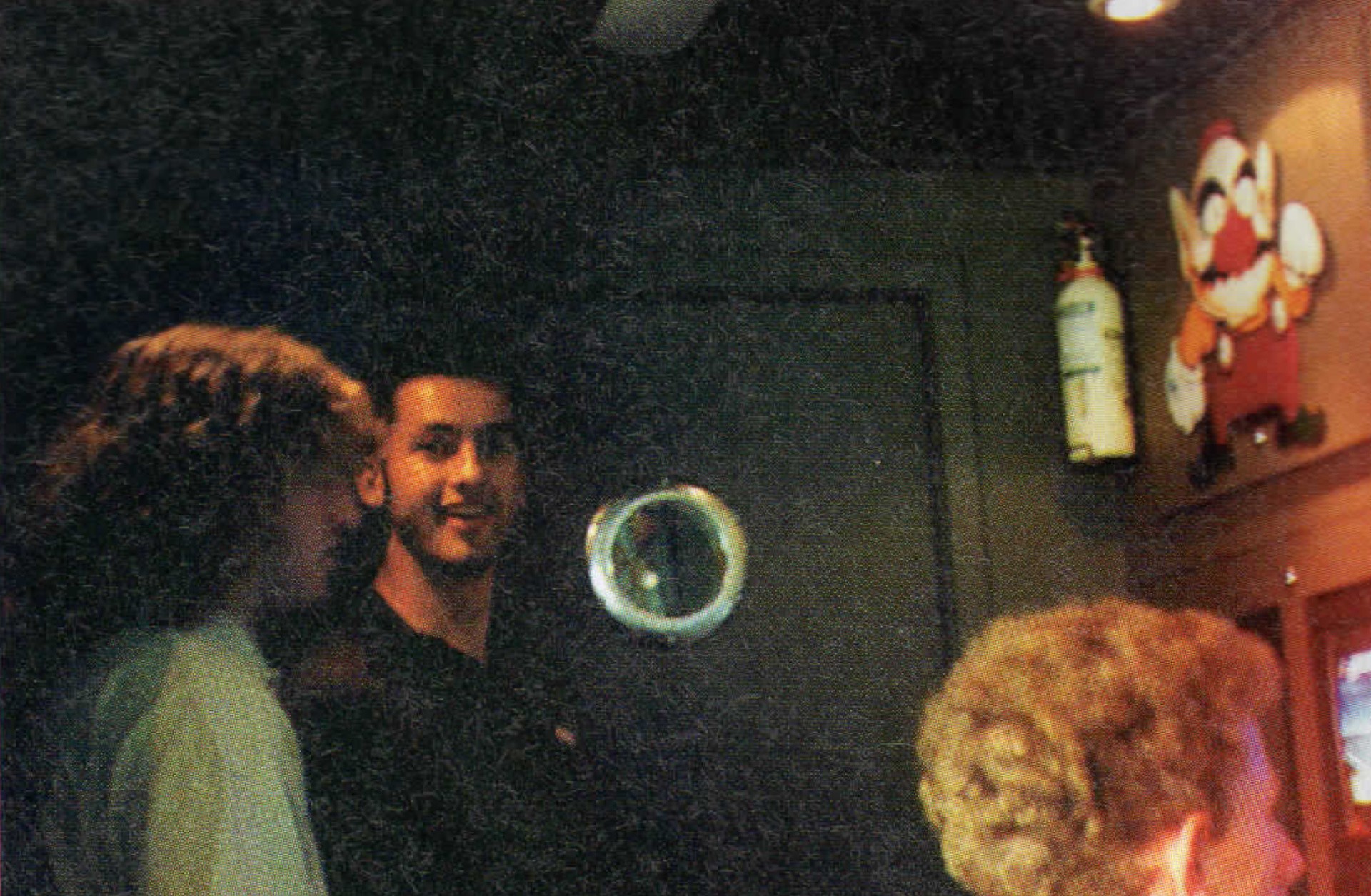
Time Extension: Speaking of celebrities, the first time I ever heard about the hotline was through Super Mario All-Stars VHS, a promotional video that Nintendo UK produced, featuring Craig Charles from Red Dwarf and the hotliner. Do you happen to have any memories of this at all?
Pullin: Sadly, I was out of the office when that happened. I was a bit gutted that I kind of missed all that, but I was doing my thing. I was up in London, up in the big smoke, going to production companies and things like that at the time.
The only comedian I had any sort of interaction with at Nintendo was Rik Mayall, and that happened completely by chance. It was at one of these launch events that we had for the Super Nintendo. It was the same event where Sega launched their guerrilla assault on our building by beaming a giant Sonic the Hedgehog on the side of it.
Rik Mayall was there, and he was sort of chatting with various people, and I was a huge fan of The Young Ones, and I went up to him, and I said, 'Oh, Rik, I'm so pleased to see you here. I'm a huge fan of yours,' and he went in his best kind of Rik from The Young Ones voice, 'Oh, piss off!'' I was like, 'Oh my God,' and walked away embarrassed. And then, a few days later, I was telling people about this story, and they went, 'Rik Mayall told you to piss off? That's fantastic. I would love Rik Mayall to tell me to piss off.' I feel quite good about it now.
Barnes: So, how the Super Mario All-Stars VHS came about was probably because of GamesMaster. We were involved with that, and then Nintendo were like, 'Oh, we'll do something ourselves in-house.' At the time, I was a huge Red Dwarf fan, so when they said, 'We're gonna shoot this video with Craig Charles', I was super excited. He rolled up, and I remember him just being really normal. I think he was trying to make sure everyone was chill because not many of us had actually done anything like this before, and off we went.
It was probably only a morning or maybe a day filming with us, but maybe six months or so later, we were in London for something Nintendo-related, and three or four of us from the hotline were there. We were walking down the corridor, and walking towards us was Craig Charles. He went, 'Oh, it's you guys!' and he remembered our names and seemed genuinely happy to see us. That was pretty fucking cool of him, because at the time he and Red Dwarf were obviously massive.
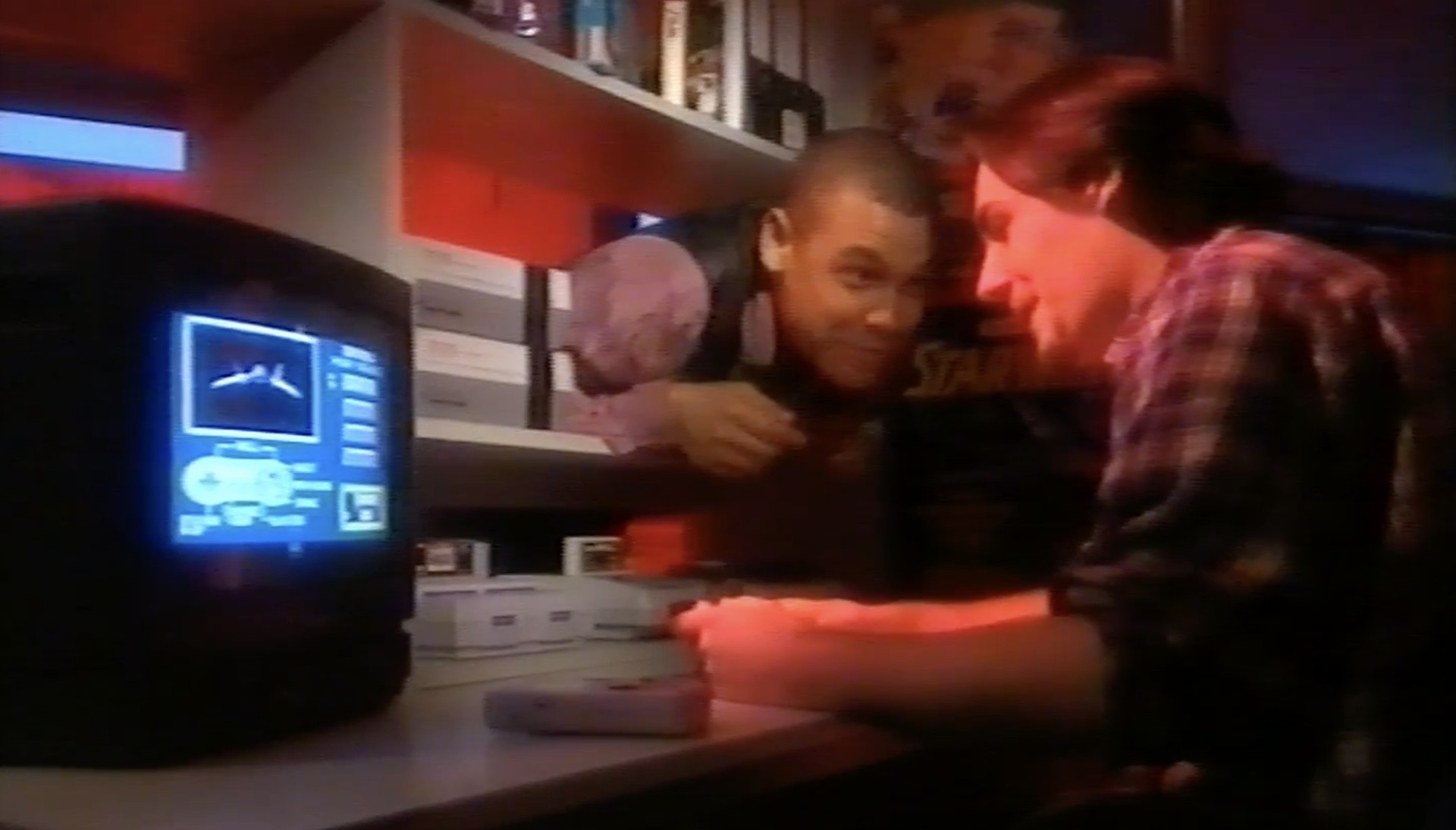
As for the tape itself, I don't think there was any script; it was just the basic idea. In fact, I don't remember much prep for it. They basically just set up a light around us, and the rest of the hotline was still there in the background. They were probably even taking calls. It was all kind of thrown together. I vaguely recall we had some sort of green screen set up there for all the other stuff. The stuff where you've got everyone's stupid digital, whirly things flying across the screen. We shot that at the site as well, with a rudimentary green screen thrown up in one of the conference rooms.
"When The Rot Set In For Me Was When Nintendo Pulled Out Of The UK"
As you can see, the early '90s proved to be one incredible opportunity after another for the hotliners, but the good times wouldn't last.
Not only did the hotline have a fairly high turnover, with people inevitably getting burnt out from answering the endless wave after wave of calls, but Nintendo itself would end up surprising everyone in July 1995 by withdrawing from the UK market, handing over distribution to Total Home Entertainment (THE), a subsidiary of the newspapers and aviation business John Menzies.
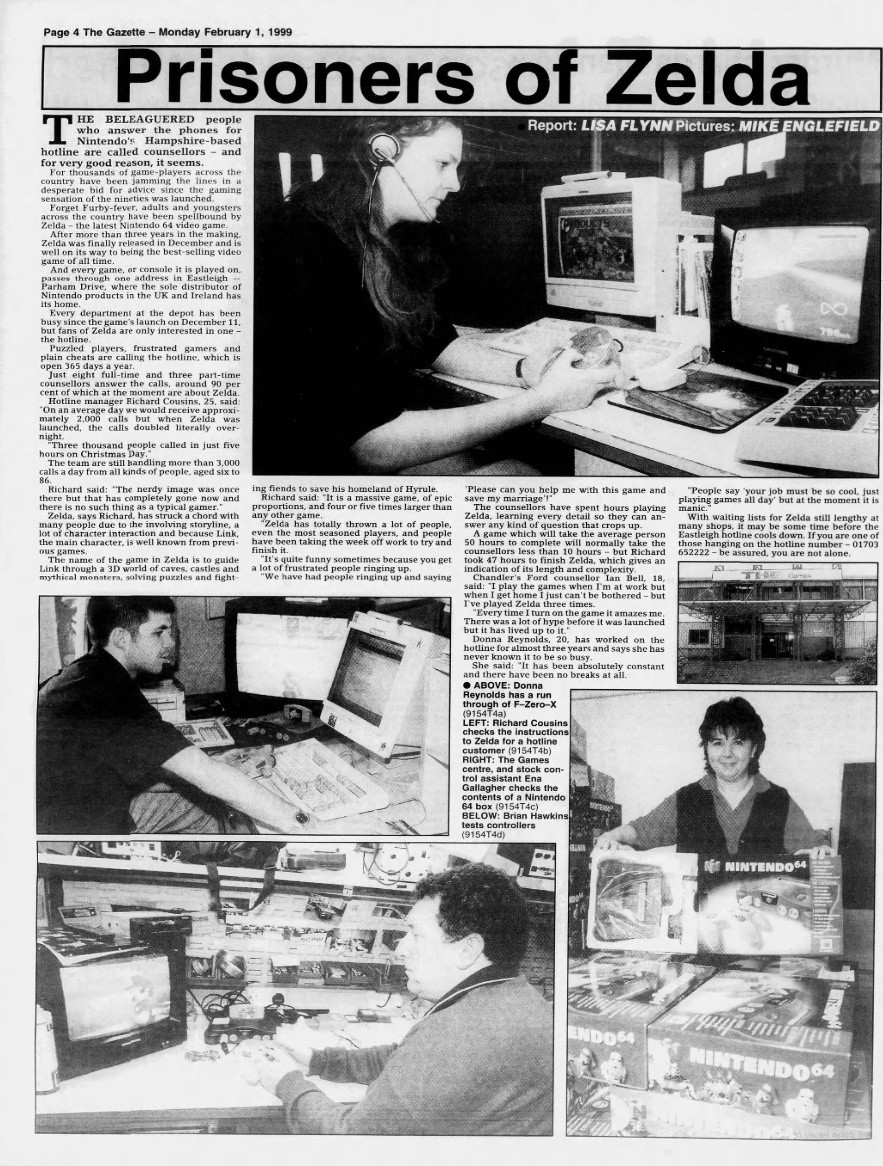
This led to reports in several local newspapers that the Fareham and Eastleigh sites would be shut down, resulting in 150 jobs lost between the two sites, and the inevitable closure of the existing hotline. In a surprising turn of events, however, one month later, a report in the August 18th, 1995 edition of the Southern Daily Echo confirmed that the Eastleigh distribution site would be retained, saving nearly 90 jobs.
The hotline would continue supporting Nintendo gamers with their video game problems for another five years, throughout the N64 era, before shutting down in late 2000, after THE decided not to renew its Nintendo license, due to the highly volatile nature of the games market leading to "potentially significant profit variations." Out of the original six, Mike Barnes was one of the last remaining hotliners at the company, becoming a product manager for THE, but even he left before the end, departing in 1997:
Barnes: It was probably a very quiet, slow death. I guess at some point the calls must have started to dry up. What really killed things, or when the rot set in for me, certainly was when Nintendo pulled out of the UK, and THE Games stepped up to be like the UK franchise distributor for Nintendo. By that point, Mike Hayes and a few of the other guys left. They had probably seen the writing on the wall.
It just wasn't Nintendo anymore. We went from the champagne days where we were all involved in the adverts, and we were travelling to Pinewood Studios, and all that crazy stuff, to this mentality of we're selling tins of beans, or carrots. You can't do that with Nintendo. The higher management just didn't get it.
I remember the guy in charge was a northern bloke. He was just sour-faced and awful, and god, he didn't get the hotline at all. I wouldn't mind betting that he probably would have been responsible for putting the final nail in the coffin, because at some point they must have pulled the plug. I think, in the end, it probably came down to the cost, because we had an entire phone system they bought and installed. It was nuts!
If you lived in the UK during this timeframe, we'd love to hear your memories of the Nintendo UK hotline. Did you ever call the hotline for help on a game? Or perhaps you saw the Challenger in person. Let us know in the comments!