
 by
by 
We recently spoke to industry veteran Mike Fischer, who has worked at Namco, Xbox and Sega during a glittering career in the video game industry, and he has shone a light on the internal conflicts that took place within Sega when the company shifted from being a hardware maker to a third-party publisher.
Fischer recalls how Sega was in a difficult position at this time, due to how the company had organised its internal development teams:
"The Japanese studio heads had, at this point, become all semi-autonomous business units to give these creators more ownership and motivation, and they put a system in place where they could borrow money from the parent company to build the games that they wanted to build and then would have to sort of repay the loan. Now this was all internal, right? So it was more of an accounting conceit. They weren't actually independent companies. But they had let the studio heads run them as if they were."
This setup "allowed them to make all of these vanity projects because they had always been just company employees," explains Fischer.
"A few of them, like Jet Set Radio, Phantasy Star Online, and Panzer Dragoon Saga, were breakthroughs. And then you also got some crazy stuff like Seaman that might not have been super commercially successful, but creatively was there. But then, a lot of them were just, 'Let's take our old arcade hits and just port them as is,' and there was this expectation that those games would sell."
However, the industry was changing, and the kind of experiences that Sega had previously found success with were starting to deliver weaker returns.
Fischer's boss at the time, Peter Moore, wanted to communicate this changing market to Sega Japan:
"He called me from the plane [on the way back from his own meeting with Sega Japan] and asked me to help. He said, 'We've got to deliver this player manifesto. We have to help them understand we're in a new world. They need to realize Grand Theft Auto is attracting a new audience, and that people are playing these games for hundreds of hours. So we're currently in a situation where people will buy our games on Tuesday, play them, and then sell them back on Sunday to GameStop. So no one is making money.
Essentially, we were trying to try and convince them that they need to make multiplayer games where people can just compete against each other forever, or they need to be longer, narrative-driven story games that are a rich, deep, immersive experience, and explore adult themes. That way we could get around some of the problems were were having."
This mandate didn't go down well with certain people within Sega, one of whom was Yuji Naka. Naka had previously clashed with Moore, who famously told him to "f**k off" at one point, and he took things badly:
"Naka-san was the most upset because again, he really believed in that Disney-esque family wholesome environment, and his games were the only ones that were ever successful. He said to me, during the meeting, 'You? You're telling me how to make games? Why don't you just tell us to make porn? That's what you want.' And he was literally frothing at the mouth. I swear he had these little spit bubbles bubbling up at the corner. He was so angry.
I tried to be positive. I said, 'Look at what Nagoshi is doing with Super Monkey Ball. It's innovative and has a ton of replay value. It's arcadey in some respects, but he gave us tons of marketing assets. This is what we need to be doing.' And I remember Yu Suzuki was just like, 'Hey, I do that too,' and they pretty much ate me alive."
Fischer admits that the language barrier will have played a part in this. "One problem I was trying to explain all this in Japanese, and my Japanese is good, right? But it's not native-speaker good. And so I probably didn't come across as articulate as I could have."
However, he did technically have the last laugh:
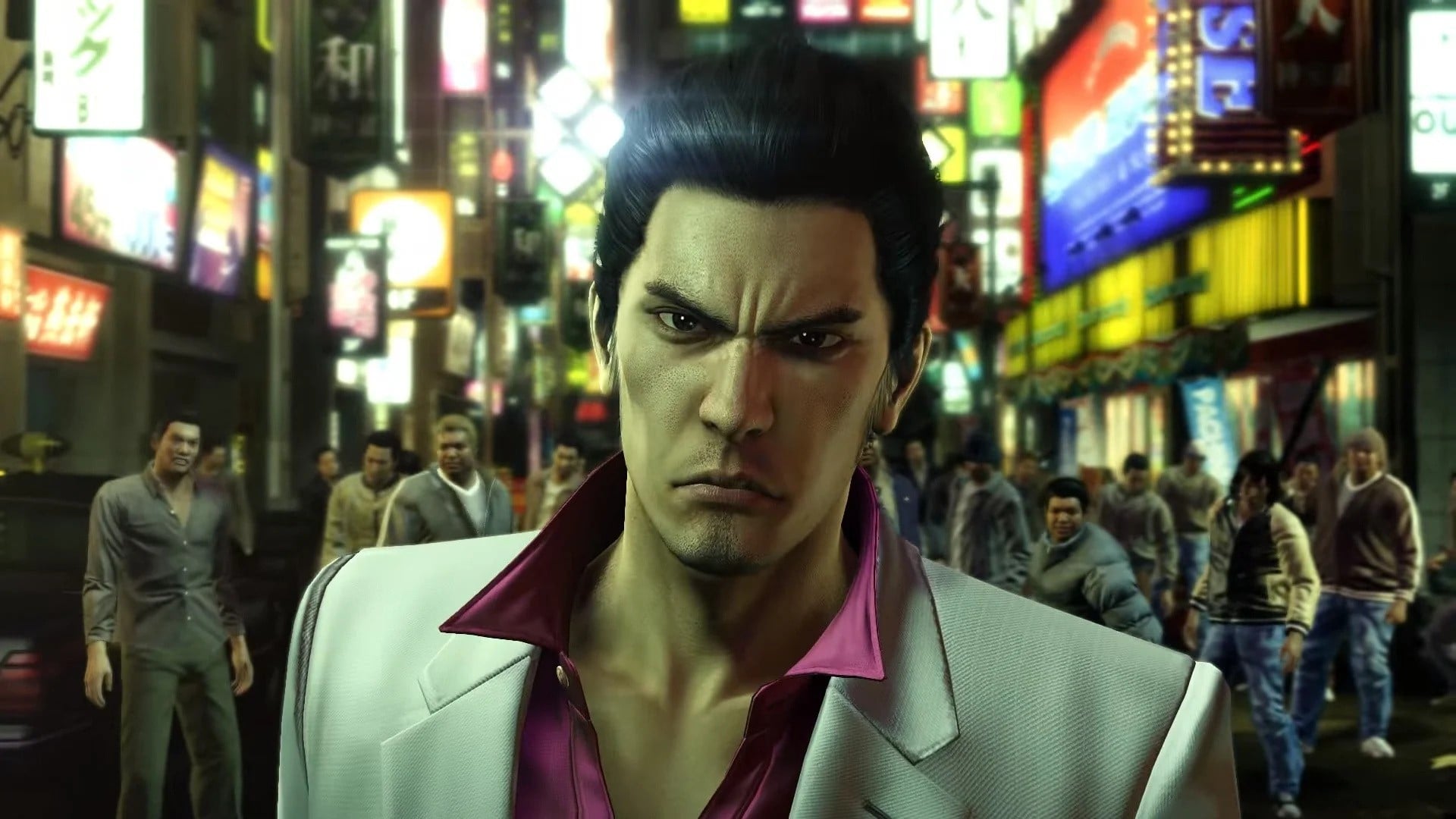
"The funny thing was, though — and this had nothing to do with me — but Nagoshi later went on to make the Yakuza games after that, which was exactly what I was asking them to do."