
 by
It recently dawned on me that I've been playing video games for well over 25 years.
I first started checking out NES games on my Pentium PC in the late '90s before moving to portable platforms like the GP32, GP2X, and Pandora a few years later, and ever since, I've kept up with developments in this fascinating sector of the games market.
This has included devices like the Polymega, which uses software emulation and a modular design to let you play your original discs and carts, and the MiSTer FPGA platform, which uses hardware emulation to offer one of the most faithful ways to reconnect with the past. And that's not to mention Analogue's family of FPGA products and the seemingly endless flood of emulation handhelds from the likes of Anbernic, Retroid and AYANEO – the latter of which has previously entered the micro-PC space with its AM01 and AM02 products.
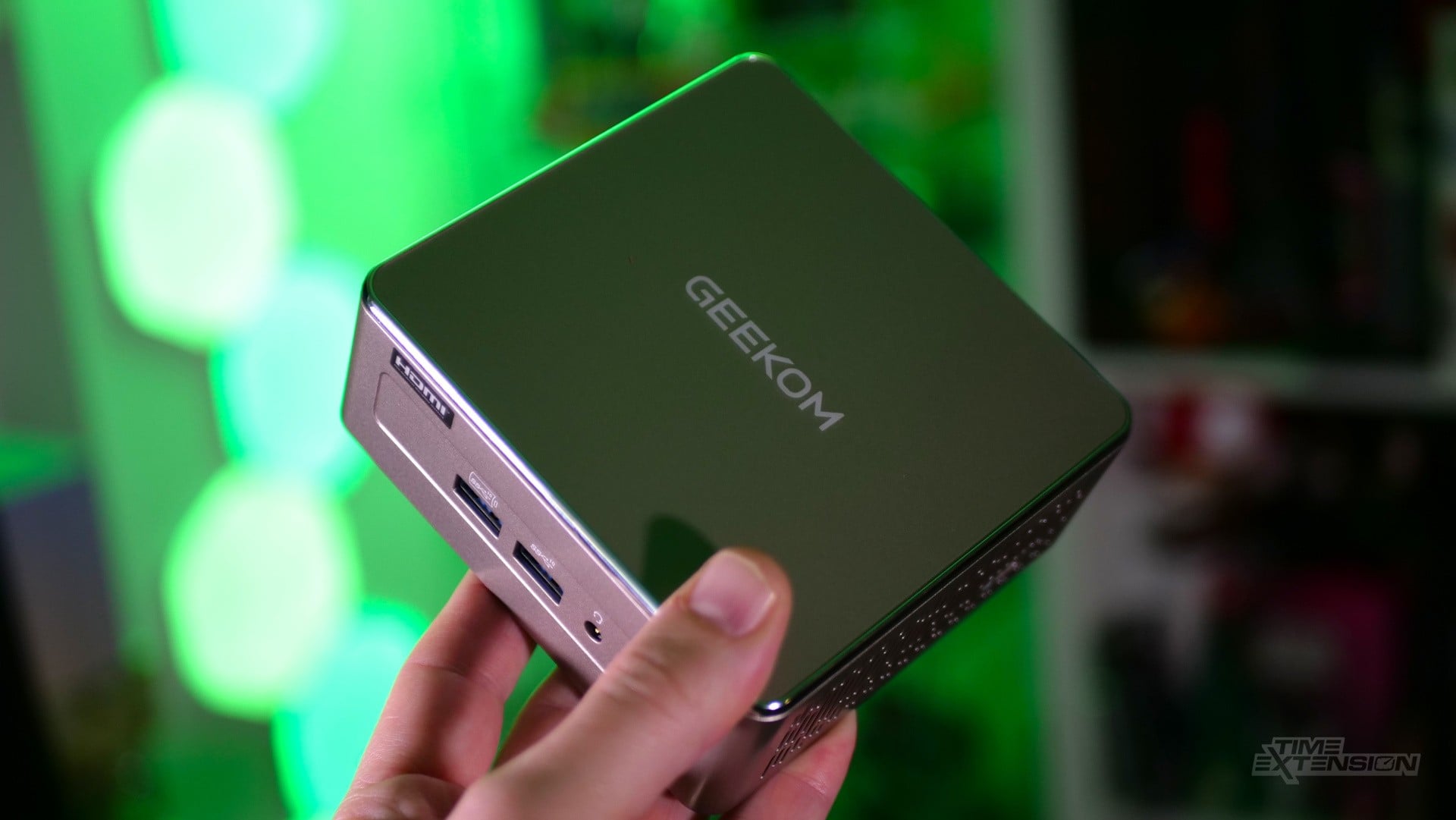
Today, I'm looking at a very similar piece of tech from Geekom called the A5 2027 – the year at the end is intended to set this particular model apart from the company's earlier A5 systems. What we have here is effectively a teeny, tiny Windows-based PC which is designed for people who want a lightweight computing solution that doesn't break the bank (well, not too much) – but the upshot, from my perspective, is that this also makes for a reasonably compelling emulation option.
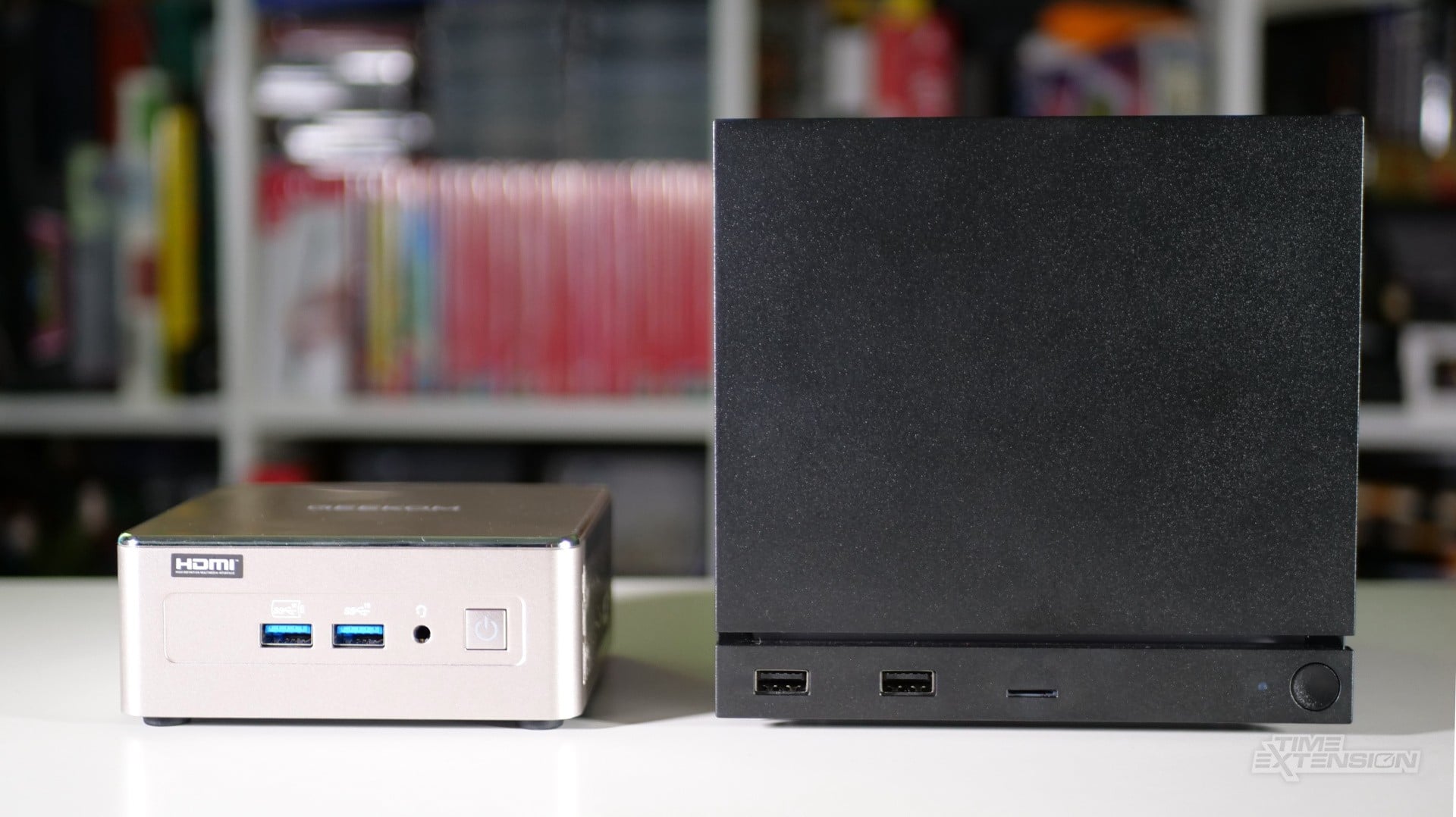
The Geekom A5 2027's footprint is tiny – it's significantly smaller than your typical desktop PC and even makes the Steam Machine look massive. It has two USB-A ports and a 3.5mm headphone socket on the front, while the rear offers up two more USB-A ports, two HDMI ports, an Ethernet socket and two USB-C ports. On the left-hand side, there's a full-size SD card slot. That's a lot of connectivity for such a diminutive piece of hardware.
The small size means low power, of course. It's powered by an AMD Ryzen 7 7730U (at least in the review unit I was sent), a chipset aimed at mobile devices rather than desktop computers. It goes without saying that this results in a lot less grunt than something like the Steam Machine, and that is reflected in the A5 2027's overall performance – AAA gaming is very bumpy unless you scale back the graphical quality dramatically, and even then, titles like Cyberpunk 2077 run sluggishly.
However, this system was pitched to me as a powerful emulation solution, and in that regard, it's a lot more successful. I tested the Geekom A5 2027 with a wide range of different games across computers, arcades, consoles and handhelds, and it passed with flying colours. There were some moments, such as when it was emulating PS2 or Saturn, when audio skipping was an issue, but drilling down into the settings almost always was enough to smooth out these bumps and obtain more agreeable performance levels.
For the most part, the A5 2027 could run games without any laborious configuration; MAME runs like a dream, and 16-bit emulation (and PS1 emulation) is perfect right off the bat. This isn't all that impressive when you consider that handheld devices run PS1 games flawlessly, but the Geekom A5 2027 has the added benefit of running anything a Windows-based PC can, which means support for the growing selection of PC-based recompilations of classic titles.
Going back to Steam for a moment, it's worth stressing that Valve's digital storefront offers an embarrassment of riches, even when you take modern-day AAA games out of the equation. The A5 2027 is the perfect entry point for many classic games from the past two decades, as well as the wide selection of modern-day indie titles which don't require insanely powerful hardware to run.
It's also worth stressing that, while the Geekom A5 2027 was sent to me by the manufacturer to promote its aptitude for retro emulation, its roots as a compact PC mean it's perfect as a small computer for your home office or a media centre underneath your television.
The big question, of course, is whether the A5 2027 is a solid option when the Steam Machine already exists. Granted, Valve's hardware is more expensive – almost twice the price, in fact – but it's vastly more powerful and (with some tinkering) can be persuaded to dabble in emulation, too. If Geekom's machine appeals to you but you have a little more disposable income, I dare say the Steam Machine is a better choice (assuming, of course, you can get one this side of Christmas).
If you're on a tighter budget and only want low-cost PC-based emulation, the Geekom A5 2027 has a lot to offer for its $550 asking price.
Thanks to Geekom for supplying the A5 2027 used in this review.
Please note that some external links on this page are affiliate links, which means if you click them and make a purchase we may receive a small percentage of the sale. Please read our FTC Disclosure for more information.