
 by
by 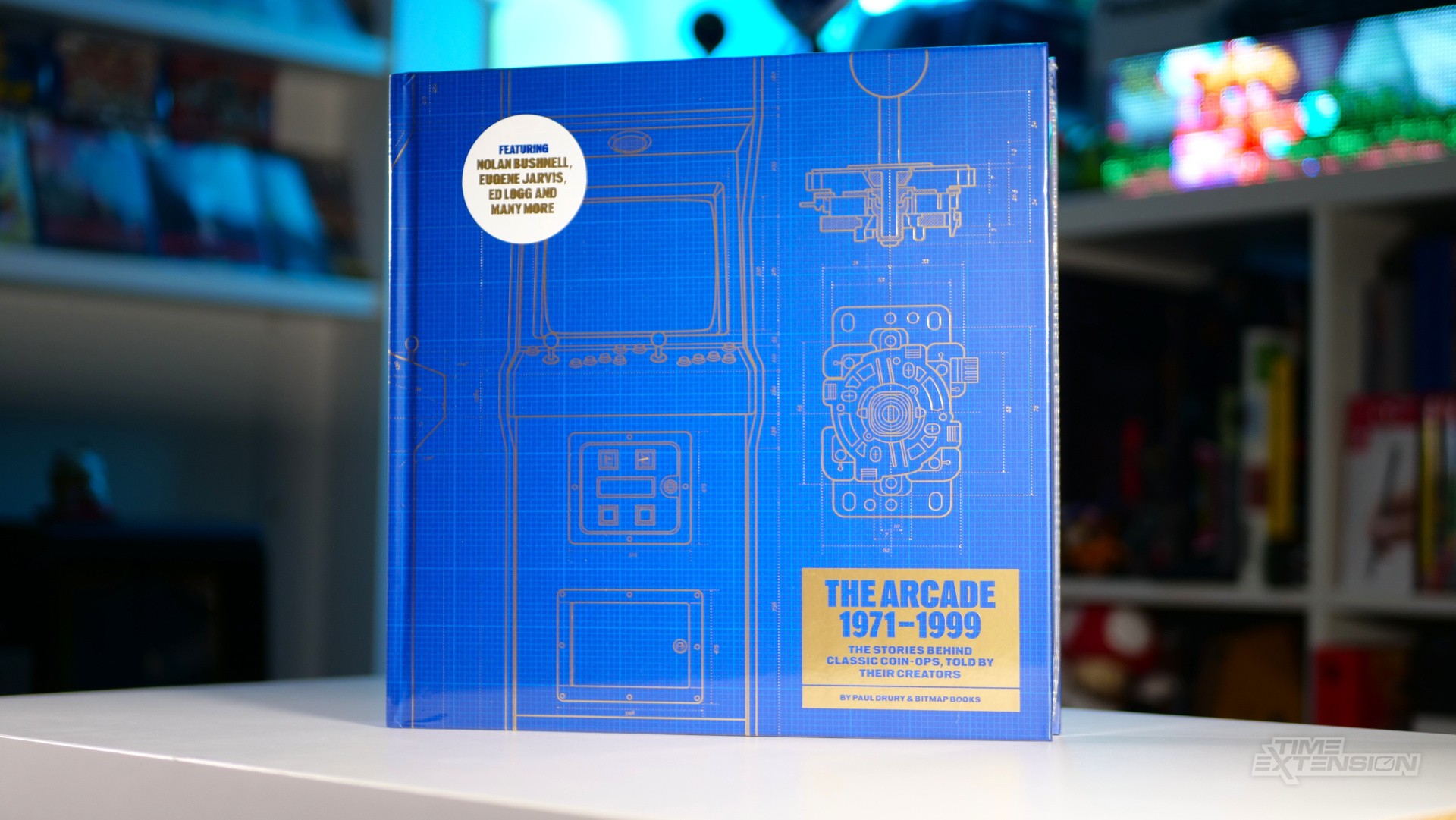
The Arcade 1971–1999: The Stories Behind Classic Coin-Ops, Told by Their Creators is the latest coffee-table tome from Bitmap Books and is penned by veteran video game journalist Paul Drury.
Boasting a foreword by Atari founder and industry legend Nolan Bushnell and featuring seminal games such as After Burner, Space Invaders, Asteroids, Final Fight, Metal Slug, Street Fighter II and many more, The Arcade 1971–1999 aims to tell the chart the history of coin-op gaming – and we were lucky enough to sit down with Drury to discuss the book in detail.
Time Extension: You've been writing about retro games for decades now. What inspired you to create this book after all this time?
Paul Drury: Arcade games were what introduced me to video games, and so they’ll always have a special place in my heart, but I was always a bit disappointed when books on coin-ops tended to rely mainly on nostalgia, with pretty pictures of arcade cabs and reminiscences about playing Space Invaders down the chip shop smoking a Benson and Hedges ciggy.
Arcade games may have arrived to us players fully formed, but each one began as a vague idea in someone’s head. I wanted to reflect the challenges, the triumphs, the disappointments, the happy accidents, the eureka moments and the very human stories of how the makers of these games felt finally seeing their creation taking coins in the real world.
I’ve spent over twenty years talking to the creators of these games for Retro Gamer magazine, and I’d always kept in touch with them, often meeting them in person when I went over to the US for game shows. Writing a book also inspired me to track down lots of people I had never spoken to and get the inside stories on games I hadn’t covered before.
On a personal note, I first pitched the idea to Bitmap Books just after my dad died. He’d always said I should do something like this, and so I thought I’d better, in his memory.
I want to add that I could not have done this book without Martyn Carroll and John Szczepaniak, who handled almost all the Japanese entries between them; Darran Jones and Tony Mott, who gave permission to repurpose 20 interviews I’d previously conducted for articles in Retro Gamer and EDGE; Tony Temple and Richie May, my co-hosts on The Ted Dabney Experience podcast – I referred back to many of the interviews we’d conducted on the show for additional material; and Sam Dyer at Bitmap Books for making it all look so wonderful.
It's fair to say that arcade gaming has fallen a long way since its zenith in the '70s, '80s and '90s - so why do gamers still find the concept of coin-ops so appealing?
There’s something about standing in front of a hulking machine, showboating your skills in public, that is undeniably thrilling – and not something you can get at home.
Everyone remembers the first time they climbed into a Star Wars sit-down cab and felt like Luke Skywalker, or proudly put their initials on top of the high score table for all to see, or decapitated their mate on Mortal Kombat in front of a jeering crowd. Arcade games are inherently social, even if you are playing alone, and walking along an aisle of cabs, grinning as you pass each one, is something special.
Though their heyday is past, coin-ops can still offer unique experiences, even today, and credit to Eugene Jarvis at Raw Thrills for keeping the coin-op video game alive, almost single-handedly, for the last 25 years.
You've spoken to some of the biggest names in the business for this book – could you give us some highlights from the people you interviewed?
I still have to pinch myself whenever I get to talk to someone who made a game I pumped coins into as a kid, so apologies for the cliché, but they were all highlights.
I suppose finally getting to speak to people exclusively for this book was special, like Steve Mayer, who created the first overhead driving game, Gran Trak 10, in 1974. He said he knew he’d got the skid sound right in the game because when his dog heard it, it jumped and ran to the window looking for a car. Sitting down with Dave Theurer in his local beach bar in California, hearing how when he got the 3D engine working for I, Robot, the first polygon-based arcade game, he went walking in Yosemite National Park, thinking, ‘I can simulate that waterfall, that mountain, I can simulate everything now…’ with this look of wonder undimmed in his eyes, all these decades later.
Asking Scott Tsumura, who was the producer for Kung-Fu Master, which really started both the scrolling beat ‘em up and the one-on-one fighter, if he had any input on how the combat was created and him casually mentioning he was a black belt in karate and sending me a photo of him in a pose which looked exactly like Thomas, the hero of the game… every entry in the book has little details like this, and I hope they give readers an insight into all these games they love.
It's a horrible thing to consider, but given the age of some of these games (and the age of the industry in general), it stands to reason that their creators might not be around for much longer. Do you feel a sense of duty to catalogue their memories before it's too late?
Sadly, this is very much the case. Half a dozen of the interviewees featured in the book have already passed away, and I’m so glad I had recorded interviews with people like Ted Dabney, Tim Skelly and Steve Bristow, which I could go back to now that they’re no longer with us. Howell Ivy, who created Death Race and Chiller for Exidy, died earlier this year, after I’d interviewed him for the book.
When we talk about video game conservation, we tend to focus on the games themselves, the hardware and the software, but saving the stories behind their creation is just as important. In ten years' time, half the people in the book may no longer be alive and in twenty years' time, hardly any. It’s a sobering thought, but I’m proud that we have got some of their tales down in print for posterity.
Bitmap's books are famous for mixing text with gorgeous photography and illustrations, and this will be no exception. What kind of artwork have you been able to pull together for this?
The book looks beautiful, as Bitmap’s output always is. I am fully aware that despite what I’ve said, nostalgia is a huge draw, so I hope readers will look at the screenshots and the cabinet illustrations and reminisce about playing Galaxian with a fag on, but then read the interview about the game’s creation and learn something about the creative process – and maybe then appreciate the game a little more.
We’ve also managed to source lots of behind-the-scenes material, often from the creators themselves, including concept art, hand-drawn sketches, scribbles on graph paper, photos from back in the day, and all manner of design notes.
We’ve been able to include John Newcomer’s original handwritten proposal for Sinistar, Ed Logg’s pencil outlines of the rocks in Asteroids and Kevin Bayliss’s early sketches for some of the Killer Instinct fighters. Then, The Strong National Museum of Play in Rochester, New York, allowed us to officially license some of its amazing collection of artefacts, so you’ll also see early designs for the Gauntlet cabinet, Will Noble’s hand coloured concept art for Paperboy, and the original storyboard Atari produced for Star Wars when they were negotiating the rights from Lucasfilm Ltd.
Could we see you collaborate with Bitmap on future projects?
I’d love to. If this sells well, there are so many more titles we could include in a second volume, maybe looking at brilliant but slightly overlooked titles, like Omega Race, Splatterhouse and my all-time favourite arcade game, Jump Bug – and a hundred more.
The Arcade 1971–1999: The Stories Behind Classic Coin-Ops, Told by Their Creators is available to order directly from the publisher. It costs £34.99.