by
by 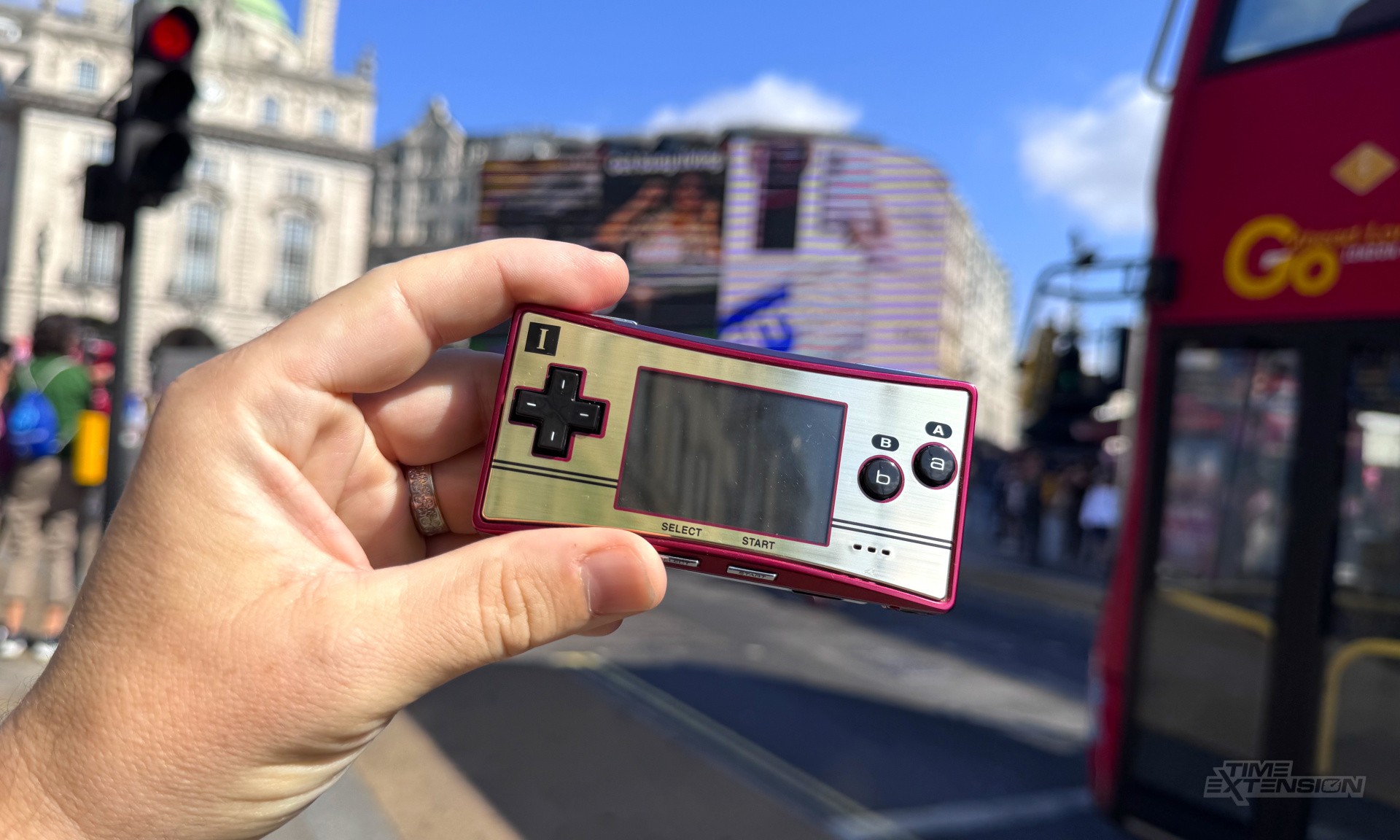
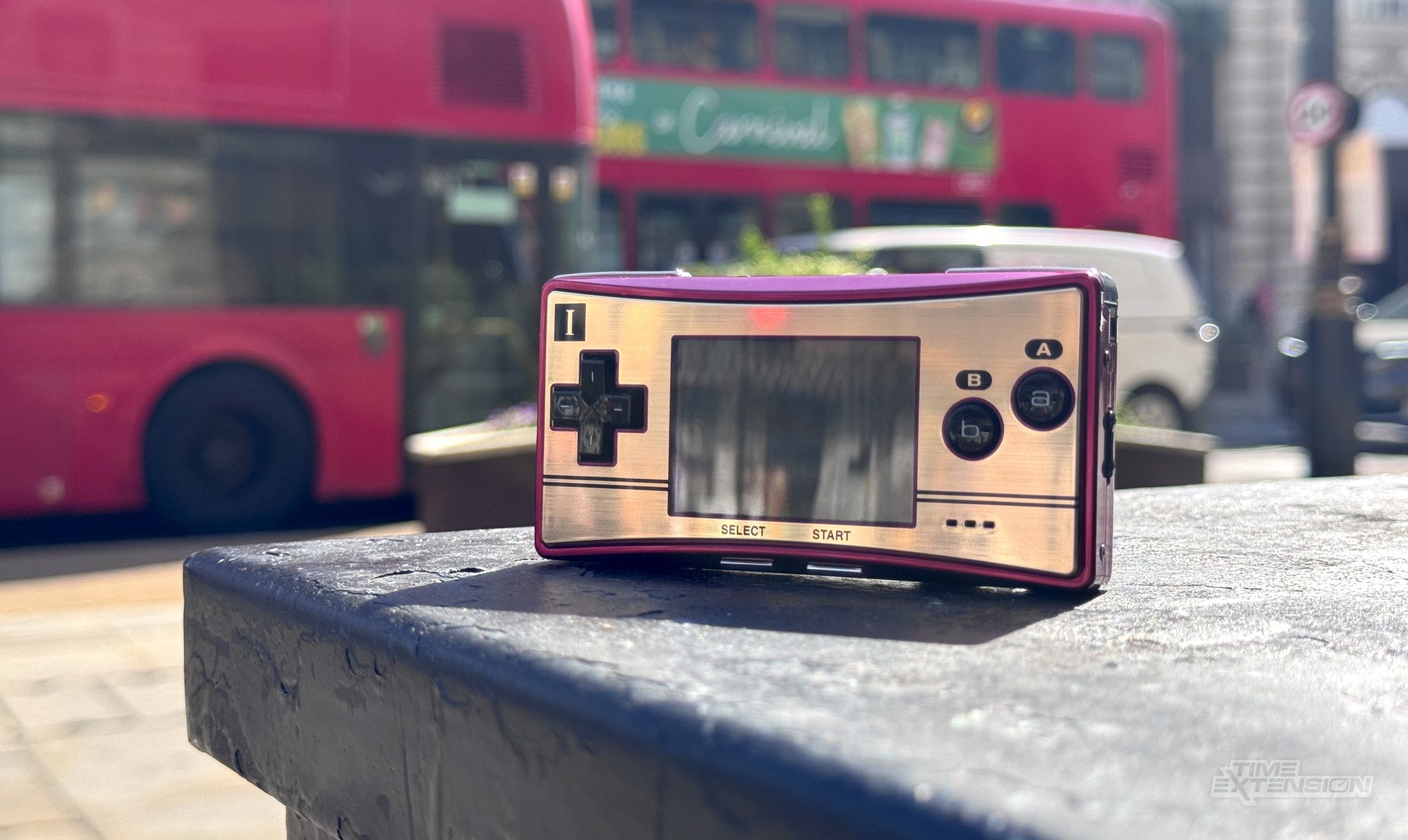
I recently took a trip with my family down to London, and, given that we were intentionally travelling super-light, I decided to take the smallest portable console in my arsenal: the Game Boy Micro.
Released around the same time as the Nintendo DS, the Micro was billed as the ultimate evolution of the Game Boy line. A scaled-down variant of the GBA, it dropped support for Game Boy and Game Boy Color games to offer a truly pocket-sized gaming experience.
Like so many people back in 2005, I ignored the Game Boy Micro at launch and chose the DS – alongside millions of others. I would eventually pick one up when the deep discounts began to appear; the Micro sold around 2.4 million units globally, making it a rare misstep in Nintendo's hardware history.
Well over a decade ago now, I managed to secure a limited-edition Famicom version, and that's what made its way down to London with me.
A Flash Cart Is A Must
Travelling light means you either have to rely on a couple of carts for entertainment or get yourself a flash cart. I didn't have room for multiple games, so the EverDrive GBA Pro was a must. I could fit the entire GBA library on a MicroSD card, which is perhaps overkill, but it did at least mean I was never stuck for choice during the trip.
The downside? Choice can sometimes be crippling.
Rechargeable Batteries Don't Last Forever
The battery inside my Game Boy Micro is now around 20 years old, and that's well beyond its intended lifespan. I suppose I should be impressed it boots up at all, but it now delivers only about an hour of gameplay on a full charge, so a replacement is in order.
Thankfully, despite being a 'sealed' unit, it's quite easy to swap out the Game Boy Micro's battery, and aftermarket replacements don't cost too much. Before it accompanies me on another road trip, I'll be sure to get a new battery.
That Screen Is Really Small...
The Game Boy Micro's display measures 50 by 101 by 17.2 millimetres, which is tiny by anyone's reckoning.
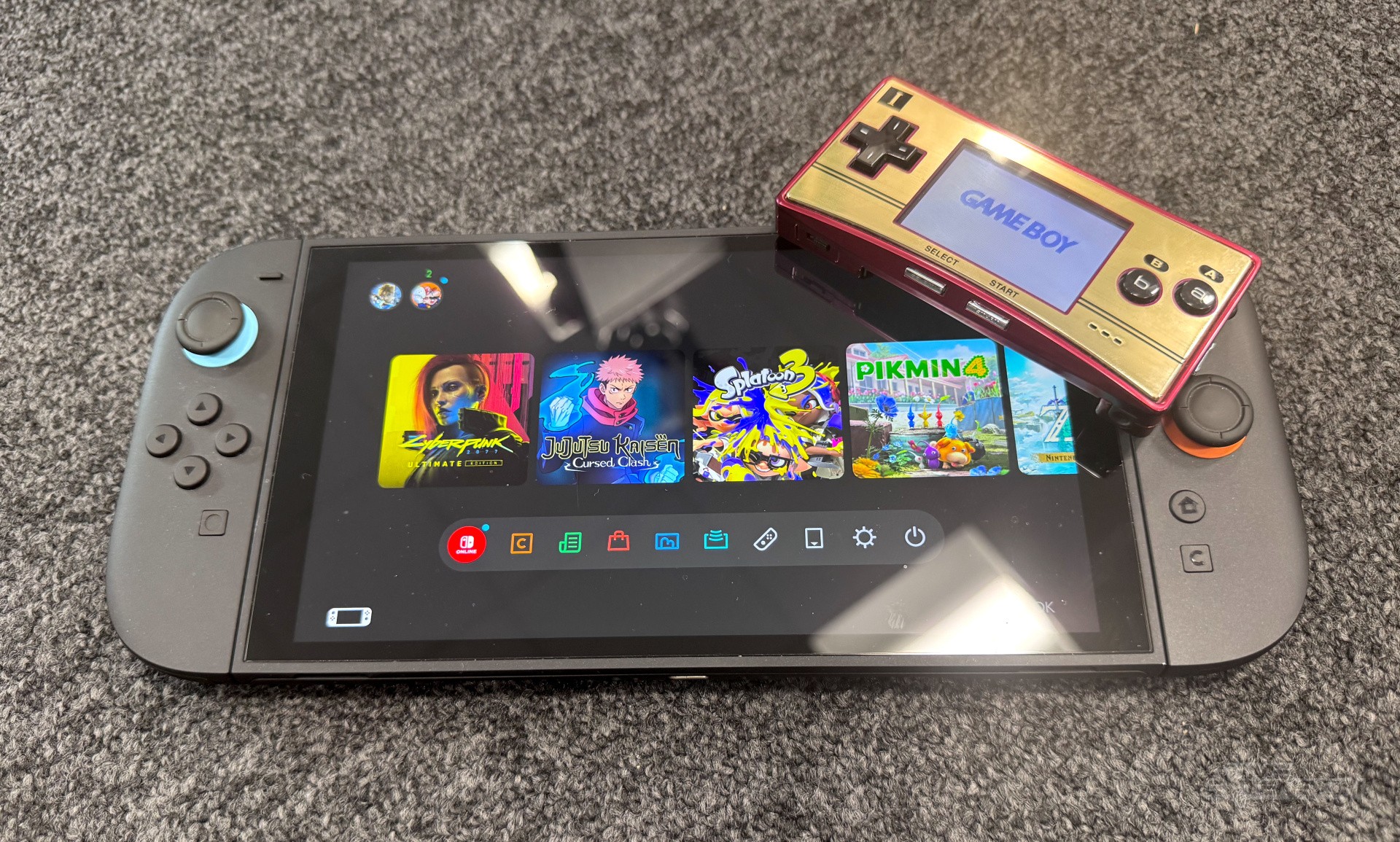
It's almost comically small when compared to the screens on the Switch, Switch 2 and even Switch Lite, and given that my eyes aren't what they used to be, reading text on a screen roughly the size of a postage stamp isn't ideal. It's not a complete deal-breaker, but after not using the console for a while, I have to admit I was taken aback by its diminutive display.
...But It's Not The Only Thing That's Small About The Micro
A small screen means a small console, and the Game Boy Micro is tiny – and that comes with some ergonomic issues. This was a problem many people flagged when it launched in 2005; if you have above-average-sized hands, you might struggle to use the console for long without hand cramps.
I have hobbit-sized hands, and even I found it a little painful to use for over an hour (which is roughly how long the battery lasted).
Portability Is Something We've Lost
For all of its size issues, spending a couple of days with the Game Boy Micro has made me appreciate how we've traded in portability for power in recent years. The Switch 2 is massive – so big, in fact, that it rarely leaves the house with me, and the same is true of the Steam Deck. Sure, we have emulation handhelds which are a little more mobile, but even those pale in comparison to the Micro's tiny size. This thing is minuscule, and that does offer some advantages – especially when you don't have space for larger gaming devices on the road.