
 by
by 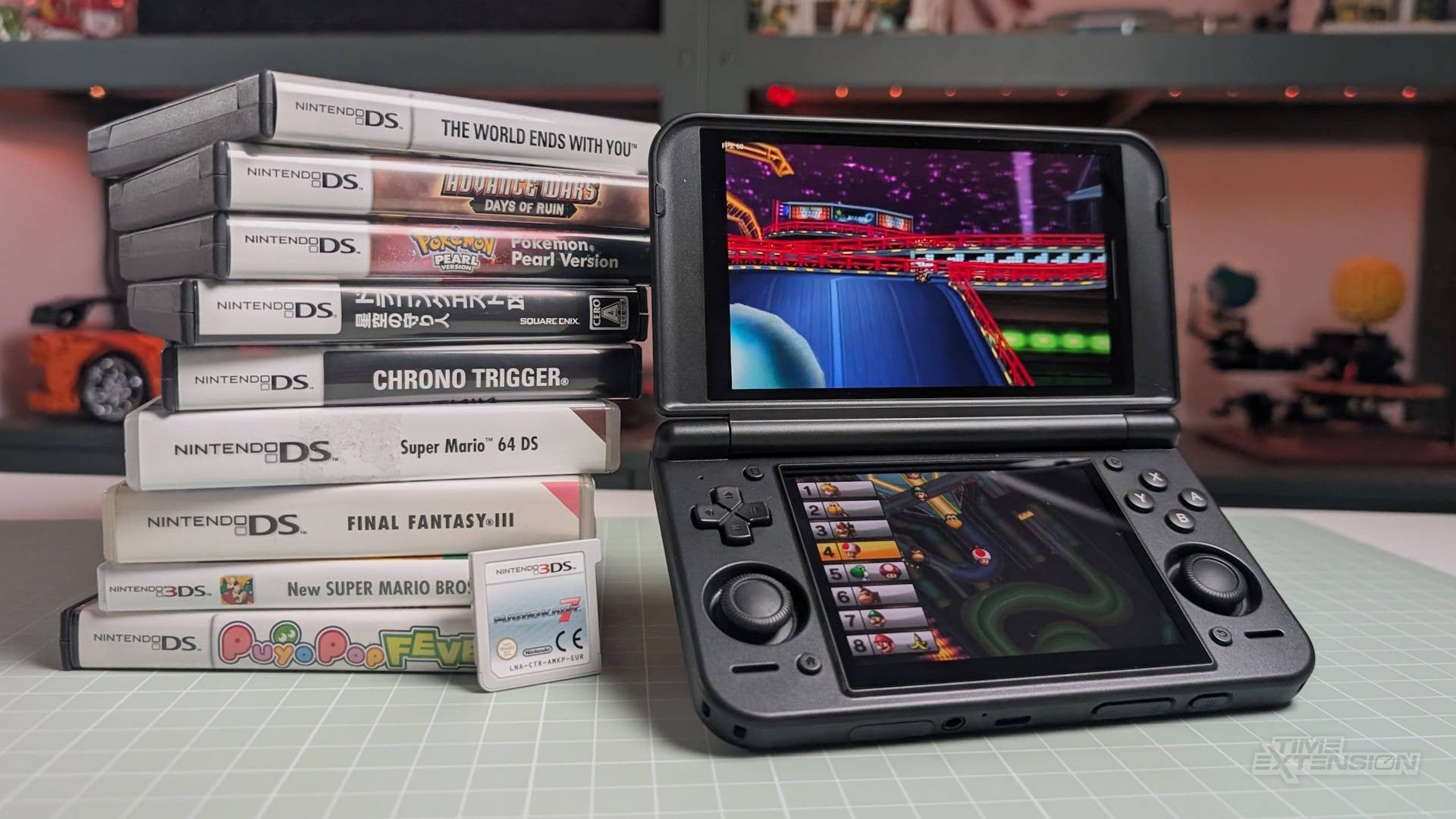
I’ve tested dozens of emulation handhelds, and the Retroid Pocket Duo Lite ($149) was by far the hardest to review. It’s been a frustrating ride over the past few weeks — not because it’s bad, but because the hardware is actually good. Until it isn’t.
I will admit that I have an unfair bias toward anything resembling a Nintendo DS. I still have my high school DS Lite on the desk in front of me, and the library has such a special place in my heart that I’m more than willing to put in the extra testing time.
That’s especially true for a mid-range device with the potential to reach the rarefied air of the popular AYN Thor ($259), since the RG DS Plus ($95) already has the budget side covered.
But the whole thing is a mess. The Pocket Duo Lite consistently fails to deliver the goods, and it sits in an awkward spot at the bottom end of a confusing lineup.
Punching Above Its Price
Starting with the good, the Retroid Pocket Duo Lite has a phenomenal build. This thing feels a lot more expensive than its price tag implies.
The plastic build is both sturdy and more resistant to collecting fingerprints than some of the glass builds I’ve tested, like the AYN Thor. The hinge is equally sturdy, with no stops. Hopefully Retroid has learned from some of the hinge issues on the Pocket Flip and Flip 2.
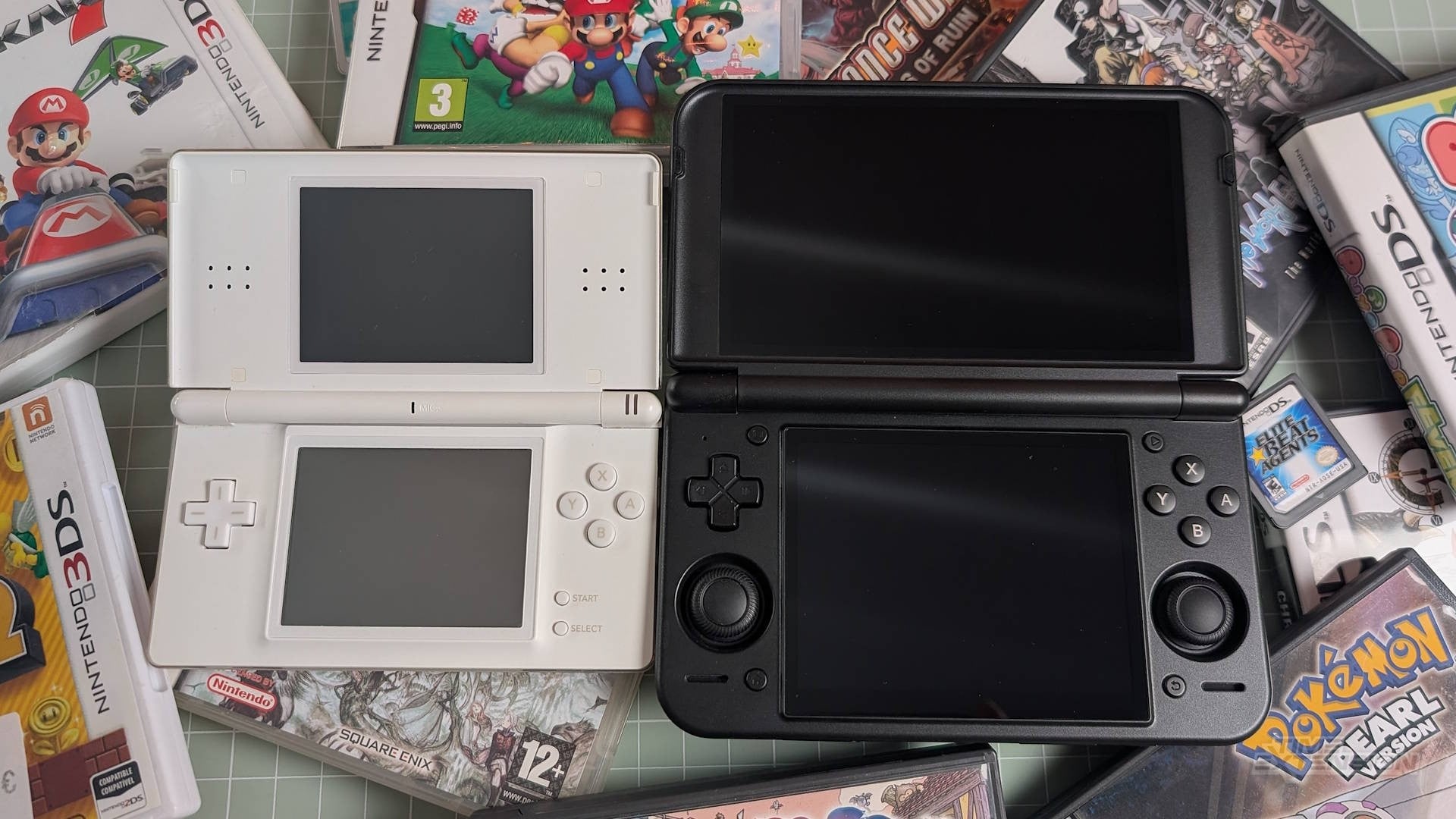
In the hand, it feels premium. The rounded edges feel noticeably smoother and more ergonomic than cheaper handhelds like the Anbernic RG DS or RG DS Plus. It’s clear to me that Retroid is drawing from its sister company AYN in the design department, and for a handheld this cheap, that’s a good thing. Granted, it’s roughly twice the size of my Nintendo DS Lite, so don’t expect to hide it away in a pocket.
As for the controls, the Pocket Duo Lite breaks from its sister device by putting the D-pad on top. This is the ideal layout for me, since I’m primarily treating this as a Nintendo DS replacement. Thankfully, the D-pad itself is great. It’s clicky, but not too clicky, and has a nice pivot for precise inputs.
There are twin sticks, too, but I can’t say I enjoyed using them. They’re heavily inset with a limited range of movement. The good news there is that this device isn’t powerful enough to play PS2 or other dual-stick systems. Dreamcast is pretty much where things top off, although I did appreciate it as a makeshift alternative to the N64’s C buttons.
Did I appreciate it as much as I would have appreciated a built-in stylus? Absolutely not. It’s such a key part of the DS experience that its absence feels like a major miss. Anbernic dropped the right stick in favour of a housed stylus on the RG DS Plus, and I can confidently say that it was the right call.
The face buttons have good travel but are soft and quiet — and I mean that in a good way. My only complaint is that they’re a little close to the centre screen, which meant I occasionally would hit the bottom screen by accident. That didn’t matter for DS emulation, but it did matter for multitasking and other systems.
The shoulder buttons are in-line and very loud, similar to the type found on cheaper Anbernic devices. Still, it’s great to have L2 and R2 buttons for save states and other emulation niceties when playing DS games.
The power and volume buttons are on the front lip of the device, right next to the charging port and headphone jack. I don’t have any complaints about the speakers, which sit beneath the sticks on the inside and are plenty loud, though I can’t help but wish they were on either side of the top screen, like Nintendo’s original consoles.
A Tale of Two Panels
Another area where Retroid struggles to match the originals is screen choice. The LCD panels (no fancy Pocket Nova OLEDs here) look fine and get the job done, but the aspect ratios threw me off. The bottom panel is a DS- and retro-friendly 4:3 at 1280 x 960, but the top is a full HD widescreen panel.
I understand why Retroid did this, but the results were mixed. The good part is that the bottom screen is great for playing all kinds of retro games. I played a lot of GBA games on my DS Lite, and in many ways this felt like an extension of that, opening up everything up to and including the Dreamcast.
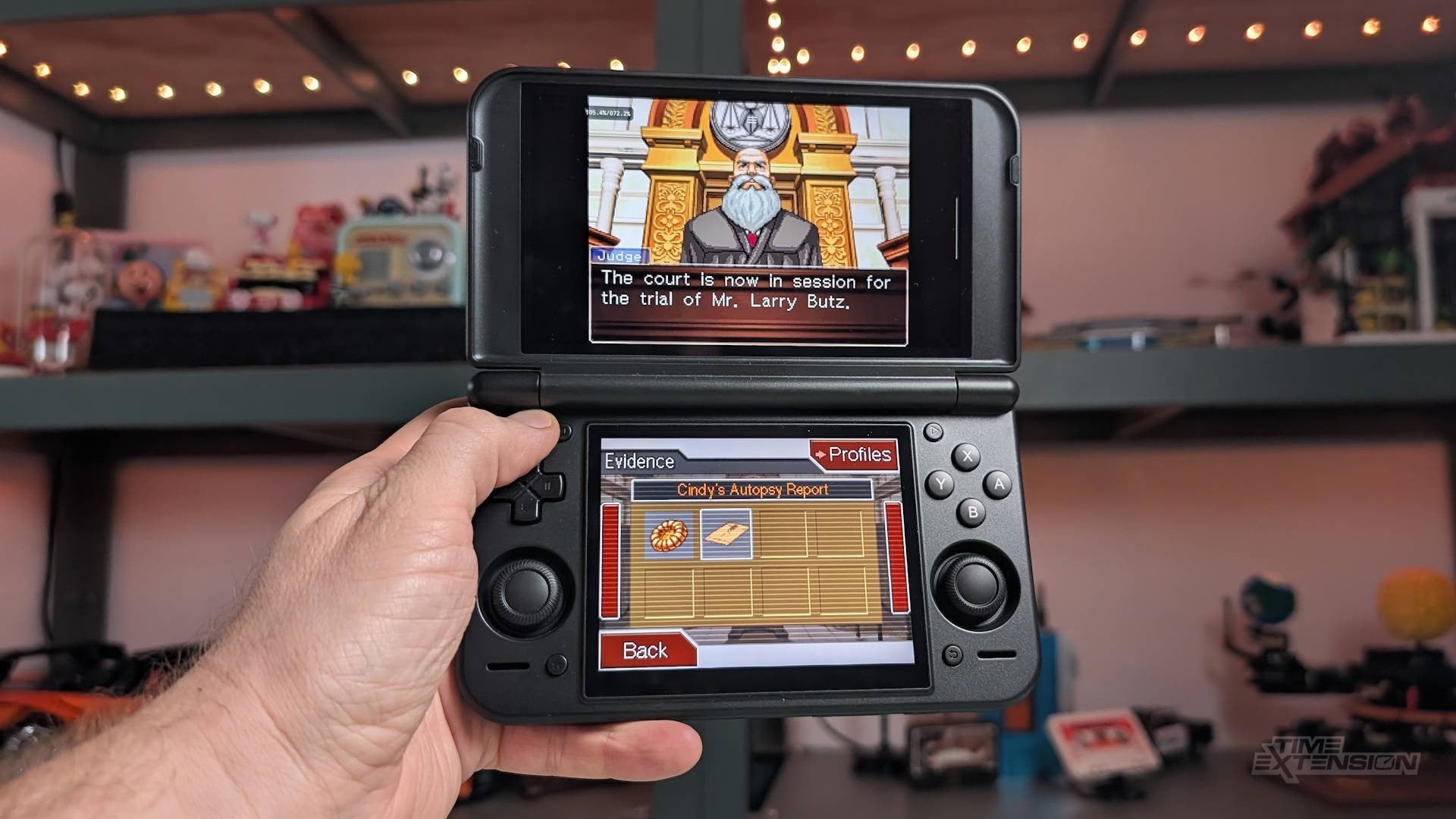
For actual DS games, though, it’s less positive. The two screens don’t share the same height, so either the top screen is larger, or you lose a bunch of screen real estate. Neither is ideal, and I'd rather have seen the same panel used for both displays, like the RG DS Plus.
Still, the widescreen panel is useful for PSP emulation in a pinch. Personally, I prefer playing PSP on a candybar handheld that, well, looks like a PSP, but to each their own. This also has the option to install the Play Store, so native Android games are also a natural fit on the more smartphone-like screen.
Given the overall design, I also wouldn’t blame you for thinking this combination of screens would be perfect for 3DS emulation, too. The top screen isn’t quite a perfect match, but it’s closer than two 4:3 panels would be.
However, an acute lack of horsepower quickly splashes cold water on that dream.
Power Shortage
Retroid picked a very unusual chipset for the Pocket Duo Lite. The Qualcomm Dragonwing QCS6125 is the non-smartphone version of the Snapdragon 665. That chipset is a close relative of the Snapdragon 662 used in the budget-friendly Mangmi Air X, so the performance isn’t a surprise.
I could never get Nintendo 3DS games to run reliably on Mangmi’s single-screen handheld, and I couldn’t get them to run well on the Pocket Duo Lite, either. Sure, some games would launch and could maybe even be called playable. The issue is that it’s inconsistent enough that it’s not really enjoyable.
I should also point out that I tested the 6+128GB model, which tacks an additional $20 onto the asking price of the 4GB variant. I imagine that version fares even worse.
Somewhat surprisingly, my emulation troubles extended to the Nintendo DS. I spent weeks testing games and emulators on this to find what worked best, and the short version is that no emulator or configuration blew me away on the Pocket Duo Lite. Considering how long DS emulation has been considered solved, this was fairly baffling.
MelonDS works for some games, but it’s a little too demanding for this underpowered chipset. DraStic has been out of development for years, but it’s optimised to run on literally anything. But for $150, I expected more than 1x resolution DraStic from the Pocket Duo Lite, so I dug deeper.
I found that by far the best option is a newer Nintendo DS emulator called SeedlessDS. I chatted with its developer, SapphireRhodonite, throughout my testing, and was able to try out some of the test builds optimised specifically for the Pocket Duo Lite. It builds on DraStic’s codebase, adding things like (casual) RetroAchievements and better upscaling.
As of writing, there’s now a public build of SeedlessDS, and judging by the developer’s past work, I only expect things to get better over time. That’s true for all handhelds, but it really comes into focus for underpowered devices like this one. Just look at what Gamma has managed to achieve with the RG DS Plus.
Of course, that’s not what many casual buyers want to hear. Setting up these devices is increasingly a key part of the hobby, but if you’re new to Android-based handhelds, it’s a major undertaking.
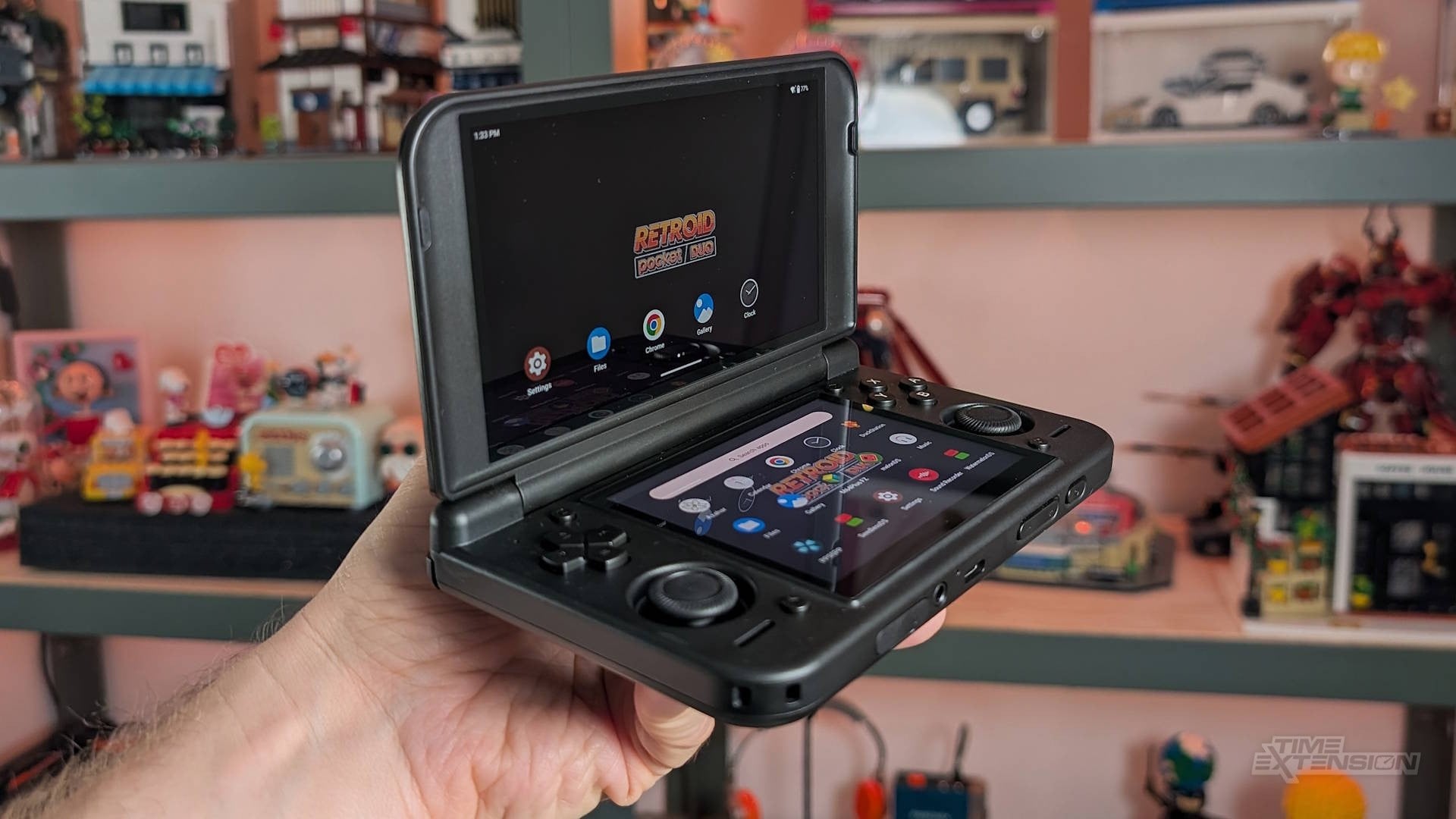
Retroid has attempted to mitigate this with a list of emulators ready for pre-installation. Performance issues aside, the software UI is clean, and a double tap of the home button opens a handy quick menu with everything you need. You will, of course, need to bring your own games.
One final bright spot is the battery, which lasted 7 to 9 hours while playing DS games. You can also turn off one of the screens when emulating other systems to eke out a little more game time. Charging times were less exciting, clocking in at roughly 2.5 hours to charge the 6,000mAh cell.
Retroid Pocket Duo Lite Review: Should You Buy It?
Even if the Retroid Pocket Duo Lite were competing against the decades-old Nintendo DS hardware, it would still be a tough sell in its current state. The lack of standout DS performance is an absolute dealbreaker, which is really unfortunate considering the level of hardware polish.
The bigger issue is that the Anbernic RG DS Plus launched a few weeks earlier, and it performed better in all my DS testing. The stock Linux system was impressive enough, but installing GammaOS on the RG DS Plus made the experience absolutely stellar. The fact that it’s $50 cheaper and includes a housed stylus seals the deal.
Gamma is working on a version of his heavily-optimised OS for the Pocket Duo Lite, but until that comes out, I’d rather just play on the RG DS Plus. Even after the Duo Lite firmware goes public, I doubt it will be worth the extra expense for DS fanatics like me.
Retroid’s dual-screen lineup still has potential in its more powerful models. The non-Lite Pocket Duo ($269) has much more to offer on paper, with superior OLED screens and potentially enough power to make 3DS emulation a reality. But that one is still untested, and at nearly twice the price of the Duo Lite, I’d hold off until reviewers have put it through its paces.
The company also seems to have realised that the Duo Lite isn’t going to cut it, so it added the Duo Lite Plus ($219) to the mix a few weeks after launch. It has the same design as the Duo Lite, but with the Pocket Duo’s more capable chipset.
The result is one of the messiest device launches of the year, and a product lineup that still doesn’t have a clear path to finding its identity in an increasingly crowded market. One thing is for certain, though: The Retroid Pocket Duo Lite is the worst of the bunch.


Comments 2
I feel like it’s a lot to keep up with all of these knockoff DS consoles. I’m perfectly content with my DSi XL and New 3DS XL.
The market for these handhelds is just beyond oversaturated now.
Would be interesting to see the sales numbers, for each model, here in the west.
Show Comments
Leave A Comment
Hold on there, you need to login to post a comment...