
 by
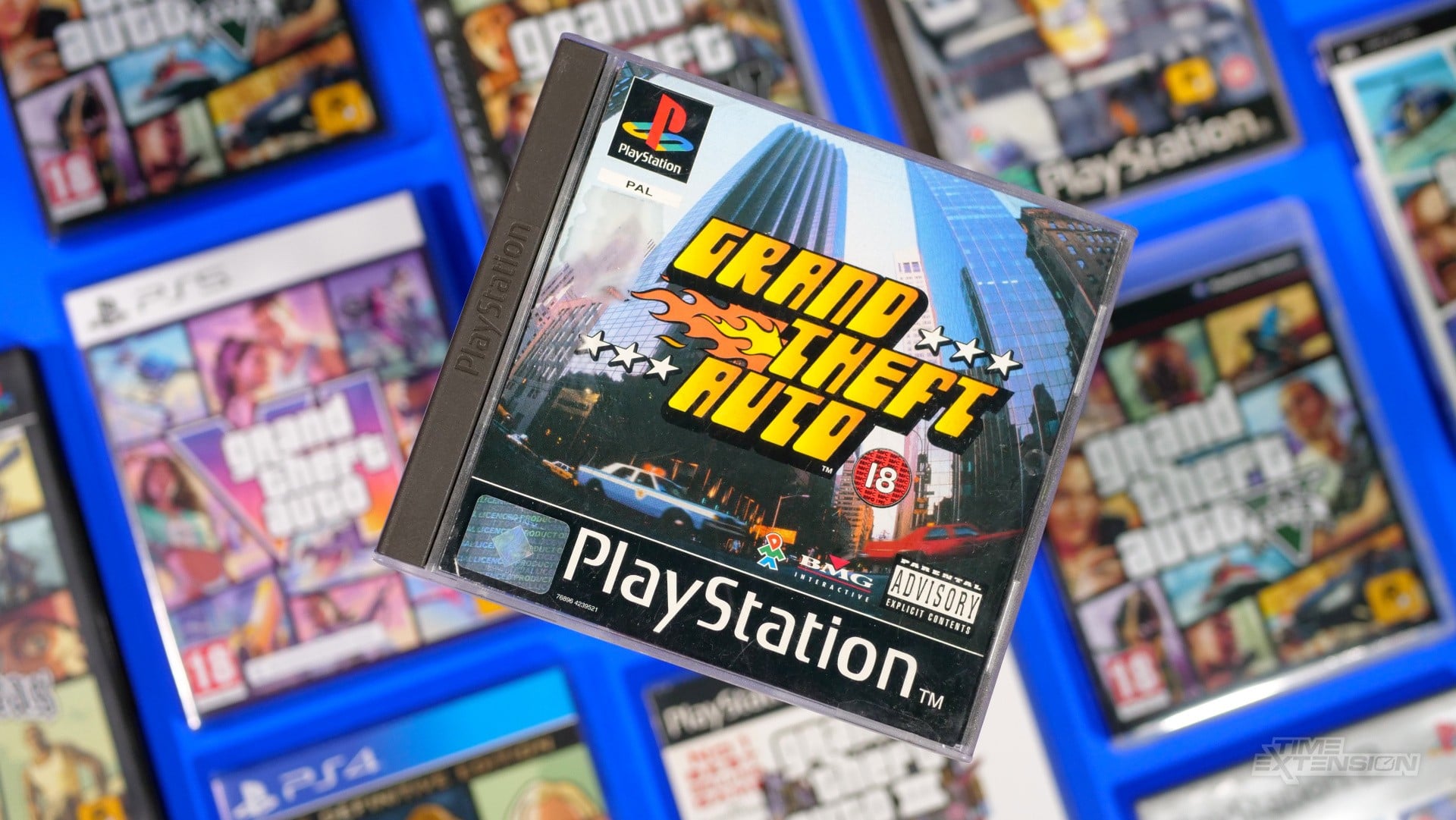
Unless you've been entirely off-grid for the past month, you'll be keenly aware that GTA 6 launches today – perhaps the most eagerly anticipated video game of the recent memory, if not all time (depending on who you ask).
As a series, GTA is a monster – it has sold over 475 million across the whole series, and its latest instalment has been 13 years in the making. GTA 6 is already earning perfect reviews and bringing the world to a standstill, but it's important to remember that the game that launched this franchise had a less certain future back in the '90s.
Like many other teens in 1997, I got merrily swept up in the pre-release hype for Grand Theft Auto, which ironically began life at DMA Design as Race 'n' Chase, a concept which would have tasked the player with chasing down criminals as a cop.
I won't deny that a huge part of GTA's latent appeal back then was the fact that it placed you in the role of a crook, and the freedom to simply jack any vehicle you desired felt oddly liberating to the easily swayed 18-year-old me back at the close of the 1990s.
What made GTA so unique, in my eyes, is that while it launched during the 3D revolution, it retained the same top-down perspective seen in titles like Super Sprint, Super Cars and Micro Machines.
Granted, the world around you was rendered in 3D – complete with towering skyscrapers which lent things a welcome sense of perspective – but all of the cars were 2D sprites, and this, twinned with the viewpoint, made it easy to dive in and get lost in what was the game's real selling point: the incredible agency it afforded the player at a time when the term 'open world sandbox' wasn't on the tip of everyone's tongue.
There was a structure to the game's narrative, of course, but the temptation was always to go off the beaten track and indulge in mischief – mowing down a procession of peaceful Hare Krishnas sticks out as a memorably abhorrent practice in the game.
It's little wonder, then, that when the game's penchant for violent crime reached the ears of British politicians, the House of Commons seriously debated banning it from sale. In the end, it was awarded an 18 age rating, which was still pretty unusual then; lest we forget, despite Sony's plan to make interactive entertainment a more mature pastime with the PlayStation, the '90s were still very much the era of video game mascots and consoles aimed at children.
A title with this much violence had the power to shock, and the team behind the game knew it, enlisting controversial Max Clifford to stir the pot with a typically risqué marketing campaign.
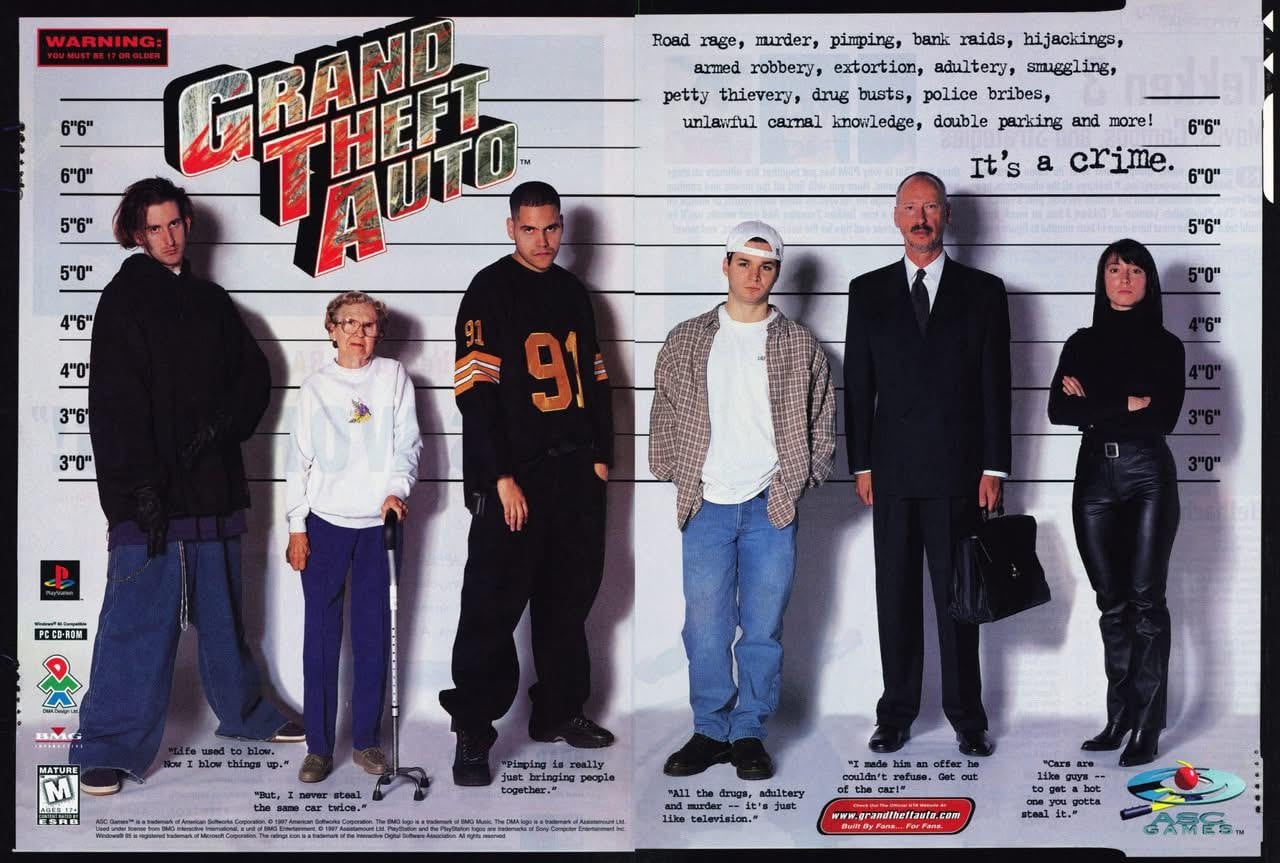
I have to admit that when I saw that the sequel would adopt the same top-down view, I lost interest – as did many other potential players, I suspect; that's a shame, because GTA 2's gang system was a genuine revelation for the time. I'm sure I speak for many people when I admit I was fully on board with GTA 3, the full-3D sequel that arguably set the series on the path to becoming the cultural behemoth it is today. The third game consumed me like no other title on the PS2, and ranks as one of the most mind-blowing experiences I've ever witnessed in the world of gaming.
Fast forward to the present day, and I'm probably one of the few gamers who hasn't pre-ordered GTA 6; I never really played another game in the series after the third one, and while I'm sure I'll check out this sixth entry at some point (presumably when my 18-year-old son, who has taken ownership of the both the PS5 and Xbox Series X in our household, allows me access), but for now I'm just happy to reflect on the impact the first game made on my impressionable mind back in 1997.
If you fancy reading a bit more about GTA, check out our past coverage below – you won't regret it!